As an Amazon Associate, we earn from qualifying purchases. Some links on this site are affiliate links at no extra cost to you. Our recommendations are based on thorough research and editorial judgment.


Understanding Social Grooming Between Multiple Cats

Understanding social grooming between multiple cats is essential for establishing trust and defining hierarchies. This behavior, known as allogrooming, fosters emotional connections and promotes cleanliness. We must observe mutual grooming as an indicator of affection, while also recognizing signs of stress such as flattened ears or tail flicking. Addressing power imbalances is important, and monitoring interactions guarantees well-being in multi-cat households. By enhancing our knowledge of these dynamics, we can better manage our feline companions’ relationships.
Key Takeaways
- Social grooming, or allogrooming, establishes and reinforces bonds among cats, particularly among littermates and companions in multi-cat households.
- Mutual grooming indicates trust and affection, facilitating emotional connections and peace within a group’s social structure.
- Dominant cats often initiate grooming to maintain their position in the social hierarchy, while submissive cats may show signs of tension during interactions.
- Observing grooming behaviors can reveal power imbalances, with non-reciprocating grooming indicating potential aggression and the need for intervention.
- Monitoring body language during grooming is crucial to prevent conflicts and ensure a harmonious environment for all cats involved.
The Significance of Allogrooming in Cat Relationships
You may be interested

How Stress Affects Cat Grooming Habits
October 1, 2025
Solutions for Cats That Refuse to Use the Litter Box
October 1, 2025
The Psychology Behind Litter Box Aversion
October 1, 2025
Although many cat owners may not realize it, allogrooming, or social grooming, plays a vital role in establishing and maintaining relationships among cats. This behavior reinforces social bonds through mutual grooming, especially among littermates and established companions. In a multi-cat household, dominant cats often engage in allogrooming with submissive ones, which helps maintain hierarchy and order. Importantly, allogrooming serves as a conflict resolution strategy, reducing tension and aggression within closely-knit groups. Kittens learn this behavior from their mothers, laying the groundwork for strong social bonds that persist into adulthood. By recognizing the significance of allogrooming, we can better understand cat relationships and their inherent social structures, ultimately fostering healthier environments for our feline companions. When social grooming behaviors are disrupted or cats experience heightened stress in multi-cat environments, calming treats with probiotics can help restore balance by supporting both emotional well-being and digestive health during periods of adjustment.
How Mutual Grooming Enhances Trust Among Cats
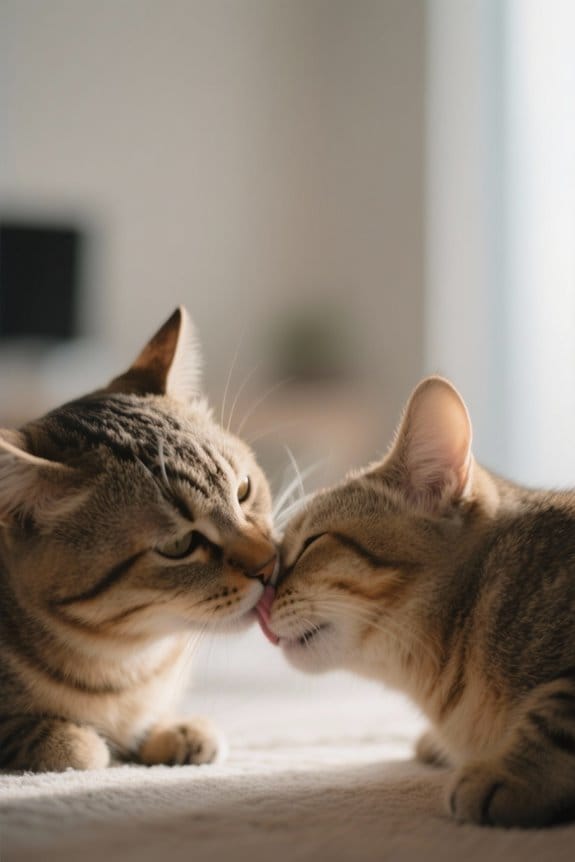
Mutual grooming, a behavior where cats lick each other in areas they cannot easily reach, serves as a notable indicator of trust among feline companions, fostering deeper social connections. This allogrooming promotes cleanliness while reinforcing social bonds through cooperation and affection, which are essential in multi-cat households. When we observe this behavior, we see reciprocal grooming; both cats display signs of enjoyment like purring and relaxed body language, enhancing their emotional connection. Additionally, mutual grooming often precedes other social interactions, indicating a strong recognition of social hierarchy. Research illustrates that cats engaged in this behavior tend to coexist peacefully, minimizing conflicts and markedly enhancing overall trust within the group. For households with bonded cats who travel together, carriers designed for multiple pets can accommodate their close relationship while maintaining comfort and reducing travel-related stress.
Grooming Behaviors: A Reflection of Social Dynamics
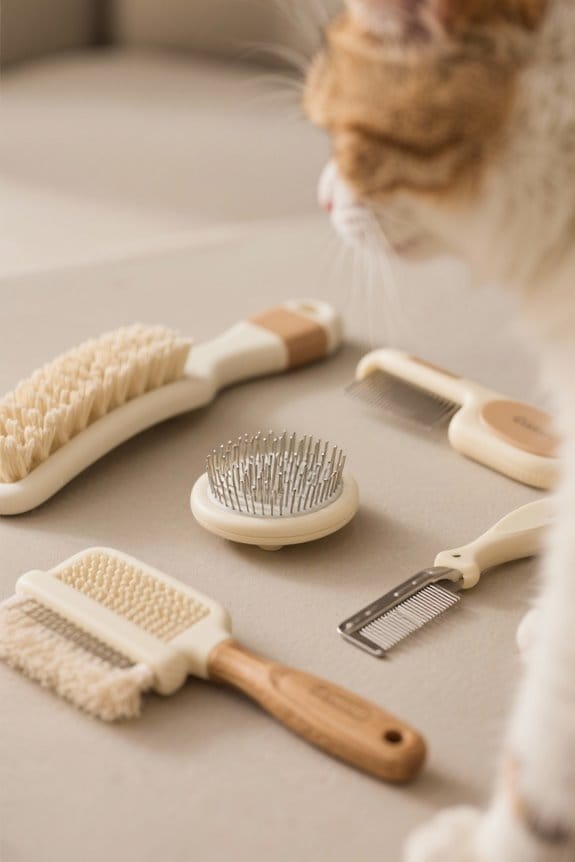
Grooming behaviors among cats, often referred to as allogrooming, serve as critical indicators of social dynamics within a multi-cat household. These social grooming activities can signify trust and affection, particularly in mutual grooming scenarios between bonded cats. Dominant cats may initiate grooming sessions, often without reciprocation, to reinforce their position within the social hierarchy. In contrast, submissive cats might exhibit signs of tension during these interactions. It is essential to recognize that mutual grooming not only enhances feline social cohesion but also acts as a conflict resolution strategy, redirecting potential aggression and fostering harmony. By closely observing these grooming patterns, we can gain insights into the complex relationships and emotional states of our feline companions. Providing vertical space through multi-level cat trees can help reduce tension by allowing each cat to establish their own territory and retreat to safe spaces when needed.
The Role of Mother Cats in Early Grooming Experiences
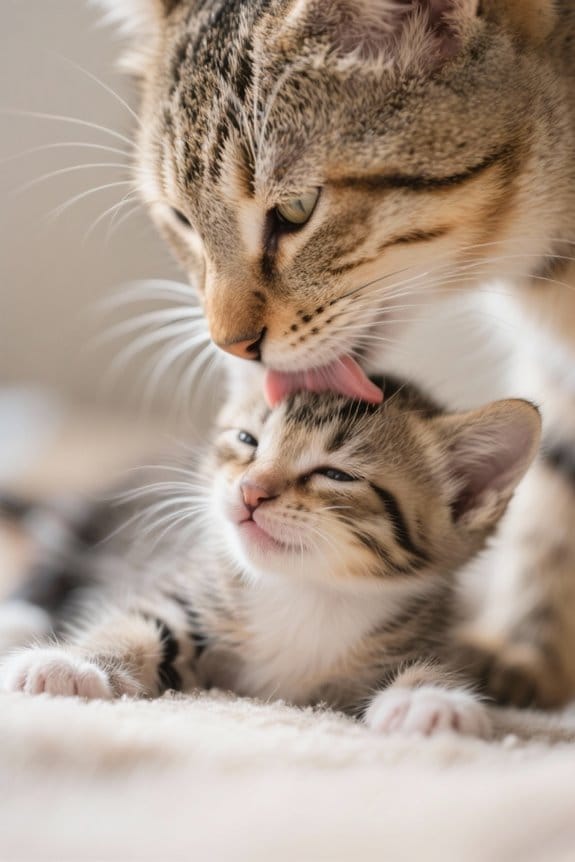
In the context of feline social dynamics, mother cats play a significant role in shaping their kittens’ early experiences with grooming. Immediately after birth, the mother cat’s grooming behavior removes critical birth materials and stimulates essential bodily functions, such as excretion. This early interaction not only promotes hygiene but also fosters an emotional bond, ensuring kittens feel secure during their vulnerable phases. As mother cats groom their kittens, they help instill social grooming skills, necessary for future interactions within feline social groups. Through these repeated grooming sessions, kittens learn important boundaries and communication cues, which become fundamental components of their adult social structures. Consequently, maternal grooming behavior is foundational for the kittens’ development and future relationships. While mother cats teach these essential grooming behaviors, responsible pet owners should also maintain a cat first aid kit to address any minor wounds or skin irritations that may occur during social interactions between cats.
Understanding Dominance and Submission in Grooming
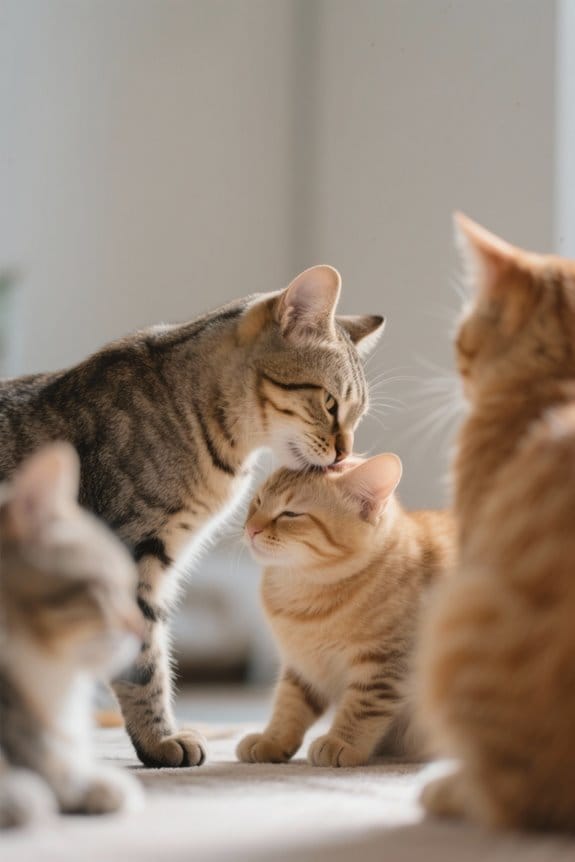
Understanding dominance and submission in the context of feline grooming is essential for interpreting social interactions among cats. Dominance can be observed when one cat consistently initiates grooming without reciprocation from another, indicating a power imbalance. In these cases, the groomer may physically restrain the subordinate cat, which can lead to discomfort and tension. Dominant cats often groom submissive ones more frequently, reinforcing hierarchies that shape interactions in a multi-cat household. This one-sided grooming, while potentially enhancing social bonds, may escalate into aggression if the non-reciprocating cat exhibits signs of annoyance. Recognizing these dynamics is significant for managing potential conflicts, ensuring that healthy relationships and social structures are maintained among our feline companions. When stress-related grooming behaviors emerge, increased grooming may indicate discomfort requiring attention to the cats’ environment and potential dietary support through anti-inflammatory foods.
Recommended Products

Valua Pack – This cat pheromone diffuser set making it easier to provide a calming environment in multiple rooms or for multiple cats.

Valua Pack – This cat pheromone diffuser set making it easier to provide a calming environment in multiple rooms or for multiple cats.

[Cat Pheromone Diffuser]The tcllka cat pheromone diffuser set includes 2 charging plugs and 4 bottles of replacement liquid (48ml each). The cat calming diffuser can keep the cat calm and not attack suddenly. Pheromone diffuser to calm cats is a sedative product for cats, cat diffuser calming can play a role in soothing and relaxing cat nerves, providing comfortable sleep for cats and pets. Cat diffuser calming comes in two packs together in a beautiful box, very easy to use use and storage
Signs of Stress and Conflict During Grooming Sessions
Cats can display a range of stress and conflict signals during grooming sessions, which is essential for owners to recognize to prevent further escalation. Signs of stress include a sudden cessation of purring, tail flicking, or flattened ears, indicating irritation or discomfort. If one cat stops grooming suddenly, starts growling or hissing, it’s a clear signal of conflict, suggesting discomfort or threat. Importantly, if one cat fails to reciprocate grooming, tense body language or avoidance may indicate brewing aggression. During grooming, the appearance of biting or clawing might shift the interaction from social bonding to a display of dominance or aggression. Monitoring for stiff body posture or dilated pupils helps in identifying potential stress or conflict early. To help alleviate holiday boredom and reduce stress between cats, interactive toys can stimulate natural instincts and promote positive play behaviors.
Recommended Products
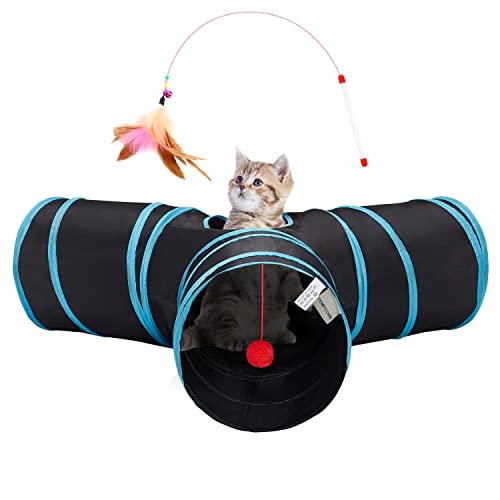
Best Ways to Play: Our cat tunnel with 3 spacious tunnels, peephole & ball toy, this popular cat toy gives your kitty more ways to have fun. Provides hours of exercise & self-amusement. This cat tunnel is more suitable for kittens and is made of polyester material.
![Qraxond Interactive Cat Toys for Indoor Cats,[Newly Upgraded] Rechargeable Touch Activated Hide and Seek Kitten Toys for Bored Indoor Adult Cats with Fluttering (Blue)](https://m.media-amazon.com/images/I/51qR4cw+OyL._SL500_.jpg)
【Top-Tier Dual Interactive Fun】Qraxond's new indoor cat toy has dual motors, controlling random rotation of butterfly and plush tail swing rod accessories, bringing fun, exciting play for kittens and adult cats. 🎁Hide-and-Seek: The animal tail-shaped plush hides under the cover cloth, rotating irregularly to appear/disappear, creating a hide-and-seek game. It mimics real prey, bringing unpredictable chases to stimulate the cat’s brain and senses. 🦋Irregular Rotating Butterfly: The top has an auto-rotating butterfly that rotates, pauses or swings to simulate real flight, keeping the cat engaged. Various interactions ensure the cat gets enough exercise to avoid obesity.

Automatic Cat toy: umosis interactive cat toy designed with real mouse squeaky and moving feather wand, it hides and moves quickly in the irregular cloth cover,the feather appear and disappear constantly, starts a hide-and-seek game , while the lure of mouse chirping drives your cat crazy, stimulating the cats to search, engaging them in hiding, and chase games
Intervention Strategies for Managing Grooming Conflicts
To effectively manage grooming conflicts among our feline companions, we need to implement a variety of intervention strategies designed to reduce stress and aggression. First, temporarily separating cats during grooming sessions can relieve tension, allowing them to cool off before reintroduction. Additionally, ensuring adequate resources, such as food bowls and litter boxes, helps minimize competition and environmental stressors. We should also encourage play and provide stimulating activities to release pent-up energy, reducing aggressive behaviors. Monitoring cat body language is vital for recognizing signs of irritation; when conflict arises, using loud claps or firm verbal cues can interrupt undesired behaviors, redirecting them towards more social interactions. For cats recovering from injury or elderly felines experiencing mobility issues, pet strollers can facilitate supervised outdoor socialization that may help reduce stress and aggressive behaviors. By applying these strategies, we can foster a more harmonious environment for our cats.
Recommended Products

Product features: The first tool-free installation dog cart, the front wheel/rear wheel quick installation/quick disassembly design, the installation is simpler and easier. The seat is fully supported, and the ride is stable, strong and safe.

Lightweight & Portable: Designed for easy carrying, our SMUG pet stroller is ultra-lightweight, perfect for daily walks or travel. Foldable for convenient storage and transportation.

【High Quality Waterproof Material】This pet stroller is made of 600D waterproof Oxford cloth, which is water resistant and durable. This durable 4-wheeled stroller makes for a safe and smooth ride and it is perfect to hold any pets weighing up to 44 lbs
The Benefits of Grooming for Cat Health and Well-being
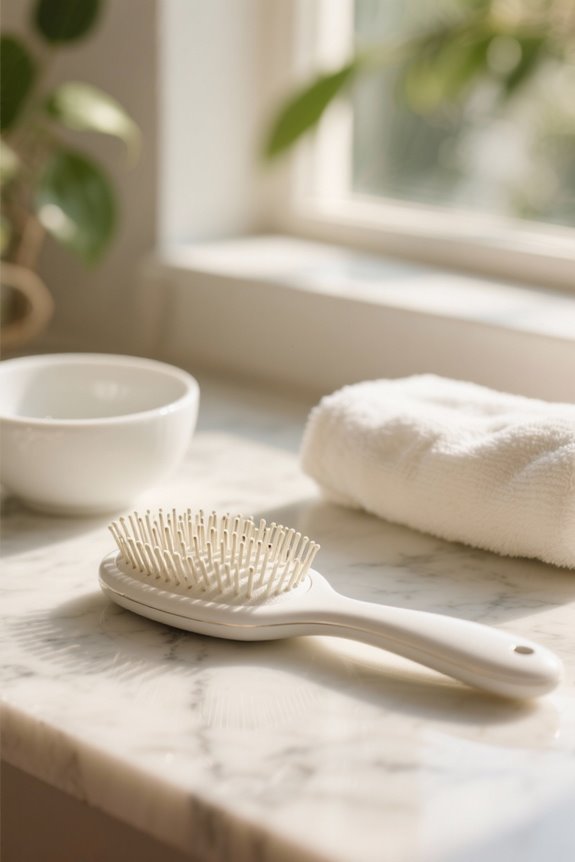
Grooming practices among felines serve multiple health benefits that extend beyond mere social interaction. Regular grooming, including mutual grooming, helps strengthen social bonds between cats, fostering trust and reducing signs of aggression. It’s essential for maintaining skin health, as it removes dirt, parasites, and loose fur, which can prevent infections. The act stimulates endorphin and oxytocin release, enhancing emotional well-being and decreasing stress levels. In multi-cat households, observing grooming behaviors can indicate comfort levels, reinforcing a positive social structure. Additionally, this behavior promotes better blood circulation, which aids in distributing natural oils throughout the cat’s coat. For cats with longer or matted fur, supplementing natural grooming with proper grooming tools can help maintain coat condition and prevent uncomfortable tangles that cats may struggle to address through self-grooming alone. Therefore, facilitating consistent grooming not only improves hygiene but also contributes to the overall mental and physical health of our cats.
Recommended Products
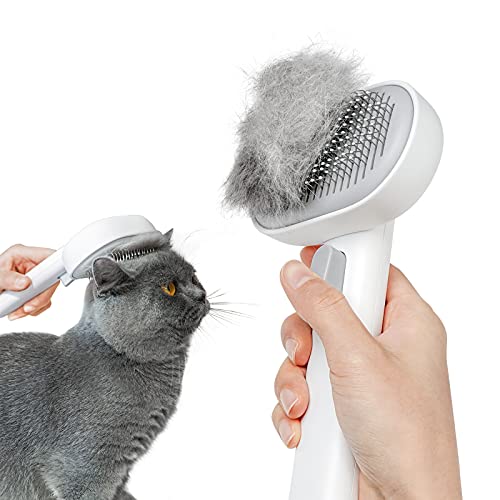
【Professional Cat Hair Brush】Perfect gift for pet owners, vets, and pet groomers. Using this cat brush for long haired cats on a regular basis can gently and effectively remove loose hair, tangles, knots, dander and trapped dirt. Suitable for short, medium or long, thick, thin or curly haired dogs/cats/rabbits, making your pets shiny and healthy.

Cat brushes for long haired cats and short haired cats

【Professional Pet Grooming Kit 】3 Pet grooming tools selected by pet lovers, which can meet daily all the grooming needs of pets. Let you, as the groomer, personally give your furry friend a shiny and healthy coat. This is a must-have beauty product set for pet lovers! The Best Dog Gifts - Merry Christmas
Observing Grooming Patterns for Better Multi-Cat Management
Understanding the nuanced grooming patterns among our cats can greatly improve multi-cat management, as these behaviors often reveal essential insights into their social dynamics and individual relationships. Observing mutual grooming indicates trust and strong bonds while one-sided grooming highlights potential dominance or discomfort. We should monitor specific preferences, such as grooming the head and neck, which may signify affection. Signs of distress during grooming, including an abrupt stop in purring or tail flicking, necessitate immediate attention to avoid conflict. By analyzing the initiation and reciprocation of grooming interactions, we can better understand power imbalances within the group. Additionally, considering individual personalities and resource availability enhances our ability to manage social hierarchies effectively in multi-cat households, ensuring a harmonious environment. Behavioral changes in grooming habits can indicate underlying health issues, making regular veterinary check-ups essential for maintaining harmony in multi-cat households.
Recommended Products

Dual-Head Design: 2 sides, 2 coats, 1 tool! Use the 9-teeth side of this dog and cat brush for smooth dematting, and the 17-teeth side for quick coat thinning and deshedding.


💖UPGRADED Easy Desheding Brush: our cat massage pet brush Upgraded durable 304 stainless steel for better deshedding brush experience for cats dogs rabbits and furry small animals.Whether you're a pet owner or groomer,You deserve to have this undercoat shedding dog cats grooming BRUSH. Your lovely pets enjoy ur brushing! Cat brush for shedding indoor cats, slicker brush for dogs cats and horses rabbits .
Frequently Asked Questions
What Is the 3-3-3 Rule of Cats?
Did you know it typically takes three months for a new cat to settle in? The 3-3-3 rule highlights crucial cat behavior phases, fostering feline friendships and relieving stress through grooming habits, communication signals, and resolving territorial issues.
Which Cat Is Dominant in Grooming?
The dominant cat in grooming often initiates interactions, showcasing their place in the grooming hierarchy. This creates tender moments, as mutual grooming strengthens feline relationships, while competition dynamics reveal dominance signals and provide stress relief.
Why Are My Sibling Cats Grooming Each Other?
Our sibling cats are grooming each other to strengthen their social bonds, express sibling affection, and maintain mutual grooming habits. This behavior fosters feline communication, provides stress relief, and reinforces their connection through shared experiences.
How to Tell if Two Cats Are a Bonded Pair?
If we observe bonded behaviors like mutual grooming, scent marking, and playful interactions, along with relaxed body language and comfortable sharing of resources, we’ll likely confirm our cats are a well-bonded pair demonstrating healthy social hierarchy.