As an Amazon Associate, we earn from qualifying purchases. Some links on this site are affiliate links at no extra cost to you. Our recommendations are based on thorough research and editorial judgment.

The Psychology Behind Litter Box Aversion

Understanding litter box aversion in cats requires us to assess several critical factors. We must first identify individual litter preferences, as many cats favor unscented, fine-grained clumping litter. Additionally, we should monitor for medical issues, such as urinary tract infections, which may impede proper elimination. Cleanliness is essential, so we need to scoop daily and deep clean weekly. By exploring these components, we can address and alleviate potential aversion, leading to improved litter box habits and overall well-being.
Key Takeaways
- Cats have individual preferences for litter types and box configurations that affect their willingness to use the litter box.
- Cleanliness is crucial; dirty litter boxes can lead to aversive behaviors and avoidance.
- Medical issues, like urinary tract infections, can contribute to changes in elimination habits and litter box aversion.
- Environmental stressors, such as noise or changes in routine, can increase anxiety and discourage litter box use.
- Providing multiple, well-placed litter boxes and experimenting with different litters helps address territorial disputes and enhances a cat’s comfort.
Understanding Litter Box Preferences in Cats
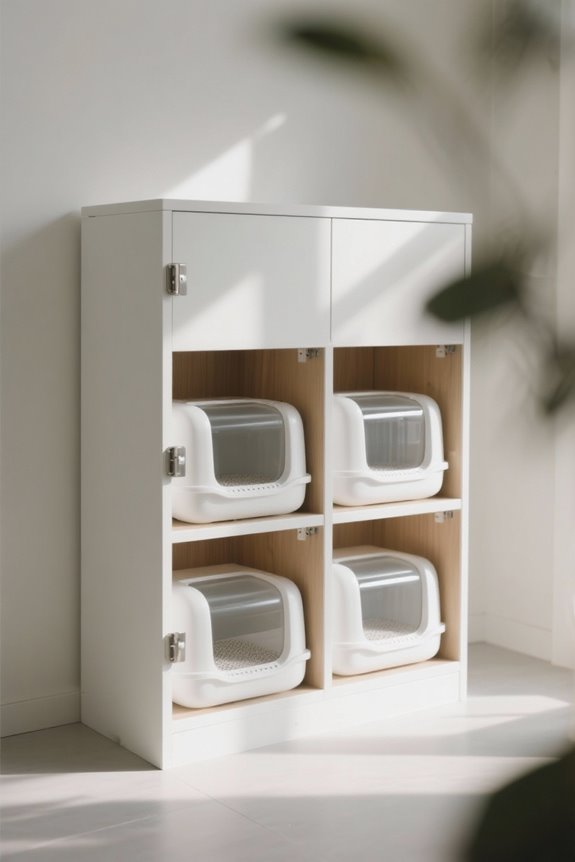
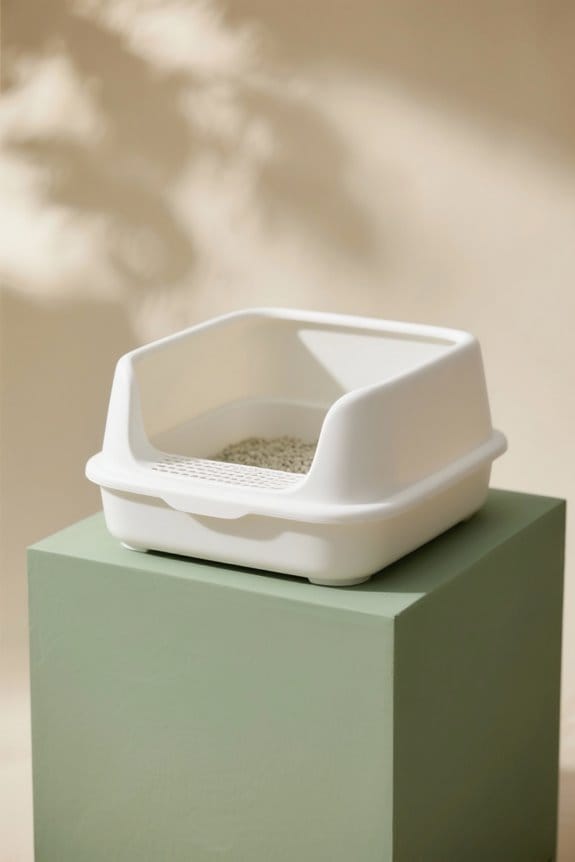
Understanding litter box preferences in cats is important for maintaining both their health and behavioral well-being. Individual preferences dictate the type of litter, box size, and location of boxes, which makes it essential for us to provide various options. Clean litter boxes are critical; cats commonly exhibit litter box aversion if their boxes are soiled. Daily scooping and weekly thorough cleaning help guarantee hygiene. Most cats favor fine-grained, unscented clumping litter, which allows for natural digging and burying behavior. Boxes should be positioned in quiet, low-traffic areas, away from food and water bowls to maintain privacy. In multi-cat households, we need one litter box per cat plus one extra, reducing territorial disputes and minimizing potential behavior problems such as elimination outside the box, which can lead to urinary tract infections. For cats experiencing stress-related litter box aversion, calming pheromone collars can help reduce anxiety-related behaviors and promote relaxation during these challenging situations.
Identifying Medical Issues Leading to Aversion

While we often focus on behavioral factors that contribute to litter box aversion, it’s crucial to take into account the potential medical issues that could be influencing our cats’ elimination habits. Conditions such as urinary tract infections, bladder stones, or kidney disease can cause significant pain or discomfort, leading to litter box avoidance and inappropriate elimination. It’s important to have our cat checked by a veterinarian if we notice changes in behavior, appetite, or water consumption. Signs like blood in urine or difficulty accessing the litter box may indicate serious health problems. Ensuring our cat has a clean bill of health can help eliminate medical causes, allowing us to address any behavioral factors with greater confidence. Cats with kidney problems may also exhibit increased thirst, frequent urination, lethargy, and weight loss, which can further contribute to litter box avoidance.
Behavioral Factors Contributing to Litter Box Avoidance
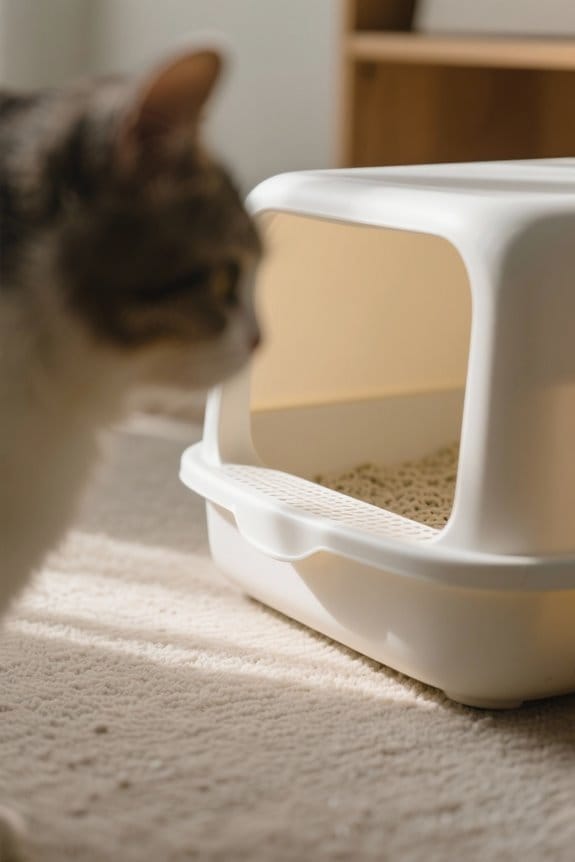
Several behavioral factors can greatly influence a cat’s willingness to use the litter box, and recognizing these elements is essential for addressing aversion. Common litter box issues include a cat’s dislike of specific litter types, leading to selective elimination habits, where they might urinate in the box but defecate outside. Environmental stressors, like household changes or new pets, may create anxiety and heighten avoidance behaviors. Cleanliness is vital, as dirty boxes can deter use; boxes should be scooped daily and deep-cleaned weekly. Proper box placement is also significant—quiet, low-traffic areas are preferred, especially in multi-cat households where territorial disputes may arise. Young kittens may be particularly sensitive to litter box issues since they require high-quality nutrition and stable environments to support their rapid growth and development. If behavioral factors persist, ensuring a vet consultation for potential medical issues is advisable.
Effective Strategies for Encouraging Litter Box Use
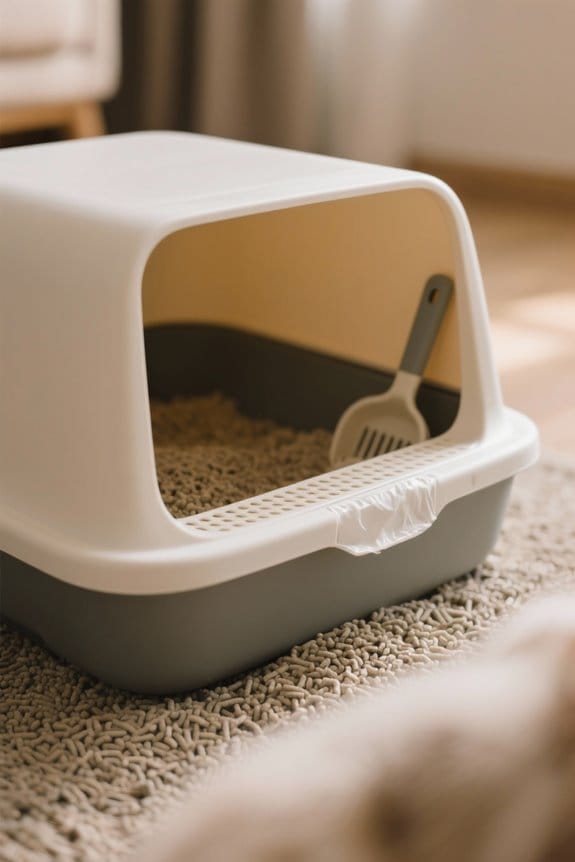
Addressing litter box aversion requires implementing effective strategies that encourage consistent use. We should guarantee our litter boxes are large enough, ideally 1.5 times the length of our cat, and placed in quiet, low-traffic areas. Maintaining clean litter boxes is essential; we must scoop daily and thoroughly clean with unscented soap weekly to mitigate odor. Experimenting with different litter types is vital, as the cat feels more comfortable using fine-grained, unscented options. Additionally, we should provide at least one box per cat plus one extra to minimize territorial disputes. Using positive reinforcement after our cat successfully uses the box can build their confidence and encourage preferred litter box habits, addressing any potential litter box problem effectively. Consider investing in top entry designs that provide privacy while reducing litter spillage, which can make the litter box experience more appealing for cats who prefer enclosed spaces.
Creating a Stress-Free Environment for Your Cat
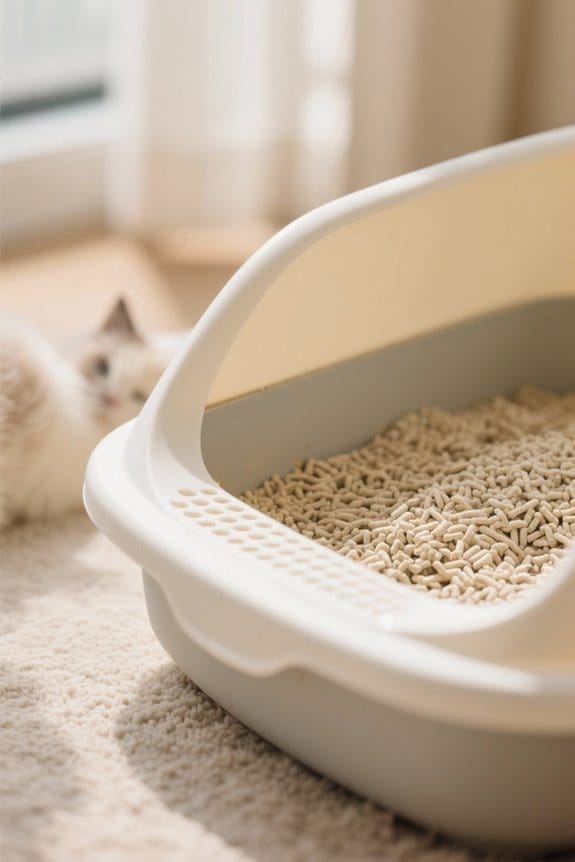
Creating a stress-free environment for our cats is fundamental to their overall well-being and can markedly reduce the likelihood of litter box aversion. To achieve this, we should provide multiple litter boxes in different locations, which minimizes territorial disputes and guarantees accessibility, especially in multi-cat households. Regular cleaning of litter boxes, encompassing daily scooping and thorough weekly cleanings, is essential to maintain hygiene, preventing elimination problems linked to unpleasant conditions. Using unscented, fine-grained litter and avoiding covered boxes makes these spaces inviting. Additionally, adhering to a consistency routine and minimizing environmental changes fosters security, while blocking distractions and employing pheromone diffusers can create a calming environment, effectively reducing anxiety for cats and promoting healthy elimination habits. Modern litter box designs with privacy lids or top-entry configurations can provide cats with the sense of security they need while still maintaining the accessibility that reduces stress-related avoidance behaviors.
Frequently Asked Questions
How to Fix Cat Litter Box Aversion?
To fix cat litter box aversion, let’s guarantee litter box cleanliness, consider environmental factors, compare litter types, address territorial issues, place boxes strategically, and use positive reinforcement to encourage our cats’ comfort and reduce stress.
What Is Litter Box Syndrome?
Litter Box Syndrome’s a perplexing puzzle involving cat behavior, stress factors, and hygiene concerns. We must consider feline instincts, territorial issues, and environmental triggers while using effective training techniques to improve our kitty’s litter preferences.
Is There a Health Problem if a Cat Avoids a Litter Box?
Yes, a cat avoiding the litter box could indicate health issues like urinary infections or gastrointestinal distress. We should also consider environmental stressors, anxiety disorders, and litter preference. Vet consultations are vital for proper assessment and cleanliness.
What Is the Litterbox Rule?
We’ve all heard of the Litterbox Rule—one box per cat, plus one for good measure! It’s about catering to those finicky litter box preferences to manage territorial issues and guarantee exceptional cat hygiene. Sounds glamorous, right?