As an Amazon Associate, we earn from qualifying purchases. Some links on this site are affiliate links at no extra cost to you. Our recommendations are based on thorough research and editorial judgment.

How to Create a Multi-Cat Litter Box Station

To create an effective multi-cat litter box station, we need at least one box per cat, plus one extra, ensuring proper accessibility. Position the boxes in visible, low-traffic areas, at least 12 inches away from walls, and avoid clustering them together. Choosing boxes that measure at least 20 inches wide and 6 inches deep is essential for comfort. Employ unscented, clumping litter, and establish a routine for daily cleaning to maintain hygiene. Additional strategies await to optimize your setup further.
Key Takeaways
- Provide one litter box per cat plus one extra to accommodate their needs and territorial behaviors.
- Ensure boxes are located on every floor and in varied, quiet areas to encourage frequent use.
- Select appropriately sized boxes, at least 1.5 times the length of your largest cat, to ensure comfort and access.
- Use unscented, clumping litter and maintain a regular cleaning schedule for optimal hygiene and odor control.
- Gradually introduce boxes with positive reinforcement and monitor usage to adjust locations or quantities as needed.
Importance of Multiple Litter Boxes
You may be interested


In a multi-cat household, the necessity for multiple litter boxes cannot be overstated. The general recommendation is to provide one litter box per cat, plus one extra, ensuring that every cat has access to adequate options. For instance, if we have four cats, we should implement a minimum of five boxes. Placing these boxes on each floor of a multi-story home increases accessibility. It’s crucial to maintain a clean environment, as foul odors can deter usage. Regular cleaning prevents territorial disputes and promotes hygiene. Additionally, consider placing boxes at least 12 inches away from walls and avoiding clustering to facilitate easy access. Remember, different cats might prefer different boxes, so varied placements can enhance their comfort and encourage habitual usage. Investing in litter boxes with filters can significantly enhance odor control in multi-cat environments, making the space more pleasant for both pets and owners.
Determining the Ideal Number of Litter Boxes
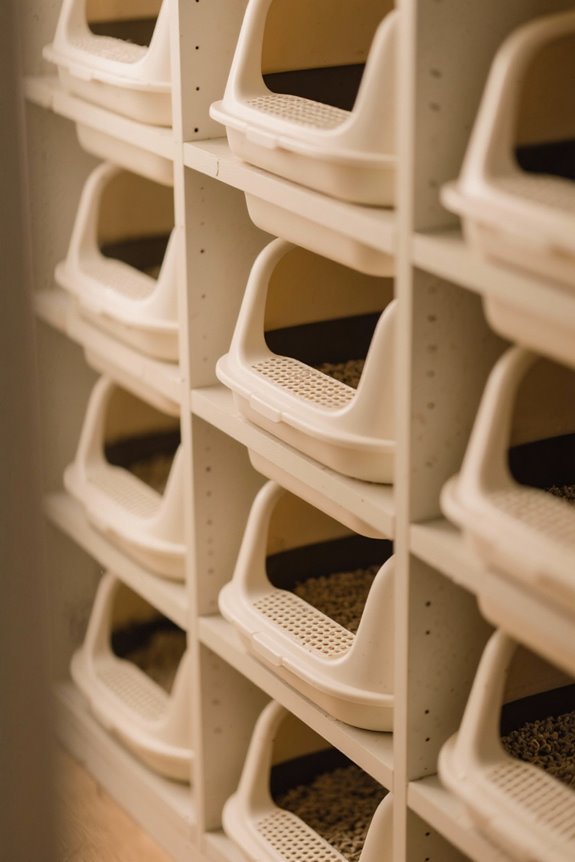
Understanding how many litter boxes to have in a multi-cat household is fundamental for maintaining a harmonious environment. As a general guideline, we should provide one litter box for each cat, plus one additional box; for four cats, this means at least five boxes. If our home has multiple floors, we need to guarantee one litter box is on each level, promoting accessibility. Some cats may prefer different boxes for urination and defecation, so spacing the boxes apart can help prevent territorial disputes. We also recommend placing boxes at least 12 inches from walls to avoid causing stress or discomfort. Regularly monitoring usage is essential, as it allows us to adjust the number of boxes to prevent any signs of territoriality or avoidance. When setting up multiple litter boxes, consider using low-dust or hypoallergenic litters to prevent respiratory issues in homes with several cats sharing the same space.
Optimal Locations for Litter Boxes
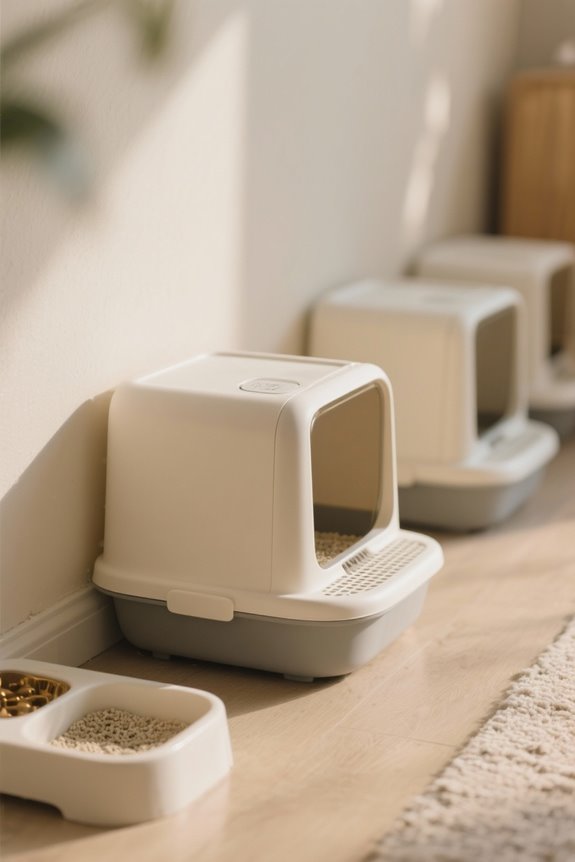
To guarantee a comfortable and functional litter box setup for our multi-cat household, we must strategize the locations of each litter box carefully. First, we should place at least one litter box on each floor of our home to adhere to the recommended ratio of one box per cat plus one extra. Ideal locations include visible, low-traffic areas away from noisy appliances, making certain our cats feel safe. We need to maintain at least 12 inches from walls for easy access, and we shouldn’t cluster boxes closely together to minimize territorial disputes. Additionally, let’s make sure they’re at least a few feet from food and water stations, and if possible, provide easy access via a cat door for our felines. When selecting boxes for these locations, consider models with high-sided designs to limit litter scatter and maintain cleanliness throughout your home.
Choosing the Right Litter Box Size
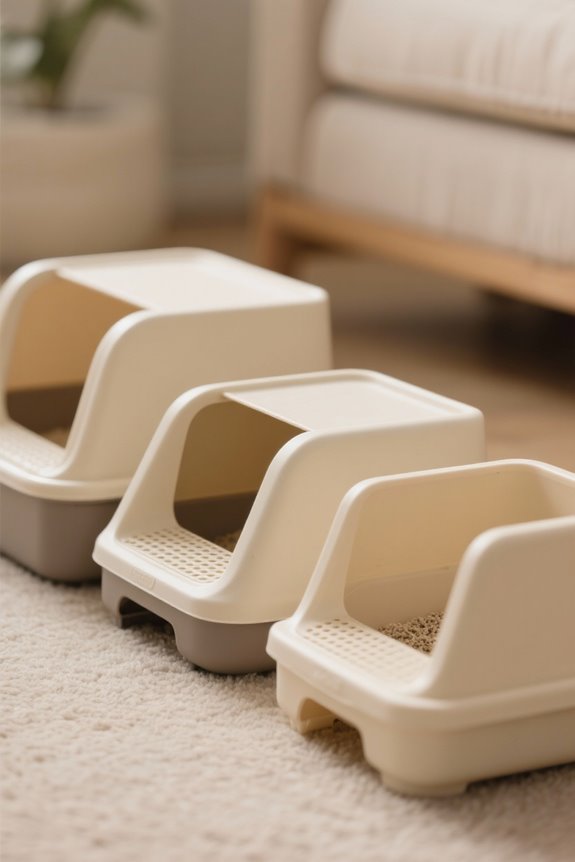
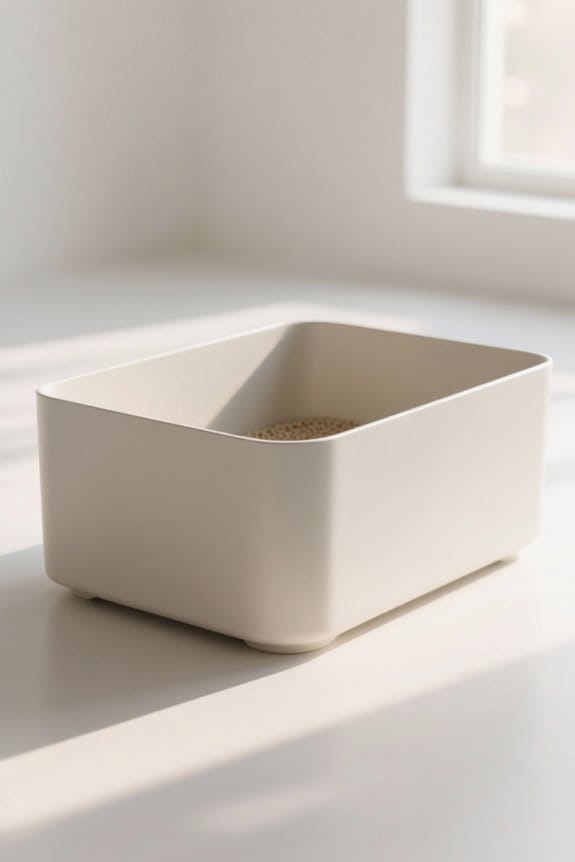
Selecting the right litter box size is crucial for ensuring our cats’ comfort and wellbeing. For multi-cat households, we should select boxes that are at least 1.5 times the length of our largest cat. Each litter box must be at least 20 inches wide, though we recommend opting for boxes that are 24 inches or wider for ideal digging space. Additionally, a depth of at least 6 inches is necessary to contain litter scatter and accommodate larger or older cats’ needs. A standard guideline suggests having one litter box per cat, plus an additional one to prevent territorial disputes. Transparent or lightly colored boxes can also provide a sense of security while our cats use the litter box, helping them feel more at ease. For households with senior or arthritic cats, consider boxes with low-entry designs under 5 inches to facilitate easier access while still maintaining adequate space.
Types of Litter Boxes for Multiple Cats
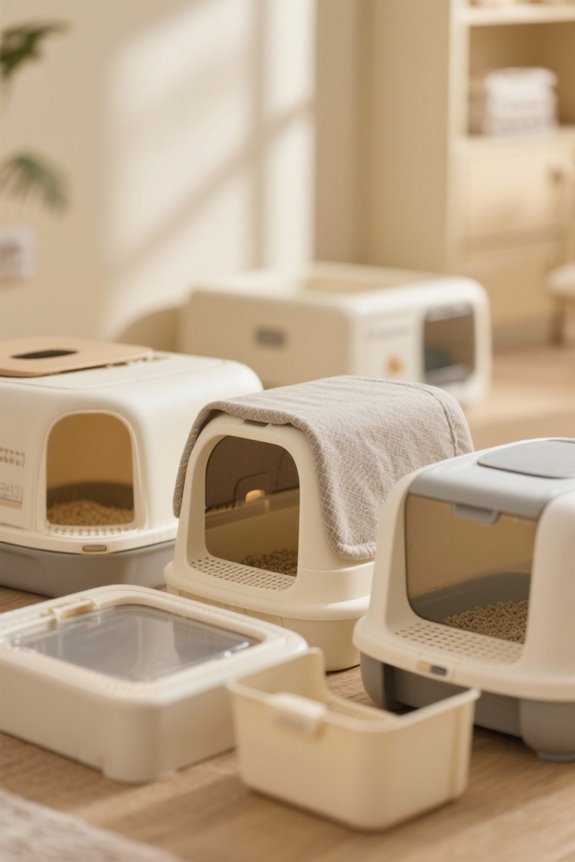
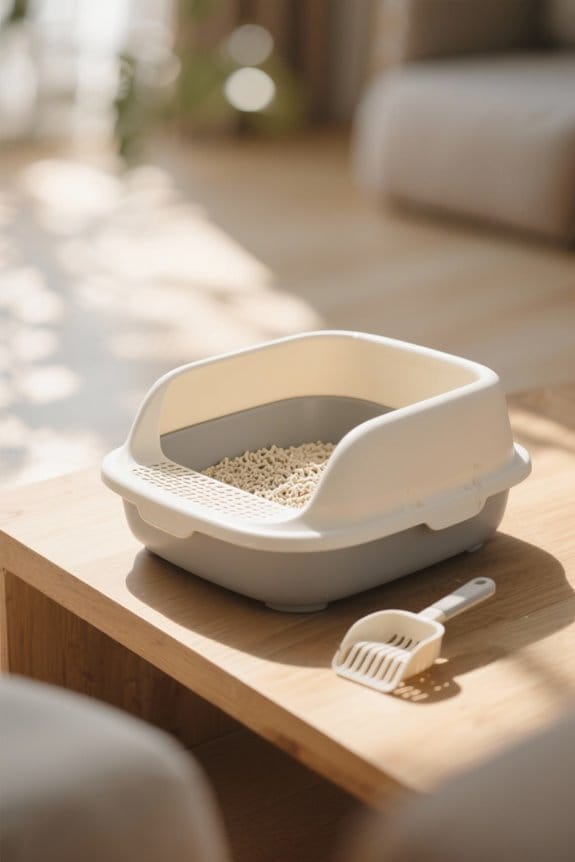
In a multi-cat household, choosing the right types of litter boxes is essential to meet the needs of all feline residents effectively. Ideally, we should provide one litter box per cat plus one additional box, thus avoiding territorial disputes. High-sided or jumbo litter boxes, typically measuring at least 30 inches long, accommodate larger cat breeds, ensuring they have sufficient space. Enclosed litter boxes can enhance privacy while containing odors, making them a suitable option when sized appropriately. For convenience, self-cleaning litter boxes, like the Omega Paw Roll n Clean, reduce maintenance time and help control odors. Additionally, customizable litter boxes crafted from plastic storage bins or repurposed furniture allow us to create tailored, hidden litter solutions for each cat’s comfort. Just as careful portioning is necessary when feeding canned cat food in multi-pet households, regularly assessing each cat’s litter box preferences helps maintain their health and comfort.
Recommended Products

ODOR CONTROL: The easy access flap door seals in odors and keeps particles from spilling onto the floor, ensuring they don't infiltrate your home and keeping the area neat and clean.

【Extra Large Stainless Steel Cat Litter Box】: This XXXL metal cat litter box with lid measures 28"L*20"W*18.1"H, which is much larger than the cat litter boxes on the market. It is specially designed for Maine Coons, Ragdoll cats, large cats and multi-cat households. The spacious space allows cats to move comfortably and can hold 60 liters of cat litter, which is enough for adult cats to use for 60 days. You no longer need to worry about changing the cat litter when you work or travel

HOODED ENCLOSURE: Provides privacy and helps prevent litter scatter and leaks from spraying.
Incorporating Hidden Litter Boxes
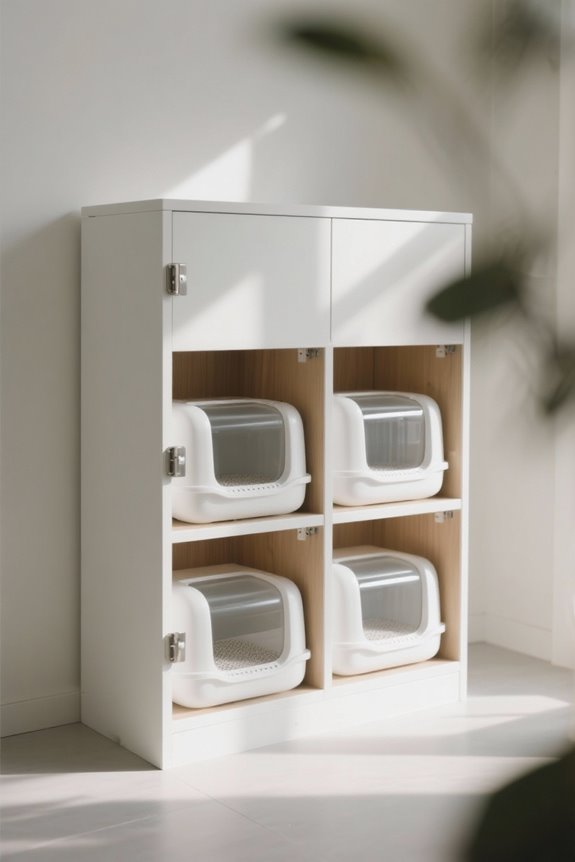
While creating a multi-cat litter box station, it’s essential that we incorporate hidden litter boxes to maintain a serene home environment. Utilizing multi-tiered furniture solutions, such as cabinets or custom-built shelves, can effectively house multiple litter boxes while ensuring accessibility for our cats. We can consider converting underutilized spaces—like a corner of the living room or laundry room—by integrating stylish furniture that complements our home decor. For outdoor access, building a hidden litter box setup with a tunnel connecting to a screened-in porch provides a clean solution without cluttering indoor spaces. It’s vital we implement odor control strategies, ensuring adequate ventilation in these enclosed spaces to minimize scents, while regularly checking hidden locations for cleanliness and proper function. Many enclosures feature double cabinet doors and removable dividers that simplify cleaning access and allow us to service multiple litter boxes efficiently.
Recommended Products

More Privacy and Less Odor: This cat restroom provides your cat with a hidden and relaxing toilet space without the odor and litter, and you can reduce the unpleasant mess

More Private, Less Odor: This wooden cat washroom provides a quiet, hidden space for your cat, is dog-proof, and helps contain unpleasant odors while keeping your home clean and tidy

Simply Modern, Seamless Fit: The CUSTOS Collection features crisp right-angled lines that fits effortlessly into your home. Complete your space with matching storage furniture for a cohesive look
Access and Privacy Considerations
Ensuring access to and privacy for our cats when setting up a multi-cat litter box station is essential for their comfort and wellbeing. We should place at least one litter box per cat, plus one extra, ensuring that these are distributed across various floors for easier access. It’s crucial to position the litter boxes in quieter, low-traffic areas, as busy environments can deter usage. We must maintain at least 12 inches of spacing between boxes to reduce territorial conflicts. Additionally, we can consider adding covers or hoods to some boxes, while remaining aware that certain cats may prefer open designs for airflow. Finally, we should facilitate easy access routes, particularly for older or less agile cats by using lower-sided boxes or ramps. When selecting litter for your station, choosing options with low dust formulas can improve air quality and reduce respiratory irritants for both cats and owners in multi-cat households.
Maintaining Cleanliness and Hygiene
A clean litter box station is essential for our cats’ health and usage, reflecting the overall hygiene of their environment. To maintain cleanliness, we should clean each litter box daily, promptly removing waste to prevent odor buildup. It’s crucial to replace the litter completely every two to four weeks, scrubbing the boxes with mild soap and hot water to eliminate lingering bacteria. We recommend using unscented, clumping cat litter, as it avoids overwhelming our cats’ sensitive noses and promotes regular usage. Additionally, sprinkling baking soda in the bottom of the boxes during litter changes can effectively absorb odors. Finally, ensuring each box has sufficient space—at least 1.5 times the length of our largest cat—promotes comfort, cleanliness, and reduces territorial issues. For multi-cat households, consider filling litter boxes to a depth of 3-4 inches to ensure optimal clumping performance and easier daily scooping.
Odor Control Solutions
To effectively control odors emanating from a multi-cat litter box station, we can implement a variety of strategies and products that enhance cleanliness and create a more pleasant environment. Using scoopable, clumping cat litter made from natural materials, like walnut shells or recycled paper, effectively minimizes odors and simplifies clean-up. We should also incorporate odor-fighting additives, such as baking soda or specialized deodorizers, directly into the litter. Installing a high-quality HEPA air purifier, or choosing carbon-filtered litter boxes, helps trap ammonia and other unpleasant odors, improving overall air quality. For multi-cat households, consider litter boxes equipped with dual odor-locking technology or built-in activated carbon filters that provide advanced odor absorption. Finally, regular maintenance, by cleaning and replacing litter at least once a week, along with washing the litter boxes with mild detergent, guarantees effective odor control solutions.
Recommended Products
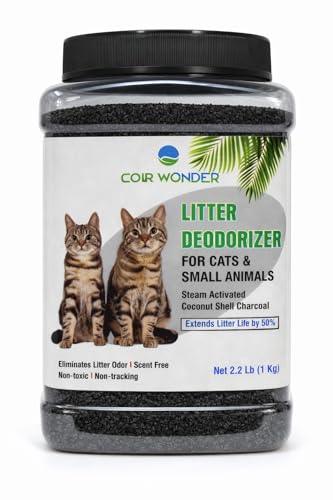
Activated Charcoal from Coconut Shells: Made from high-quality steam-activated coconut charcoal, this natural deodorizer absorbs and traps odor-causing molecules instantly.

【Crush Litter Box Odors Instantly】 Activated-carbon bags lock in ammonia and waste smells before they spread, leaving your home guest-ready and odor-free from day one.

😺Compatibility: Odor eliminator is designed for Hooded Cat Litter Box, set of 12 pieces, activated carbon charcoal bags can trap urine and feces odors in their pores so your home smells clean and fresh.
Educating Your Cats on Box Usage
While introducing our cats to a multi-box litter station, it’s crucial that we approach the process with patience and care, as this allows each cat to acclimate to their environment without unnecessary stress. We should introduce each cat to the litter boxes gradually, letting them explore the different options freely. Positive reinforcement, such as offering treats or praise when a cat uses the litter box, can foster a positive association with these areas. We must also maintain a consistent cleaning routine, aiming for daily scooping to guarantee cleanliness, which encourages usage. Finally, observing our cats for signs of reluctance helps identify potential issues related to cleanliness preferences or stress, guiding necessary behavioral adjustments for ideal comfort. Consider investing in a quality litter disposal system to make daily scooping more convenient and maintain a fresh environment that encourages consistent litter box usage.
Adjusting to Multiple Cat Dynamics
Establishing a harmonious living environment for multiple cats involves understanding their unique social dynamics and guaranteeing resources are adequately distributed. To prevent territorial disputes, we must provide a minimum of one litter box per cat plus one additional box; therefore, for two cats, we should have at least three litter boxes. Position these boxes at least 12 inches away from walls and allow for easy access routes to encourage usage. It’s vital to observe individual cat preferences, as some may prefer different boxes for urination and defecation, requiring strategic placement. Monitoring litter box cleanliness is essential, as cats are sensitive to odors and will avoid dirty boxes. Finally, guarantee boxes are in calm areas away from loud appliances to promote comfort.
Eco-Friendly Litter Options
Choosing eco-friendly litter options is not only beneficial for the environment but can also improve the well-being of our feline companions. We should consider options like Naturally Fresh Quick-Clumping Litter, made from biodegradable walnut shells, or Okocat Less Mess Natural Wood Clumping Litter, which utilizes reclaimed, compostable wood. Another excellent choice is Sustainably Yours Cat Litter
Recommended Products

For Cat and Kitty Litter Box - Naturally Fresh Cat Litter is made from all-natural walnut shells, and this eco-conscious litter neutralizes odors better than clay, pine, corn, and wheat litters.


PREMIUM QUALITY: A combination of premium texture and granule size made with 100% bentonite clay for maximum clumping creates litter particles that are just the right size.
Storage Solutions for Litter and Supplies
How can we efficiently organize our cat litter supplies to guarantee a tidy and functional space? First, we should utilize a sturdy 30-gallon storage bin that can securely hold our litter supplies, providing easy access and sufficient storage for multiple cats. Next, investing in labeled containers or baskets will help us organize miscellaneous supplies, such as scoops, liners, and odor control products, facilitating efficient cleanup. We can also consider installing wall-mounted shelves or cabinets to maximize vertical space, keeping litter supplies off the floor. A rolling cart offers versatility, allowing us to store litter and transport supplies easily. Finally, incorporating a hidden litter box storage bench serves a dual purpose by enhancing decor while discreetly storing litter supplies.
Recommended Products

Portable Design:Cat litter storage bins come with attachable casters so you don't have to pick up heavy litter.Cat litter storage container is collapsible design, with good toughness and can be foldable repeatedly, making it easy to store and efficiently saving precious space whether indoors, outdoors, or during travel.

Portable Design:Cat litter storage bins come with attachable casters so you don't have to pick up heavy litter.Cat litter storage container is collapsible design, with good toughness and can be foldable repeatedly, making it easy to store and efficiently saving precious space whether indoors, outdoors, or during travel.

Food Storage for All Pets: Keep dog kibble, cat dry food, bird seed, pellets, and treats fresh and organized in one versatile 33 Quart container that holds approximately 22–26 lbs of most dry kibble, depending on kibble size—not all 30 lb bags will fit
Frequently Asked Questions
How to Set up Multiple Litter Boxes?
To set up multiple litter boxes, we should guarantee they’re strategically placed throughout our home. For multi-cat households, let’s maintain one box per cat plus one, guaranteeing easy access and reducing territorial disputes.
What Is the Golden Rule for Litter Boxes?
We can’t ignore our cats’ needs. The golden rule is to provide one litter box per cat plus one extra; this helps avoid territorial conflicts and addresses their behavior, especially regarding litter box location in our home.
Why Do Vets Not Recommend Closed Litter Boxes?
Vets often don’t recommend closed boxes due to issues like odor retention, stress for our cats, and insufficient airflow. We should prioritize open boxes for better cleanliness and our cats’ comfort and health.
Can You Put Multiple Litter Boxes Next to Each Other?
Like islands in a vast ocean, our litter box placement must be spaced apart to guarantee cat comfort. Let’s avoid territorial waves and provide our feline friends with their own sanctuaries for peaceful relief.