As an Amazon Associate, we earn from qualifying purchases. Some links on this site are affiliate links at no extra cost to you. Our recommendations are based on thorough research and editorial judgment.

How Seasonal Changes Affect Cat Shedding Patterns

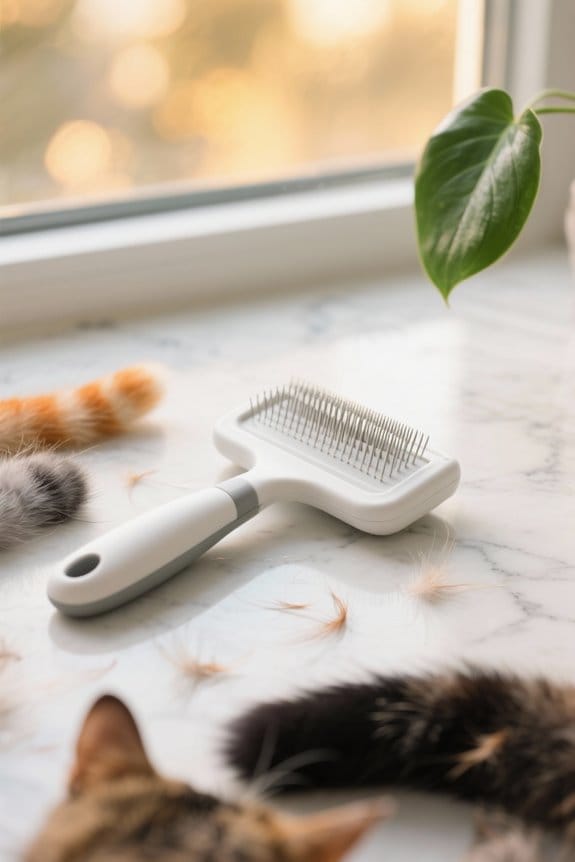
Seasonal changes impact cat shedding patterns markedly, as temperature and daylight fluctuations trigger hormonal shifts. In spring, cats may experience increased fur loss, known as “blowing their coat,” with shedding peaking between April and June. During summer, daily grooming helps manage loose fur and prevent hairballs. In autumn, shedding reduces as cats shift to winter coats, while indoor cats shed less than outdoor ones. Monitoring excessive shedding is essential for identifying health issues, which we will explore further.
Key Takeaways
- Seasonal changes trigger shedding cycles in cats, with significant fur loss typically occurring in spring during the transition to summer coats.
- Rising temperatures and increased daylight in spring accelerate hormonal changes, prompting cats to shed their winter coats more profusely.
- Autumn marks a milder shedding period as cats prepare for their thicker winter coats, resulting in generally less hair loss compared to spring.
- Indoor cats usually shed less than outdoor cats due to consistent climate conditions, affecting their overall shedding patterns each season.
- Regular grooming is essential during shedding seasons to manage loose hair, prevent matting, and maintain coat health regardless of the season.
Understanding the Shedding Cycle in Cats
As we explore the shedding cycle of cats, it’s important to understand that this natural process, which is primarily influenced by seasonal changes, involves a series of distinct phases: anagen, telogen, and exogen. Typically, adult cats experience shedding twice a year, with increased shedding most noticeable in April and October. This renewal of their coat supports temperature regulation as they shift from a winter coat to a lighter summer coat. Environmental cues, such as daylight and temperature shifts, directly trigger these phases. Additionally, coat type affects the amount of shedding; long-haired breeds, such as Maine Coons and Persians, may shed more heavily. Regular grooming can help manage loose hair and reduce the effects of increased shedding during these alterations. Using appropriate de-shedding tools tailored to your cat’s specific coat type can effectively remove up to 90% of loose fur during peak shedding seasons.
The Influence of Temperature on Shedding Patterns
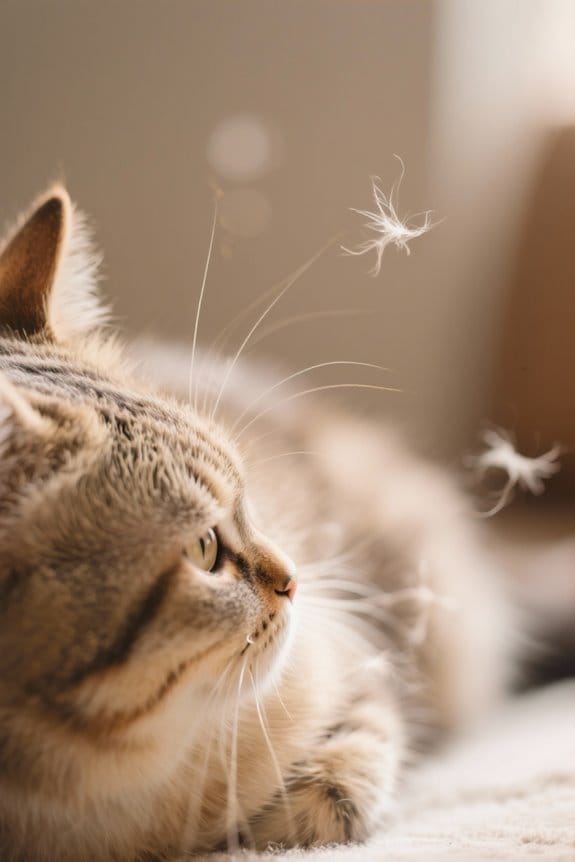
Understanding how temperature influences shedding patterns in cats is essential for effective grooming and overall care. As temperatures rise in spring and summer, cats undergo a biological response, shedding their winter coats to regulate body heat. Increased daylight hours trigger hormonal changes that enhance this process, resulting in a peak in shedding. Typically, we observe significant fur loss during the warmer months, particularly around April and October. However, indoor cats may experience less dramatic shedding due to more stable temperature conditions. The average shedding season lasts about six to eight weeks, influenced by temperature variations and living environments. To manage increased shedding effectively, we should maintain a regular grooming routine to minimize loose fur and promote a healthy coat. Using effective deshedding tools during these peak shedding periods can reduce loose fur by up to 95% and help maintain optimal coat health.
Seasonal Changes: Shedding in Spring
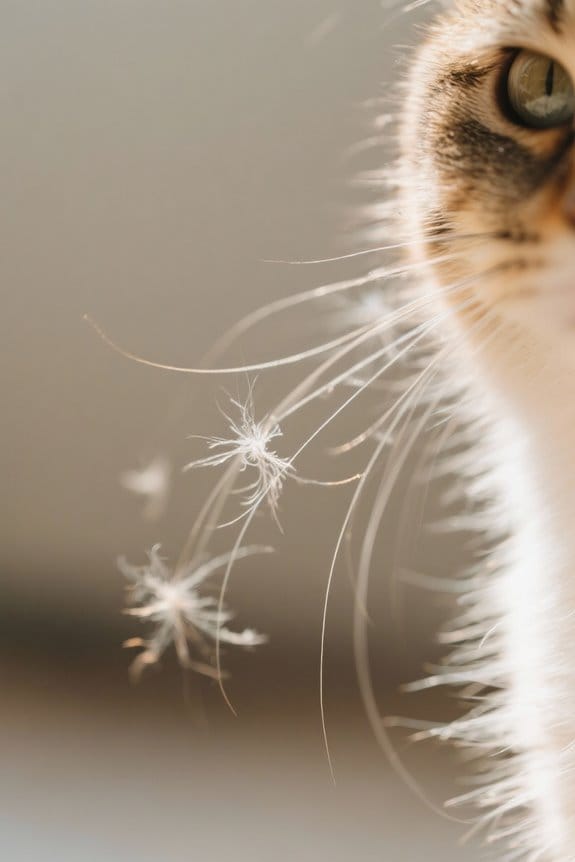
With warmer temperatures and longer daylight hours, spring brings significant changes in cat shedding patterns, primarily due to the biological processes of coat renewal. During this period, cats shed their winter coats to prepare for summer, a process known as “blowing their coat.” Shedding during spring typically occurs between April and June, lasting six to eight weeks, when cats will lose substantial amounts of fur. This increased shedding, triggered by hormonal changes, helps cats regulate their body temperature. Regular grooming is essential to manage this seasonal shedding, as it prevents matting and reduces loose hair accumulation in our homes. Additionally, we may notice behavioral changes, such as excessive grooming, potentially leading to tangles and dandruff if not properly addressed. Using low noise trimmers during this peak shedding season can help reduce your cat’s anxiety while maintaining their coat effectively.
Recommended Products

✄Easy to trim:oneisall cat grooming clippers is easy to trim matted long hair.It uses a safe ceramic blade that is gentle enough on the skin when trimming your cat's long hair,won't irritate your cat's skin.

Professional Pet Clipper: The Wahl Pro Animal KM Supera Cordless Pet Clipper is ideal for pet owners, groomers, and veterinarians

Managing Shedding During Summer Months
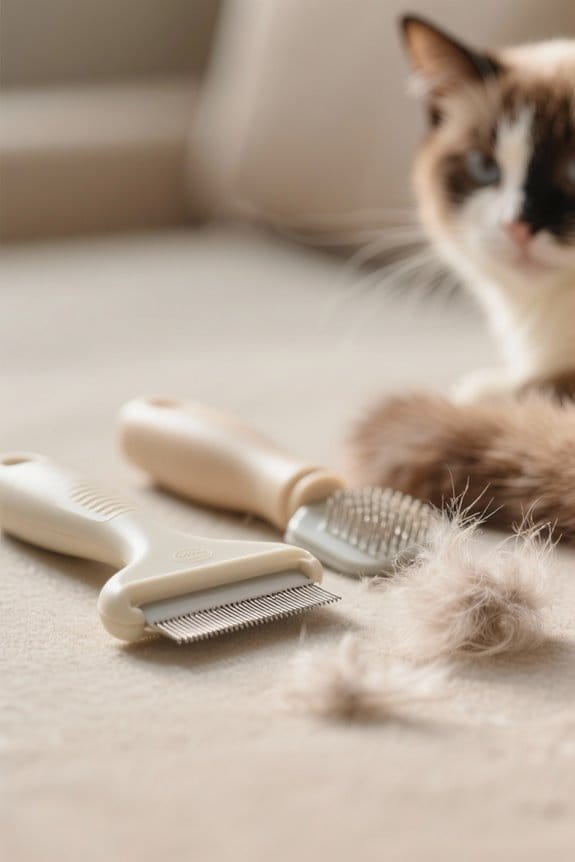
Effective management of cat shedding during the summer months is vital for maintaining both our cats’ comfort and our home’s cleanliness. To combat increased cat shedding, we should engage in daily brushing to remove loose fur and prevent hairballs, which can be detrimental to coat health. Utilizing deshedding tools, like specialized brushes or grooming mitts, is essential; they effectively target the thick undercoat that is shed during seasonal changes. Additionally, ensuring proper hydration and adjusting nutrition can greatly support our cats during this time. A well-balanced diet rich in omega fatty acids may enhance skin and coat health. By committing to these practices, we’ll keep our cats comfortable and our living spaces fur-free during the peak of summer shedding. For those dealing with particularly stubborn mats or heavy shedding, investing in a comprehensive grooming kit with multiple brush types and tools can address various grooming needs efficiently.
Recommended Products

A Better Cat deShedding Tool: FUR4’s patented design is made specifically for Long Hair Cats to remove loose fur and reduce shedding.

All The Essentials: The Catit Shorthair Grooming Kit has been carefully composed to hold every brush and comb you need to tend to your shorthaired cat’s coat. All the tools are packed in a special protective casing, keeping them upright and within reach

【5-in-1 Adjustable Stainless Steel-Ceramic Blade】 FuzzyFix cat clipper feature a new 5-in-1 blade crafted with stainless steel and ceramic. Easily adjust between 0.7/1.3/1.9/2.4/3.0mm lengths for precise and custom pet grooming, ensures exceptional sharpness, rust resistance, and long-lasting performance. It stays cool even during long sessions.
The Transition to Autumn: Shedding Insights

As cats shift into autumn, we notice a significant change in their shedding patterns, indicating a natural preparation for the colder months ahead. During this period, cats begin evolving from their lighter summer coats to a denser winter coat, resulting in autumn shedding characterized by decreased hair loss compared to summer months. Indoor cats may experience a mild reduction in shedding due to stable temperature changes, while outdoor cats adapt more noticeably to environmental shifts. Regular grooming during this phase is essential for managing loose hair and preventing matting; brushing sessions should ideally occur several times a week for best results. Using the right grooming tools, such as slicker brushes for detangling or de-shedding tools for high-shedding breeds, can significantly improve the effectiveness of your autumn grooming routine. This shedding typically lasts about six to eight weeks, allowing our feline companions to adjust gradually in preparation for winter.
Recommended Products

Natural fiber blend: Made with 50% alpaca wool and 50% sheep wool for breathable warmth soft texture and lasting strength.

Ultra-Realistic Turf Grass: XLX TURF artificial grass rug elevates your indoor outdoor space with its 4-tone color and C-shape blades. This 1.38" thick grass mat provides a lush, natural look year-round. Perfect for adding a green touch to your patio, deck, or porch

CLEAN UP ANY MESS IN A JIFFY: Do you want to be able to clean any mess, anytime, super-fast and easy? Now you can with the Fuller Brush electrostatic carpet and floor sweeper! Perfect for the home, office, garage and more, this ultra-efficient cleaner will make any hardwood, tile, wood, low pile carpet or laminate floor sparkle in just a few seconds! And the best part? It is always ready to use for quick touch-ups!
Winter Shedding: Indoor vs. Outdoor Cats
While we observe notable differences in shedding patterns, it’s essential to understand how indoor and outdoor cats uniquely adapt during winter months. Outdoor cats typically develop a thicker coat, insulating them from cold temperatures, resulting in minimal shedding compared to warmer months. In contrast, indoor cats often shed moderately throughout winter, as indoor heating creates dry air, prompting them to lose fur continuously. Regular grooming is vital for both types, as it helps maintain coat health and prevents matting, especially for indoor cats affected by dry conditions. Additionally, we should anticipate that shedding for outdoor cats will increase in early spring when they shift to lighter coats, while indoor cats may continue shedding steadily year-round. Managing excess fur during these seasons becomes easier with tools featuring easy-to-clean components, such as removable mats that simplify maintenance and help keep your home tidy.
Recommended Products

Luxury large cat tree: This cat tree tower features a heavy-duty 39.4 inches wide base and solid wood for unbeatable strength. It easily supports multiple cats up to 150lbs total and handles the largest breeds like Maine Coon and Ragdoll without wobbling or tipping.

Tailored for Large Breeds: Specifically crafted for the "Grand Maine Coon" and other large cats, this five-level paradise offers an expansive environment for climbing and surveying.

This cordless vacuum cleaner, equipped with a 650W brushless motor, generates 55,000Pa of ultra-powerful suction. It effortlessly lifts deep-seated dirt from carpets, stubborn pet hair from sofas and upholstery, and debris from hard floors. Designed for versatile cleaning, this cordless vacuum tackles pet hair, dust, crumbs, and large particles across multiple surfaces with ease.
Grooming Techniques for Seasonal Shedding
Managing seasonal shedding requires employing specific grooming techniques that assure both the cat’s comfort and the cleanliness of our living spaces. During peak shedding months, such as April and October, we should engage in regular grooming sessions, ideally daily, to effectively manage loose hair. Utilizing deshedding tools, slicker brushes, and grooming mitts allows us to remove excess fur while distributing natural oils, promoting a healthier coat. Brushing our cats not only minimizes fur buildup around the home but also reduces the risk of hairballs. Additionally, bathing with cat-safe shampoos can help loosen dead hair and guarantee proper rinsing, which prevents skin irritation. Slicker brushes with fine, coated bristles are particularly effective during these heavy shedding periods as they gently capture loose hair while being safe for sensitive skin. Establishing this routine can greatly enhance the bond between us and our feline companions, fostering a positive grooming experience.
Recommended Products
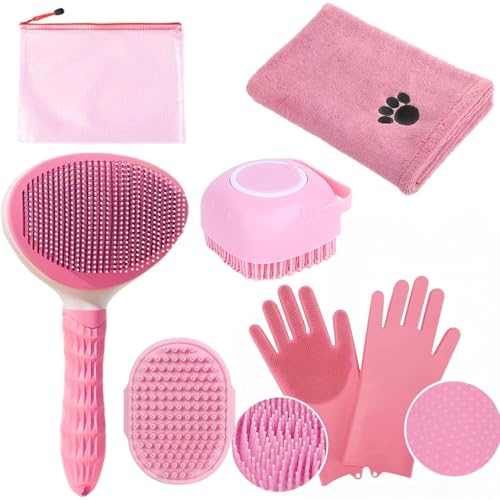
【Professional Deshedding Brush】 Features retractable bristles that gently remove loose hair and untangle knots without irritating skin. Perfect for dogs, cats, and rabbits with all coat types—short, long, straight, or curly. One-button hair release makes cleanup effortless.

The FURminator undercoat tool is suitable for extra large dogs that weight over 41 kg and with a short coat (less than 5 cm hair length)

Stainless steel deShedding edge reaches through topcoat to safely and easily remove loose hair and undercoat
Recognizing Abnormal Shedding and Health Concerns
Recognizing abnormal shedding in our cats is critical for maintaining their health, particularly when excessive hair loss or the emergence of bald patches occur, as these symptoms may signal underlying medical issues. We should closely monitor for excessive grooming behaviors, which can lead to skin irritation and indicate potential health issues, such as allergies or infections. Behavioral changes, including increased anxiety or lethargy, may also accompany abnormal shedding. Additionally, symptoms like dandruff or skin lesions warrant immediate consultation with a veterinarian. A thorough evaluation by a veterinary professional is essential to determine the cause of excessive hair loss and guarantee our cats’ overall well-being, allowing for effective diagnosis and treatment of any underlying conditions. Maintaining proper coat hydration through products containing moisturizing ingredients like aloe vera and oatmeal can help support skin health and reduce excessive shedding related to dryness.
Frequently Asked Questions
Do Cats Shed When Seasons Change?
Yes, we see cat shedding increase as seasons change. Variations in fur texture and breed differences influence our pets’ grooming habits, while indoor environments can trigger allergies, impacting nutrition and temperature regulation, alongside potential health indicators and behavioral changes.
Does Weather Affect Cat Shedding?
Sure, we’re shocked to discover weather affects cat shedding! Temperature impact, humidity levels, and daylight hours play huge roles. Breed differences and health alongside our grooming habits and stress factors shape how much cat fur we find!
Do Seasonal Changes Affect Cats?
Seasonal changes impact our cats’ behavior, fur types, and grooming needs. Climate variations, humidity levels, and nutrition can influence heat cycles and seasonal allergies, affecting their overall health and comfort in indoor environments.
What Is Molting Season for Cats?
Molting season for us cat owners feels like a furry apocalypse! The molting process increases shedding frequency, influenced by hormonal changes, fur texture, and environmental factors. Regular grooming techniques help manage health indicators, differing by breed and indoor versus outdoor cats.