As an Amazon Associate, we earn from qualifying purchases. Some links on this site are affiliate links at no extra cost to you. Our recommendations are based on thorough research and editorial judgment.

Why Location Changes Stress Cats: Litter Box Psychology

Cats experience stress from location changes due to their territorial nature and dependence on familiar scents. When we relocate or alter a litter box’s position, we disrupt their sense of security. This can lead to behaviors like litter box avoidance, increased hiding, or aggression. To mitigate this, we recommend placing litter boxes in quiet, low-traffic areas, ensuring each cat has its own box plus one extra. Monitoring their behavior during changes will help us identify any stress-related issues, and further insights await.
Key Takeaways
- Cats are territorial animals, and changes in their environment can disrupt their sense of security and increase stress levels.
- Environmental changes often lead to litter box avoidance or inappropriate elimination behaviors, reflecting heightened anxiety.
- Providing familiar items in their new space helps restore a sense of comfort and security for cats during transitions.
- Multiple litter boxes in quiet areas reduce resource competition and encourage appropriate elimination behaviors in multi-cat households.
- Consistent cleaning routines and familiar litter materials enhance comfort, minimizing stress related to litter box usage in new locations.
Understanding Feline Territoriality
Understanding feline territoriality is essential for ensuring a harmonious living environment for both cats and their owners. Cats are inherently territorial, relying on their environment to feel safe and in control. When significant alterations occur, like rearranging furniture or introducing new pets, stress levels can rise, potentially leading to behavioral problems such as avoidance of the litter box or marking behavior. In multi-cat households, this stress can be exacerbated by competition for resource access. To minimize territorial disputes, we should provide clearly defined safe spaces for each cat, ensuring they have private areas with adequate resources. During particularly stressful transitions, calming treats with pheromones can help reduce anxiety-related behaviors and support your cat’s adjustment to environmental changes. By recognizing and respecting their boundaries, we can help reduce stress and promote effective litter box use, fostering a more peaceful coexistence among our feline companions.
The Impact of Change on Cat Behavior
When a cat experiences changes in its environment, whether it’s a relocation, the introduction of new pets, or modifications within the household, the effects on its behavior can be profound and alarming. Cats are territorial by nature, and these environmental changes can induce stress or anxiety. This often results in litter box problems or inappropriate elimination, as their sense of security is disrupted. We should monitor behavior closely after moving to a new location, as stress may manifest in altered habits. To alleviate discomfort, it’s essential to provide a comfortable space, filled with familiar items, like their litter box and food, which can help restore their sense of stability and facilitate a smoother adjustment to their new environment. During transitions, maintaining proper hydration through wet food can support your cat’s overall health and help reduce stress-related complications.
Signs Your Cat May Be Stressed by Litter Box Relocation
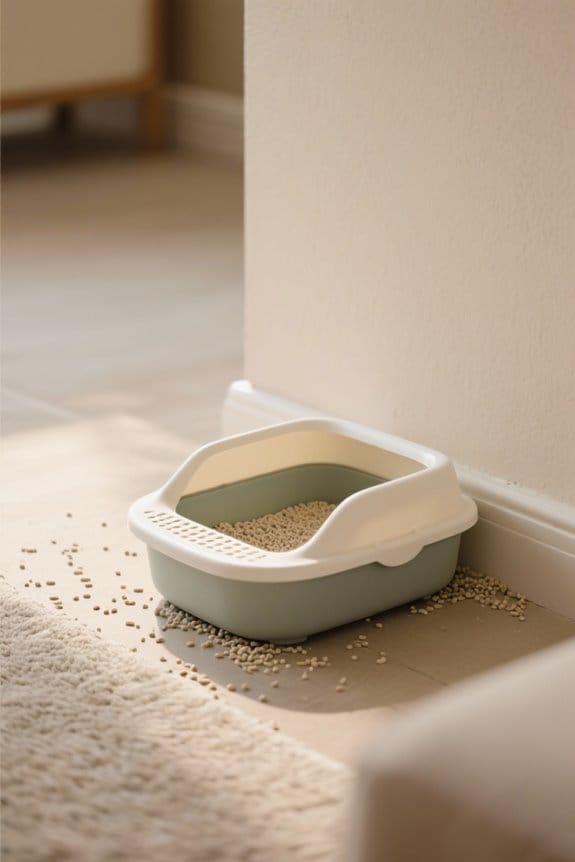
Several signs may indicate that a cat is stressed following the relocation of its litter box, and recognizing these symptoms is vital for addressing potential issues. We should monitor for behavioral changes, such as increased hiding or aggression, which could signal anxiety related to the new location. Additionally, if we notice our cat avoiding the litter box altogether or eliminating in inappropriate areas, it’s important to take these behaviors seriously. Environmental changes, like noise or visibility from the new spot, can heighten stress levels. Vigilance is necessary, as these signs indicate that our cat may need a more gradual relocation strategy or adjustments to their litter box environment. Prioritizing our cats’ comfort can help mitigate their stress. When selecting a replacement box, consider features like built-in odor control and appropriate sizing to ensure the new setup meets your cat’s needs and encourages acceptance of the relocated space.
Ideal Litter Box Locations for Cats
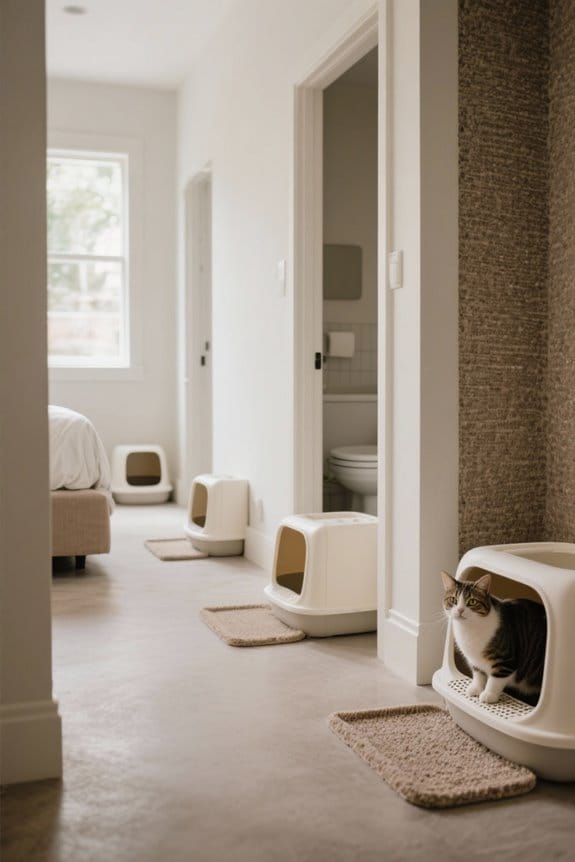
Choosing the ideal location for a litter box is vital to guaranteeing that our cats feel safe and comfortable while using it. We should place litter boxes in quiet, low-traffic areas away from their food and water bowls, as this separation minimizes discomfort during elimination. Each cat should generally have its own litter box, plus one extra, to reduce competition and conflict. The litter box should offer a clear view of exits and entrances, allowing our cats to monitor their surroundings, consequently preventing stress. Accessibility is important, especially for elderly or physically limited cats; as a result, we need to make certain the boxes are easy to enter and exit, promoting consistent usage without anxiety or difficulty. For homes where visual privacy is a concern, litter box enclosures can provide cats with the seclusion they need while helping to contain odors and reduce litter scatter.
Recommended Products

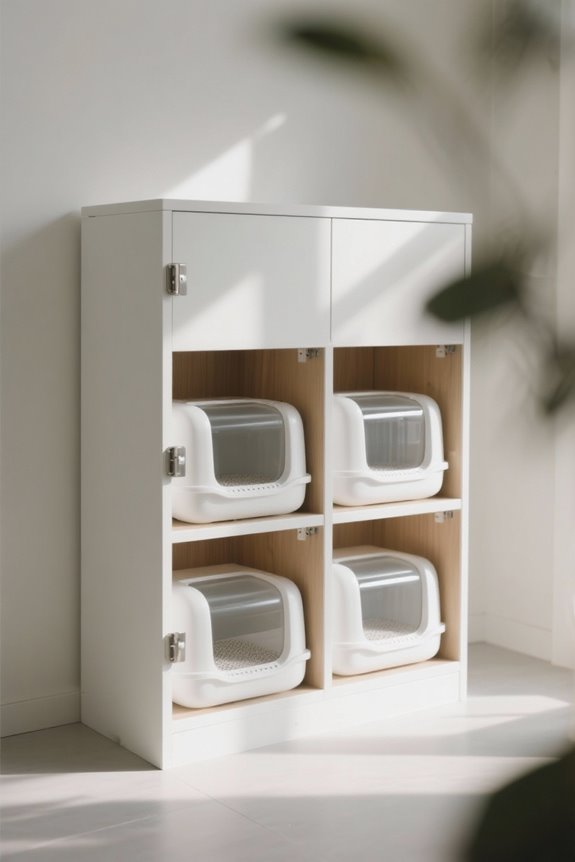
🐾 Versatile: Can be used as a TV Unit, or a Hallway Storage Cabinet, or even as a Cat Litter Cabinet!

Multi-functional Design: Say goodbye to clutter and hello to versatility! Our cat house doubles as a hidden litter box enclosure and a stylish storage cabinet, perfect for organizing your living room, bedroom, or bathroom.

【Please Confirm the Size Before Purchasing】This self-cleaning litter box enclosure is specially designed for large-sized automatic litter boxes, and it has a generous overall size. Please measure your placement space carefully before ordering to make sure the fit works for you. Due to the height of the front door panel, we recommend tilting the Cat Robot slightly when placing it inside the enclosure.
Managing Multi-Cat Households During Relocation
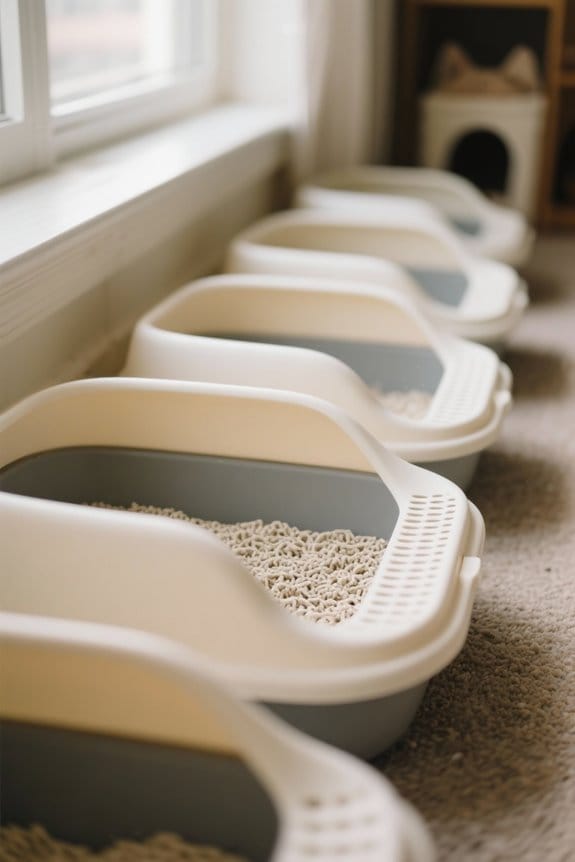
Relocating to a new home can be particularly challenging for multi-cat households, as the change in environment often leads to heightened stress levels among our feline companions. To effectively manage this shift, we should provide multiple litter boxes—ideally one per cat plus one additional—for reducing resource sharing issues and potential competition. It’s also important to allow our cats to explore the new space gradually, one room at a time, which helps minimize disturbances to their established territory. Maintaining consistent cleaning routines for litter boxes, alongside familiar scents like bedding or toys, establishes a comforting environment. This method reinforces their sense of security, allowing for a smoother shift and lowering the likelihood of litter box avoidance behaviors. Investing in a cat litter disposal system with effective odor control features can further support a clean and stress-free environment during this transition period.
Recommended Products

5-LAYER PROTECTION: These super absorbent pads include 5 layers. First, a non-woven quilted top layer that prevents splatters and tracking around the home. Next, a pulp and polymer sandwich, which instantly turns liquids into a gel, and lastly, a waterproof backing film on the bottom to make cleanup a breeze and protect your precious floors.

AI Dual Cameras: See both inside and outside the litter box with dual cameras, so you always know what your cat is doing—from entry to exit, in one complete view

Complete smart litter box bundle: Get all the essentials in one value-packed bundle; includes the AI automatic litter box, plus 3 rolls of cat waste drawer liners, 2 activated carbon filters, 1 waterproof cat litter mats, and 1 litter trapping mats; get a complete setup for a cleaner home, easier maintenance, and long-lasting odor control right out of the box
Tips for Transitioning Litter Boxes Smoothly
When shifting to a new litter box, it’s essential to create an environment that promotes comfort and familiarity for our cats. We should begin by placing the new litter box in a quiet, easily accessible area, avoiding locations near food or water bowls and high-traffic zones. To facilitate adjustment, we can keep the old box available, allowing our cats to acclimate to the new box at their own pace. Using the same type of litter in both boxes will maintain consistency. Initially, positioning the new box near the old one can assist in this gradual introduction. It’s important to monitor behavior closely, making adjustments to location or accessibility as necessary to enhance our cat’s comfort during this adjustment. For cats in compact living spaces, consider options with ergonomic corner designs that maximize available floor area while maintaining accessibility.
Recommended Products

🏠[2-In-1 Robot Vacuum and Mopping]: Use iMartine mopping robot vacuum cleaner to quickly remove dust, paper scraps, and other debris, and experience the ultimate cleaning convenience. The design of the non rolling brush suction port achieves tangle-free and is equipped with a 230ml electronic control water tank to ensure uniform water seepage, suitable for all hard floors, such as reinforced wood flooring, ceramic tiles, granite, parquet flooring, etc.

【106L Extra-Large Capacity For All Cats】Robotail cat litter box features an extra-large 106L capacity, offering a spacious and cozy area that easily accommodates 3-4 cats sharing at once. It fits all felines weighing between 3.3-30 pounds, letting them step in, dig, and turn around freely with zero hassle. This cat litter box perfectly meets the daily needs of multi-cat households

NO-BEND CAT LITTER BOX: Clean without bending, kneeling, or straining. Raised to knee height to reduce back pain, joint stress, and daily discomfort from floor-level litter boxes.
Recognizing Medical Issues Linked to Stress
Recognizing the signs of medical issues linked to stress in our cats is vital for maintaining their well-being, especially following significant life changes. Stressful situations, such as relocating, can lead to medical problems like urinary tract infections, causing increased urgency and avoidance of the litter box. We should remain vigilant for signs of discomfort, including painful urination, which may indicate Feline Interstitial Cystitis. Additionally, stress can exacerbate existing health issues, such as kidney disease or diabetes, resulting in increased drinking and urination. Gastrointestinal issues may arise, leading to reluctance in using the litter box due to painful bowel movements. Monitoring changes in elimination behavior is important, as they may signal underlying medical problems requiring veterinary intervention. Stressed cats may also develop flea infestations, which can cause excessive scratching, hair loss, and further behavioral changes that compound their anxiety during relocation.
Addressing Environmental Stressors
To effectively address environmental stressors that can disrupt our cats’ well-being, we must first recognize the factors that contribute to their anxiety. Environmental changes, such as renovations or new pets, often provoke stress, leading to litter box avoidance and changes in elimination habits. We can mitigate this by providing a separate, quiet space that includes essential resources such as a litter box, food, and water. This designated area can foster a sense of security amidst the changes. Additionally, monitoring our cats as they adjust to these alterations in their environment is vital. By gradually reintroducing them to the modified surroundings, we can reduce their stress and prevent potential litter box problems that may arise from anxiety. Modern automatic litter boxes with motion sensors and quiet operation under 35 dB can help minimize additional stress during environmental transitions by maintaining consistent cleaning routines without startling anxious cats.
Cleaning Strategies for Previously Soiled Areas
Although addressing litter box issues can be challenging, implementing effective cleaning strategies for previously soiled areas is critical for preventing recurrence of inappropriate elimination. First, we should use enzymatic cleaners specifically formulated for urine odors, as they eliminate the organic matter causing lingering scents. Soak any soiled items in these cleaners before laundering to guarantee they are thoroughly cleaned. It’s essential to avoid ammonia-based cleaners; their scents can mimic urine, encouraging cats to revisit those areas. We’ll need to monitor these locations closely for any signs of recurrence, as this vigilance helps us identify possible areas for further intervention. Additionally, establishing an appropriate litter box setup that appeals to cats may further deter unwanted behaviors in the future. Consider using plant-based odor eliminators near the litter box area to maintain a fresh environment while ensuring safety for your cat.
Recommended Products

Fall in love with your cat(s) all over again: Experience unparalleled freshness with Purrified Air, the leading Cat Litter Box Air Purifier for Cat Litter Smell brand. Our unique litter box filter media targets and neutralizes cat odors, dust, and dander, ensuring your home remains odor-free and welcoming. More litter box air filter media (2.2 pounds) and more air flow (53 cubic feet per minute) put us head and shoulders above the competition.

EVERY PURCHASE SAVES PETS. BISSELL proudly supports BISSELL Pet Foundation and its mission to help save homeless pets.

Large Coverage (3000 ft²): The T555 efficiently purifies 3000 ft² once per hour (CADR: 205 CFM / 350 m³/h). Perfect for large bedrooms and living rooms.
Enhancing Cat Comfort in New Spaces
Creating a comfortable environment for our cats in new spaces is vital, especially as they can be sensitive to changes. To reduce stress, we should designate a quiet area for the litter box, ensuring it’s accessible and away from high-traffic zones. This positioning helps our cats feel secure and encourages them to use it. Utilizing familiar litter materials can also enhance comfort, as cats have specific preferences regarding texture and scent. It’s important to maintain a consistent routine for litter box cleaning and placement during the shift to the new space. Allowing our cat to explore at their own pace further minimizes anxiety, fostering a sense of security and making them more likely to use the litter box without hesitation. For larger cats, selecting a box with high-sided designs can help contain litter and provide the extra space they need to move comfortably.
Recommended Products
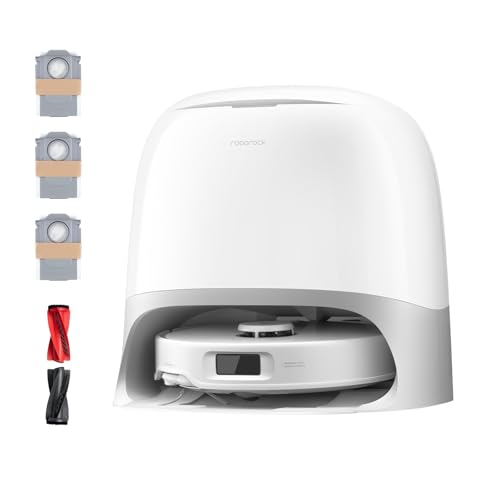
Dual Zero-Tangling System: The Qrevo Curv S5X robot vacuum adopts a revolutionary dual anti-tangle system with a main and side brush, minimizing hair wrap and ensuring efficient, low-maintenance cleaning in pet-friendly homes

ThermoHub Self-Cleaning Mop Technology: Adopts 100℃ PTC heated washboard to high-temperature clean mop pads. Dissolves greasy stains, suppresses odor and keeps mop sanitary with zero manual work.

19,000Pa Suction Quietly Captures Tiny Dust and Large Debris: Boasting the sixth-generation TurboForce high-speed motor, 19,000Pa Vormax suction offers powerful debris pickup from floor gaps and carpets. Its motor minimizes the noise level for a quiet, comfortable cleaning experience.
Frequently Asked Questions
Does Location of Box Matter to Cats?
Absolutely, the litter box placement matters to cats. We should observe stress indicators and behavioral patterns, considering box accessibility and hygiene preferences. Environment changes can provoke cat anxiety, leading to territorial disputes or aversion to litter types.
Why Do Cats Suddenly Change Where They Sleep?
Cats suddenly change where they sleep due to various environmental stressors, behavior triggers, and health concerns. Their feline instincts push them to find safe spaces, marking new territory, and seeking comfort zones as anxiety indicators arise.
What Is the 3-3-3 Rule of Cats?
The 3-3-3 rule outlines cat adaptation phases: three days of moving anxiety signs, three weeks for behavioral adjustment methods, and three months for establishing litter box preferences and comfort zones in their new environment. Let’s support them!
What Is a Red Flag Behavior in Cats?
Red flag behaviors in cats include aggression triggers, litter box issues, and grooming changes. We should watch for stress signs like fear responses and changes in play behavior or feeding routines, as they indicate underlying problems.