As an Amazon Associate, we earn from qualifying purchases. Some links on this site are affiliate links at no extra cost to you. Our recommendations are based on thorough research and editorial judgment.

How Many Litter Boxes Should You Have Per Cat?

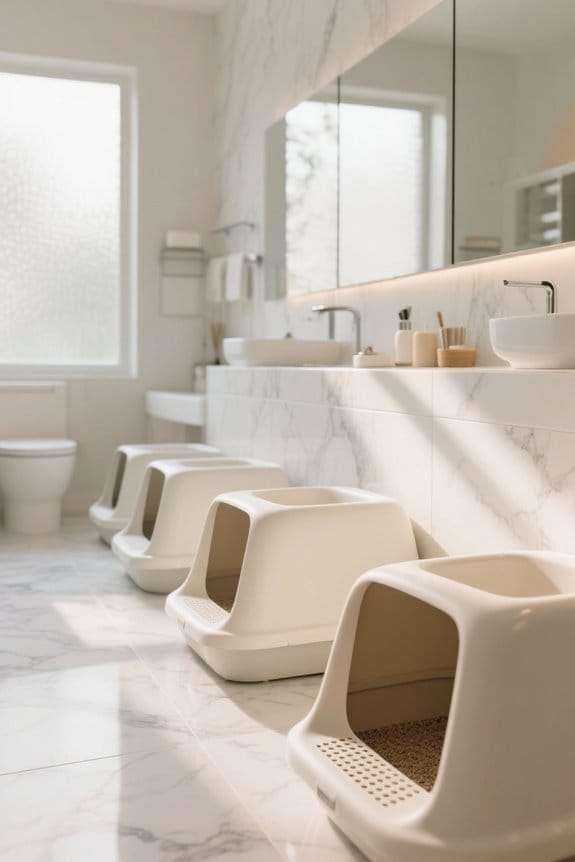
To promote ideal litter box usage, we should have one litter box for each cat, plus one additional box for comfort and accessibility. This means if you have two cats, you need three boxes. Each box should be at least one and a half times the length of your cat to guarantee sufficient space. Additionally, regularly monitor and maintain these boxes for cleanliness, as doing so can help prevent accidents and health issues. Further insights about litter box positioning and materials await.
Key Takeaways
- Each cat requires one litter box plus an additional one for comfort and accessibility, following the one-plus-one rule.
- In multi-cat households, the total number of litter boxes should equal the number of cats plus one extra.
- Place litter boxes in different locations to reduce territorial disputes and promote individual comfort.
- Ensure that litter boxes are at least one and a half times the length of the cat for adequate space.
- Regular maintenance, including daily scooping and biweekly litter replacement, is vital for hygiene and optimal usage.
Understanding Cat Behavior and Litter Box Needs
When considering our cats’ litter box needs, it is essential to recognize that each cat typically requires one litter box, plus an additional one for ideal comfort and accessibility. This means we should have multiple litter boxes in our homes, especially when caring for two cats, making a total of at least three boxes necessary. The presence of multiple boxes helps alleviate territorial disputes between cats, minimizing the stress associated with competition over a single box. Each litter box should measure at least one and a half times the length of the cat to guarantee adequate space for movement. Providing different types of litter in each box can also cater to individual preferences, enhancing our cats’ overall litter box satisfaction and compliance. For senior cats with mobility challenges, boxes with low-entry designs under 5 inches can make accessing multiple litter stations throughout the home much easier and more comfortable.
The One-Plus-One Rule Explained
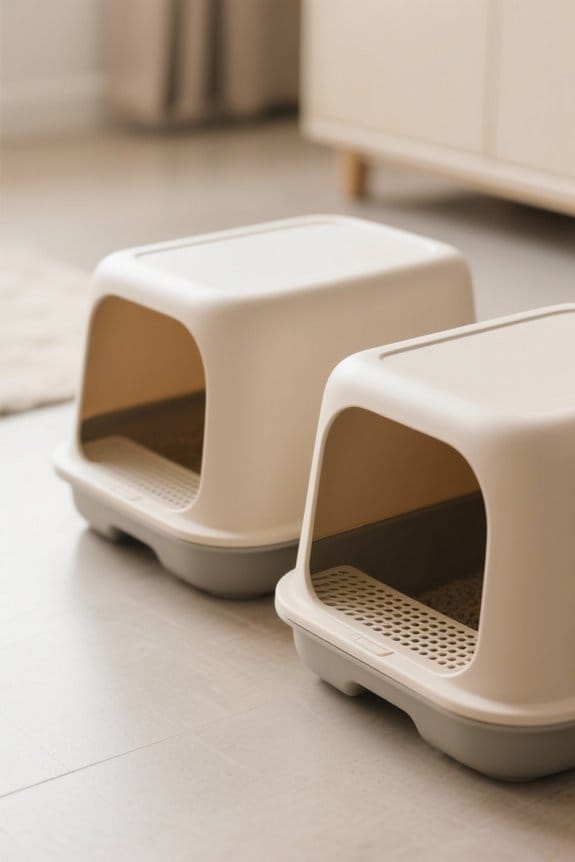
To maintain a harmonious environment for our feline companions, understanding the “One-Plus-One Rule” is vital for any cat owner. This guideline dictates that for each cat in the household, there should be one litter box plus an additional box, totaling two for one cat, three for two cats, and so forth. Implementing this rule helps guarantee that each cat has access to a clean, private space for elimination, thereby minimizing territorial disputes and associated stress. Additionally, having extra litter boxes can prevent inappropriate elimination and reduce competition for resources. We should place these boxes in various locations throughout the home, especially making sure at least one box on every level for easy access, essential for older cats and those with mobility challenges. Regular maintenance is critical to uphold litter performance and odor control promises, ensuring that each box remains inviting and hygienic for your cats.
Importance of Accessibility in Litter Box Placement
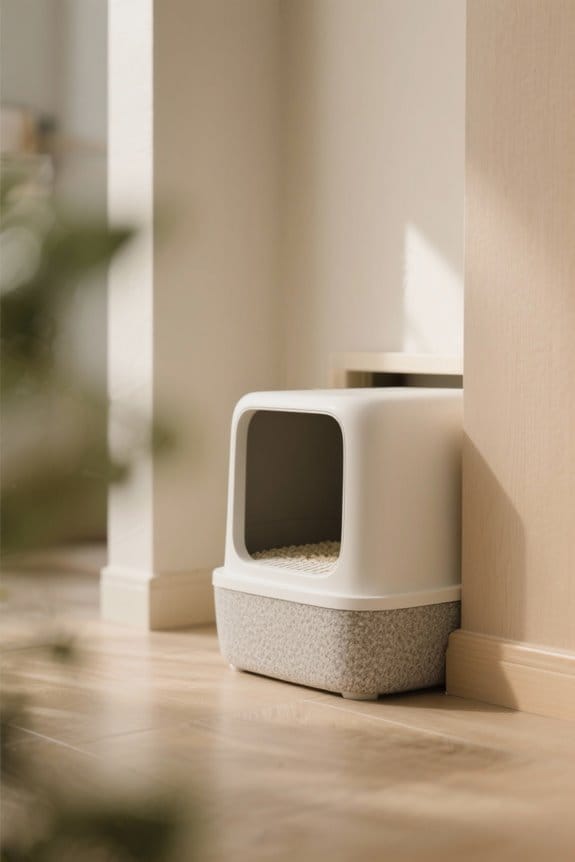
Accessibility in litter box placement is vital to guaranteeing our cats can comfortably and effectively meet their elimination needs. In homes with multiple levels, it’s important to place one box on each floor, as this allows older or physically challenged cats to access a litter box without the need to navigate stairs, which may pose challenges. Additionally, we should position boxes in quiet areas, away from high-traffic zones, offering a serene environment for our cats. Avoid placing litter boxes side-by-side; instead, distribute them throughout different locations to encourage regular use. Following these guidelines not only helps prevent stress but guarantees that each cat can find a box promptly, thereby promoting favorable elimination behaviors and overall well-being. For cats experiencing anxiety related to environmental changes or stressful situations, consider using calming treats with probiotics to support both their emotional comfort and digestive health during the adjustment period.
Ideal Number of Litter Boxes for Single-Cat Households
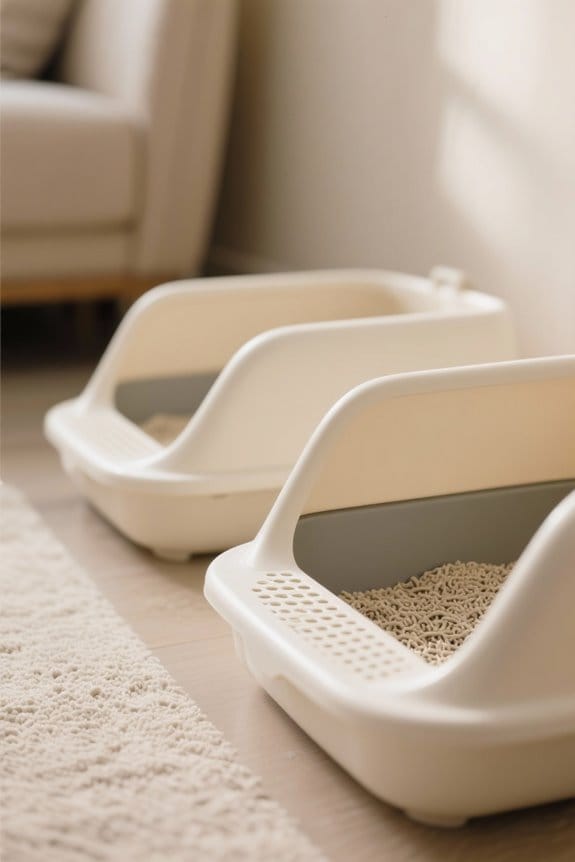
In single-cat households, we recommend having at least two litter boxes to provide ideal options for elimination, greatly enhancing our cat’s comfort and well-being. This quantity allows our feline companion to have a choice, reducing potential stress associated with territorial disputes. It’s important to place the second litter box in a separate location, ensuring accessibility based on our cat’s preferences. For optimal hygiene, regular cleaning of both litter boxes is vital; dirty boxes may deter use and lead to inappropriate elimination behaviors. Adhering to the guideline of one litter box per cat plus one extra greatly meets our cat’s instinctual needs, thereby promoting their overall health and happiness. Consider using litter box enclosures that provide privacy while controlling odors and reducing litter scatter, with many models featuring ventilation holes and easy-access designs for simplified maintenance.
Recommended Products

🐾 Versatile: Can be used as a TV Unit, or a Hallway Storage Cabinet, or even as a Cat Litter Cabinet!

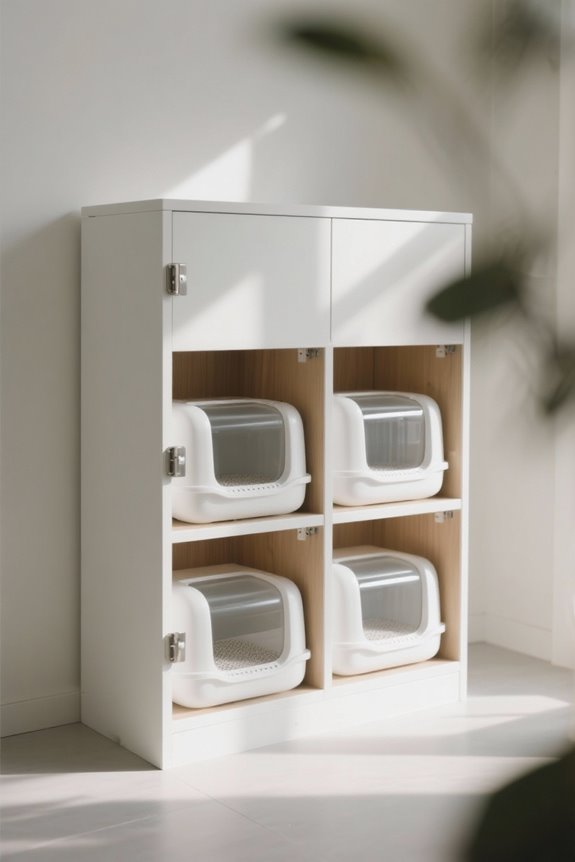
Multi-functional Design: Say goodbye to clutter and hello to versatility! Our cat house doubles as a hidden litter box enclosure and a stylish storage cabinet, perfect for organizing your living room, bedroom, or bathroom.

【Please Confirm the Size Before Purchasing】This self-cleaning litter box enclosure is specially designed for large-sized automatic litter boxes, and it has a generous overall size. Please measure your placement space carefully before ordering to make sure the fit works for you. Due to the height of the front door panel, we recommend tilting the Cat Robot slightly when placing it inside the enclosure.
Litter Box Requirements for Multi-Cat Households
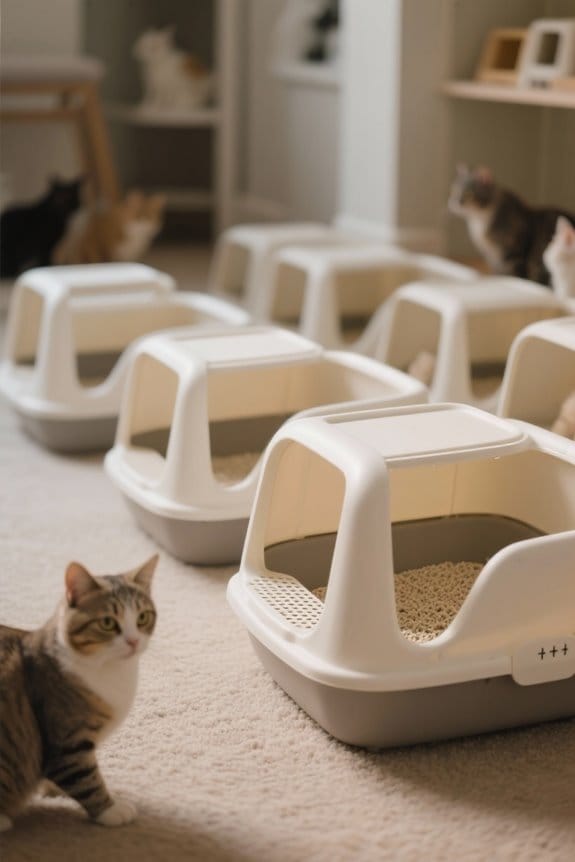
Maintaining an ideal environment for our cats in multi-cat households requires strategic planning regarding litter box arrangements. We should provide one litter box per cat, plus an additional box; for instance, with three cats, we must use four litter boxes. It’s crucial to distribute these boxes across various areas of our home, ensuring accessibility on each level. We should place them in quiet, discreet locations to minimize stress and avoid inappropriate elimination. Additionally, situating litter boxes separately, rather than side-by-side, is essential to provide each cat with its own space. Finally, observing individual preferences can help us understand our cats’ needs, which may indicate underlying health concerns if a box is persistently avoided. Choosing quality litter boxes with features like high-sided designs and durable materials can reduce the frequency of litter changes while maintaining better hygiene in busy multi-cat environments.
Recommended Products

Homey Pet Dog Crate Bank: Includes: 4 Pack Three tiers stackable dog crate(Size: 42.5"L x 28"W x 84"H). Each unit measure 42.5"L x 28"W x 30"H (the interior height: 22.5 inches). Each unit comes with1 x Tray, 2 x Metal Floor Grids, 4 x Locakable Casters, 1 x Safe Locks, 2 x Steel Feeding Bowls (Food & Water). Perfect dog crate cage kennel for medium small dog breeds. Choose spacious dog kennels keep your dog's comfort and safety

🐈️ 【106L Extra-Large Capacity For All Cats】Robotail cat litter box features an extra-large 106L capacity, offering a spacious and cozy area that easily accommodates 3-4 cats sharing at once. It fits all felines weighing between 3.3-30 pounds, letting them step in, dig, and turn around freely with zero hassle. This cat litter box perfectly meets the daily needs of multi-cat households

5-level cat activity tree with ultimate scratching post
Territoriality and Its Impact on Litter Box Usage
While most of us appreciate the comfort of our homes, it’s important to recognize that our cats possess distinct territorial instincts that greatly influence their litter box habits. Cats view specific litter boxes as their personal domains, leading to potential conflicts when multiple cats share a box. To mitigate these territorial disputes, we recommend having one litter box per cat, plus one additional box. This setup helps guarantee that each cat has access without aggressive blocking or conflict. Observing litter box usage can provide critical insights; if one cat consistently dominates a box, it signals the need for more boxes. Positioning litter boxes in different areas of the home will further facilitate individual territories, reducing the chances of stress and inappropriate elimination. When selecting boxes for multi-cat households, consider options with high walls that minimize litter scatter while providing adequate space for each cat to feel comfortable.
Best Practices for Litter Box Distribution
To guarantee ideal litter box distribution, we should consider several factors that cater to the natural behaviors of our cats. The general guideline suggests having one litter box per cat, plus one extra, which for two cats means three litter boxes. Distributing these boxes throughout our home, especially in multi-level residences, ascertains each floor has at least one accessible box. Avoid placing litter boxes side-by-side to prevent territorial disputes; instead, position them in separate, quiet, well-lit areas away from busy zones. To optimize usage, we can test different locations for the litter boxes, identifying the most frequented spots to improve accessibility. For households seeking to minimize maintenance time, automatic litter boxes with self-cleaning functions can significantly reduce manual scooping while maintaining proper hygiene across multiple box locations. This strategic arrangement ultimately promotes comfort and encourages our cats to use the litter boxes more consistently.
Recommended Products
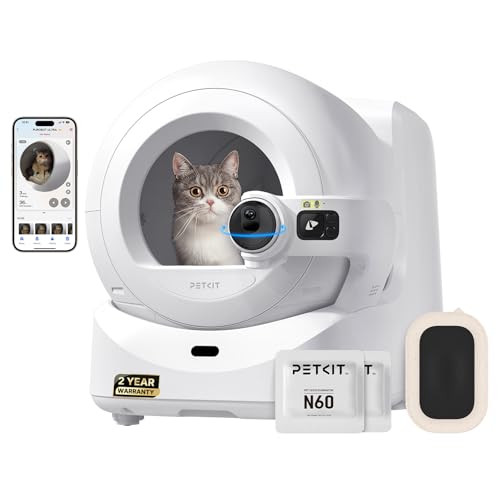
【 Invisible Health Clues Hidden in Litter Box Become Visible 】: World’s first smart AI camera cat litter box, This revolutionary self cleaning litter box integrates cat facial recognition and poop monitoring with an AI camera—transforming routine litter box use into a comprehensive health tracking system.

LITTER-ROBOT CORE BUNDLE: Save on the Litter-Robot 4 Core Bundle, which comes complete with Litter-Robot 4 automatic litter box, 3 OdorTrap refills, 10 waste drawer liners, 30 cleaner wipes, 2 carbon filters, and LitterTrap mat.

Ultra-Large 106L Capacity for Multi-Cat Homes: Designed for families with multiple cats or large breeds like Maine Coon, this spacious litter box offers ample room to reduce territorial issues and minimize litter tracking, ensuring a cleaner home environment
Factors Influencing Litter Box Preferences
Understanding the factors influencing litter box preferences is essential for promoting effective elimination habits in our cats. We should consider that cats typically prefer one litter box per cat plus an additional box to reduce competition. The type of substrate can vary; offering different types of litter in separate boxes allows us to identify our cat’s specific preferences. Additionally, the placement of litter boxes is vital; they should be located in quiet, accessible areas away from loud noises. We must avoid liners or improperly sized boxes, as these can lead to avoidance behaviors. Regularly monitoring litter box usage patterns will give us valuable insights into their preferences and potential health concerns, highlighting the importance of attentive observation. Maintaining proper ventilation near litter boxes not only enhances deodorizer effectiveness but also contributes to a more pleasant environment that encourages consistent use.
Choosing the Right Type of Litter Box
When selecting the right type of litter box, it’s essential to take into account both your cat’s size and personal preferences, as these factors directly impact their comfort and willingness to use the box. A general rule is to choose a litter box that is at least one and a half times the length of your cat, ensuring they can turn around comfortably inside. Some cats may prefer open boxes, while others might favor hooded options; observe your cat’s behavior to determine their comfort. Additionally, avoid sudden changes in litter box style to minimize stress, and maintain boxes in a quiet and accessible location. This consideration helps enhance your cat’s overall litter box experience and reduces potential behavioral issues. If your cat shows signs of anxiety related to litter box use, consider using calming sprays with pheromones to help reduce stress and encourage positive associations with their designated area.
Recommended Products

Artificial Intelligence Camera: PETKIT Max Pro self-cleaning cat litter box is equipped with a high-resolution AI camera with 210° wide angle and infrared night vision, which can be controlled remotely and live streamed in real time through the app, with 2.4&5GHz Wi-Fi enabled; the camera comes with a pet identification function, clearly captures the details of the cat's toileting, and focuses on recording the cat's urination and defecation data, help cat owners to determine the cat's health condition and prevent it in advance.


X-Large Size 30"x24"x9
Maintaining Cleanliness for Optimal Usage
Establishing a routine for maintaining cleanliness in litter boxes is essential for encouraging ideal usage among our cats. We should scoop litter boxes daily, as cats may refuse to use them if they are dirty. Additionally, we must regularly disinfect and replace the litter every two weeks to prevent odor buildup, ensuring a hygienic environment. Monitoring the condition of the litter boxes is also vital; we need to replace them when wear and tear make them uncomfortable or unappealing. Strong cleaning chemicals should be avoided; instead, we can use hot water or pet-safe disinfectants to clean the boxes safely. By establishing this consistent cleaning routine, we promote positive associations with the litter box, encouraging regular usage without stress. Just as we maintain their litter boxes, regular grooming with pH balanced shampoos can enhance overall skin health and contribute to our cats’ well-being.
Signs of Litter Box Issues and Health Alerts
Although we may not always notice subtle changes in our cats’ behaviors, paying close attention to any alterations in their litter box habits is essential for identifying potential health issues. In particular, we should watch for increased frequency of elimination or outright refusal to enter the box. Monitoring the type and amount of waste present can help us detect digestive or urinary problems. Particularly, sudden changes in urination patterns—like straining to urinate—could indicate serious conditions, such as urinary tract infections. Additionally, if we notice inappropriate elimination, it may reflect stress from inadequate litter box maintenance or competition for access. Investing in technology like the Petivity Smart Litter Box Monitor could alert us to concerning behavioral changes, facilitating timely veterinary intervention.
Benefits of Extra Litter Boxes
Providing extra litter boxes—specifically one more than the number of cats we have—can greatly enhance our pets’ well-being by ensuring they have a clean and accessible space for elimination. With extra litter boxes, we reduce competition and territorial disputes, thereby promoting healthier behaviors. By distributing these boxes throughout our home, we minimize the chances of one cat blocking another’s access, leading to more peaceful interactions. Each cat often has specific preferences, so accommodating these with varied litter box options allows for better satisfaction of their instincts. Importantly, strategically placed extra litter boxes can decrease the risk of accidents outside the box, protecting our furniture and carpets from potential damage while contributing to a happier living environment for our pets.
Recommended Products
![MEGAGRASS 15 x 94 Feet Premium Synthetic Turf for Sports - Deluxe Artificial Grass [Indoor and Outdoor Athletic Mat for Agility Training, Fake Grass for Large Football Fields, Pet Dogs Potty Rugs]](https://m.media-amazon.com/images/I/61-3Il2S7WL._SL500_.jpg)
SPORTS TRAINING: Train on fresh, natural-looking, and soft feeling artificial grass surface all year long for all. Consistency in friction, cushion and feel that can only be found in luxurious lifelike emerald and olive green thatch roll.
SPORTS TRAINING: Train on fresh, natural-looking, and soft feeling artificial grass surface all year long for all. Consistency in friction, cushion and feel that can only be found in luxurious lifelike emerald and olive green thatch roll.
SPORTS TRAINING: Train on fresh, natural-looking, and soft feeling artificial grass surface all year long for all. Consistency in friction, cushion and feel that can only be found in luxurious lifelike emerald and olive green thatch roll.
Insights on Litter Box Materials and Types
When it comes to selecting litter box materials and types, understanding the preferences of our feline companions is essential in creating a suitable elimination environment. It’s advisable to maintain one litter box per cat, plus one additional box, accommodating individual preferences for litter types, such as clumping unscented litter, which is often preferred for cats with urinary issues. The size of the litter box should measure at least one and a half times the length of the cat, ensuring ample space for movement. Testing different styles, like covered and uncovered boxes, is critical, as cats may resist unfamiliar options. Keeping the litter clean with hot water, rather than strong chemicals, will discourage refusals to use a dirty box.
Positioning Litter Boxes for Maximum Comfort
To guarantee our feline friends feel secure and are willing to use their litter boxes consistently, we must strategically position these boxes throughout our living spaces. Ideally, we should provide one litter box per cat, plus one additional box to minimize territorial disputes. In multi-story homes, it’s essential to place at least one litter box on each floor, enhancing accessibility, particularly for older or less mobile cats. We should situate litter boxes in quiet, low-traffic areas to confirm cats feel safe during elimination. Additionally, avoiding side-by-side placement allows each cat its own space, reducing stress. Positioning some boxes at opposite ends of the house can further decrease tension and ensure equal access for all pets in our homes.
Regular Maintenance and Replacement Guidelines
Regular upkeep of litter boxes is vital for ensuring their effectiveness and encouraging ideal usage by our cats. We should scoop each litter box daily to maintain hygiene and avoid any reluctance from our cats. Additionally, we need to replace the litter boxes every 1-2 years, or sooner if we notice wear and tear. Choosing new boxes similar in size and style to the old ones is important for reducing stress during the changeover. When cleaning, we should use hot water and pet-safe disinfectants, steering clear of strong chemicals that might deter our cats. Establishing a routine for thorough maintenance, which includes thorough cleaning and periodic litter replacement, will promote ongoing suitability and minimize potential behavioral issues related to litter boxes.
Frequently Asked Questions
How Many Litter Boxes Are Needed per Cat?
They say, “Better safe than sorry,” and that’s especially true for litter boxes. We recommend one box per cat, plus one extra. Remember, litter preferences can vary, so let’s keep our furry friends happy!
What Is the 3-3-3 Rule for Cats?
The 3-3-3 rule for cats suggests we provide three litter boxes for every three cats, accommodating their behavioral preferences. This guarantees each cat has enough space and reduces stress over resources in our home.
What Is the Golden Rule for Litter Boxes?
Imagine our cats’ comfort is like a cozy café; having the golden rule of one litter box per cat plus one guarantees they’ve got their own ‘table’—an essential litter box tip for harmonious living together.
Why Do Vets Recommend Two Litter Boxes per Cat?
Vets recommend two litter boxes per cat to enhance litter behavior. This approach helps reduce stress, prevents competition, and guarantees our cats have the freedom to eliminate comfortably, promoting a happier and cleaner home for everyone.