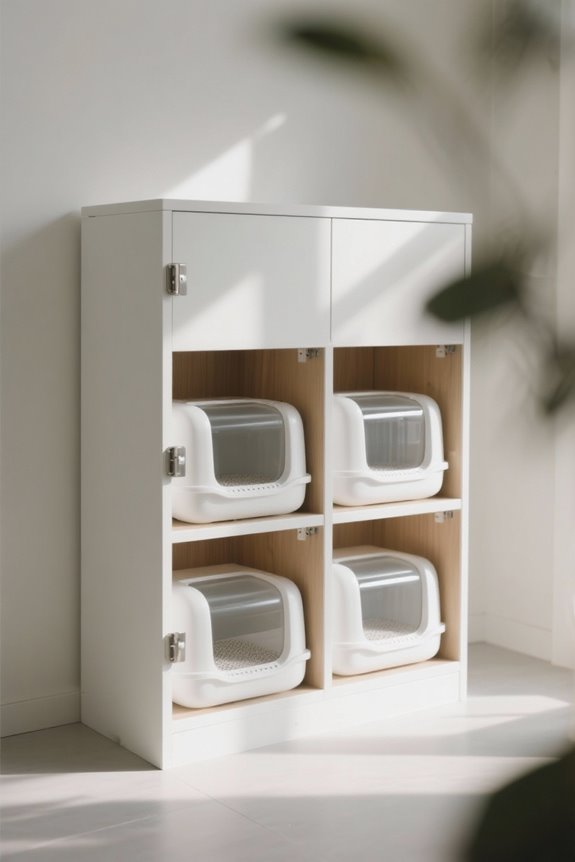
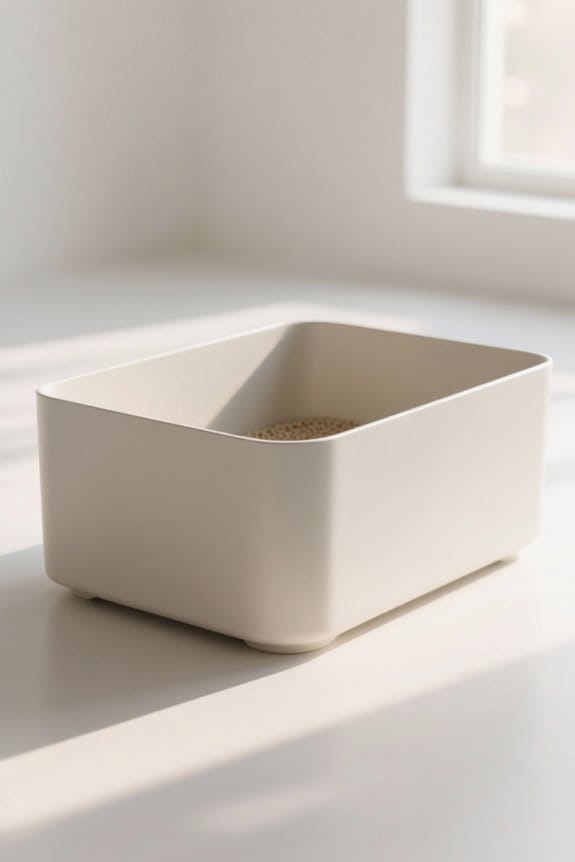
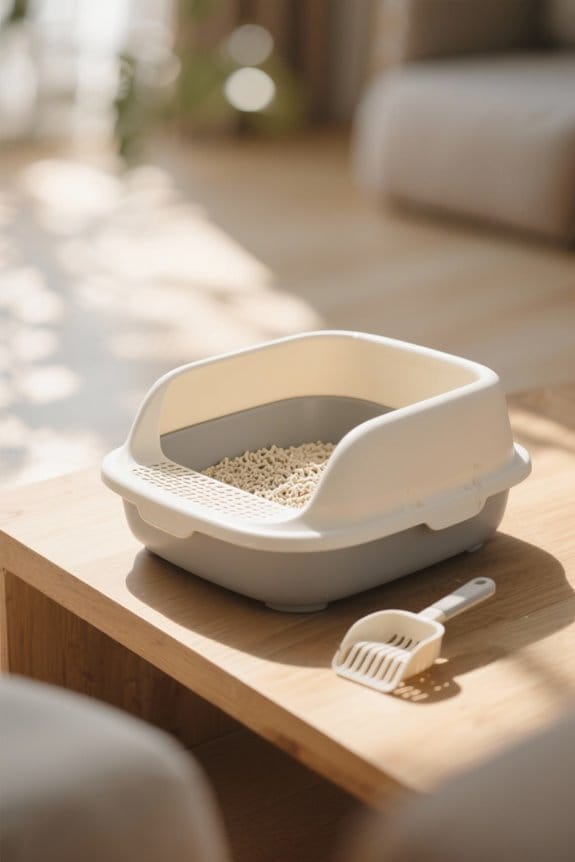
As an Amazon Associate, we earn from qualifying purchases. Some links on this site are affiliate links at no extra cost to you. Our recommendations are based on thorough research and editorial judgment.


Understanding Your Cat’s Litter Box Preferences

Understanding our cat’s litter box preferences is essential for their wellbeing, as nearly 10% of cats face elimination issues due to improper management. We should provide large, uncovered boxes measuring at least 24 inches by 18 inches, using clumping, unscented litter one to two inches deep. Additionally, placing boxes in quiet, low-traffic areas can reduce anxiety. Avoid ammonia-based cleaners and guarantee one box per cat plus one extra to mitigate territorial disputes. We’ll explore further strategies to optimize litter box habits.
Key Takeaways
- Cats prefer large, uncovered litter boxes that accommodate their size and allow for natural digging behaviors.
- Unscented, clumping litter with a depth of one to two inches is favored for comfort and to promote burying instincts.
- Maintain one litter box per cat plus one extra to reduce territorial disputes, especially in multi-cat households.
- Place litter boxes in quiet, low-traffic areas away from food and water to minimize stress during use.
- Regularly clean litter boxes daily to ensure hygiene, as cleanliness is crucial to a cat’s willingness to use the box.
The Importance of Litter Box Management
You may be interested


10 Best Cat Door Flap Replacements for Easy Access and Comfort
January 28, 2026
When we consider our cats’ well-being, effective litter box management becomes essential for maintaining both their hygiene and comfort. Daily scooping of waste, along with a weekly deep clean using mild detergents, helps keep the litter environment inviting and reduces the likelihood of avoidance behaviors in our cats. For multi-cat households, it’s crucial to have one litter box per cat plus one extra to minimize territorial disputes and accommodate individual preferences. Each box should allow ample space, measuring at least 24 inches long and 18 inches wide, ensuring our cats can stand, turn, and dig comfortably. Using clumping, unscented litter with a depth of one to two inches supports natural behaviors while promoting a cleaner and more appealing space for using the litter box. To maintain optimal odor control, fill litter boxes to a depth of 3-4 inches and store litters in a dry location to ensure their effectiveness over time.
Common Litter Box Problems
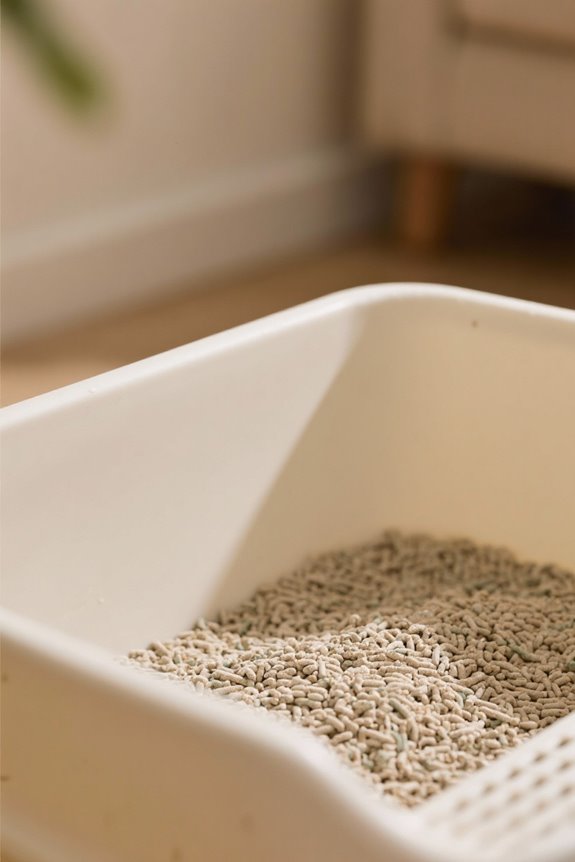
Understanding common litter box problems is fundamental for ensuring that our cats remain comfortable and healthy. Approximately 10% of cats experience elimination issues, which may include litter box avoidance. In multi-cat households, conflicts can arise if there aren’t enough boxes; the recommended guideline is one per cat plus an extra. This setup can mitigate avoidance stemming from territorial disputes. We should also address cleanliness; boxes need daily scooping and a complete wash weekly to prevent unsanitary conditions, which deter use. Additionally, observing behaviors like waffling and box banging can indicate dissatisfaction with cleanliness or box suitability. Addressing these concerns promptly allows us to maintain a conducive environment for our cats’ elimination needs, reducing stress and potential medical issues. Consider that high-sided designs can help contain litter and reduce scatter, which may encourage consistent use while minimizing mess in your home.
Medical Conditions Influencing Elimination Behavior

Medical conditions influencing elimination behavior in cats warrant our close attention, as they can greatly impact our pets’ comfort and overall health. Conditions like urinary tract infections (UTIs) often lead to painful urination, which may result in our cats avoiding the litter box altogether. We should monitor their elimination habits closely, watching for symptoms such as frequent attempts to urinate, which may indicate kidney stones or blockages. If we notice sudden changes in our cat’s behavior, it’s essential to seek veterinary attention promptly. By addressing these medical conditions, we can alleviate discomfort and restore their litter box usage. Additionally, we should be aware that skin irritation or allergic reactions from flea infestations can cause excessive scratching and discomfort, leading cats to associate the litter box with pain and avoid using it. Timely diagnosis and treatment are critical to ensuring our cat’s wellbeing and, consequently, our peace of mind.
Behavioral Issues to Consider
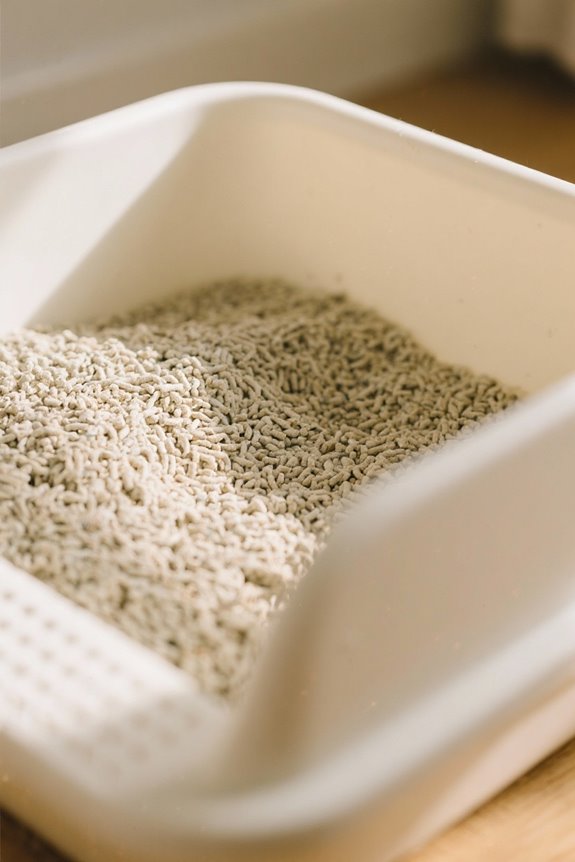
Elimination issues in cats can often signal underlying behavioral problems that require our attention, especially as at least 10% of cats experience such dysfunction. We should monitor our cats for signs like “waffling” or “port-a-potty” behaviors, which can indicate dissatisfaction with the litter box‘s cleanliness or location. Additionally, observing litter box behaviors, such as “gargoyling” or “box banging,” can reveal important details about box size or litter depth preferences. For multi-cat households, it’s essential to have one litter box per cat plus one extra to minimize territorial conflicts; this strategy promotes harmonious usage. For large cats specifically, choosing a box with dimensions at least 1.5 times the length of the cat’s body ensures they have sufficient space to move comfortably and may reduce elimination problems. Finally, it’s essential to rule out medical conditions, including Urinary Tract Infections, that may compound these behavioral problems before implementing any changes.
Key Factors in Litter Box Setup
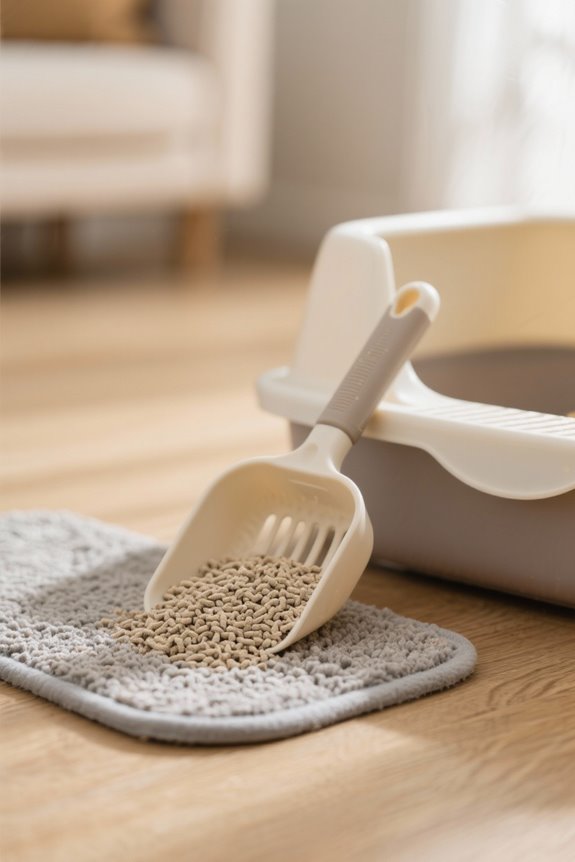
When setting up a litter box for our cats, we must consider several key factors that significantly influence their comfort and willingness to use it. First, choose large, uncovered litter boxes, ideally 1.5 times the length of our cat, allowing space for movement. We should maintain a ratio of one litter box per cat plus one extra to minimize territorial disputes. In addition, regular daily cleaning is essential, as cats prefer clean environments; neglecting this can lead to avoidance behaviors. Additionally, using fine-grained, unscented litter closely resembles their natural digging surfaces. Finally, for elderly cats, we must guarantee accessibility; consider boxes with low sides for easier access, accommodating their physical limitations and enhancing their comfort. For odor control, consider boxes with built-in charcoal filters that absorb tough odors while maintaining a fresh environment.
Recommended Products

EASY CLEANING: Simplify your cat care routine with the sifting cat litter box's patented lift-to-sift technology. This provides efficient litter maintenance without scooping.

OPEN-TOP KITTY LITTER BOX: This small cat litter pan provides ample space on all sides for cats to do their business comfortably, and is great for small cats or kittens to access

HIGH-SIDES DESIGN: Keep your floors clean with the high sided cat litter box that contains litter effectively
Assessing Box Hygiene and Maintenance
Maintaining a litter box’s hygiene is essential for our cats’ health and their willingness to use it. Daily cleaning is necessary to prevent avoidance behavior, as cats are particular about their environment. We should scoop waste daily, ensuring the box stays clean. A full cleaning, which includes washing with mild detergent, is recommended weekly to eliminate odors that may deter our cats. Additionally, a rule of thumb is to have one litter box per cat plus one extra, as this minimizes conflict and improves box hygiene. It’s important to select a box that allows our cats to move comfortably, as adequate size contributes to cleanliness and preferred use, ultimately promoting a healthy litter box experience. Just as cats require regular access to fresh water alongside their meals, they also need consistently clean litter boxes to maintain their overall health and well-being.
Recommended Products

ANTI-LEAK HIGH SIDES—5.7" tall ABS wall is specially designed for messy diggers. Featuring an internal overlap and external buckles for a tight seal, the splash guard effectively stops urine leakage and keeps floors clean—perfect for high sprayers.

【XXL stainless steel litter box】This stainless steel litter box is super extra large, sized 28"L X 20"W X 12"H, which is much larger than the common litter box in the market. The extra large steel litter box provides ample space for big indoor cats to move comfortably. It's a perfect fit for large and multi-cat households. The litter box's capacity to hold up to 60L of litter significantly reduces the frequency of cleanups. Note: NOT for limited space. Please ensure the sizes fit your space before purchase.

2PACK EXTRA LARGE XL STAINLESS STEEL LITTER BOX: This extra large litter box has a spacious 23 "L x 15 "W x 11 "H, ideal for large felines or multi-cat households. The spacious space of the cat litter box ensures that they feel comfortable to handle their business, with anti slip pads on the bottom for stable use, providing a more comfortable living environment for your cats.
Choosing the Right Size and Type of Litter Box
Selecting the appropriate size and type of litter box is essential for ensuring our cats feel comfortable and secure while eliminating. Cats generally prefer large boxes that allow them to stand, turn around, and dig freely, ideally measuring at least 24 inches long. We recommend having one litter box for each cat in the household plus one extra to mitigate potential conflicts. The litter’s depth should be maintained between one to two inches, promoting natural digging behavior without causing discomfort. High-sided boxes can effectively limit litter scatter, while low-sided options suit kittens and elderly cats. When shifting to a new box style or substrate, gradual changes are vital to prevent stress, as abrupt modifications can lead to litter box aversion. For households using disposal systems, proper waste management solutions like refill bags with multi-layer odor control can help maintain a fresh environment around the litter area.
Recommended Products

LONG-LASTING STAINLESS STEEL LITTER BOX: Crafted from premium stainless steel, this kitty litter box is scratch-proof, rust-resistant, and designed to last up to 5 years. Unlike plastic, it won't crack, absorb odors, or stain over time, making your cat always have a clean and safe space. With this long-lasting durability, you won't have to worry about constant replacements, saving you time and money.

GREAT SIZE FOR LARGE CATS: Dimensions: 30"L x 20"W x 14"H
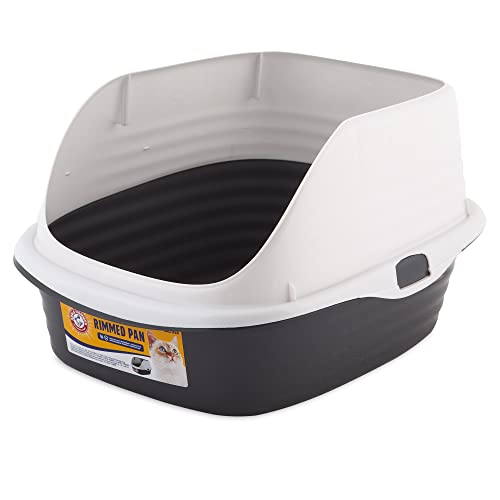
LESS MESS, CLEANER AREA: The high sided litter box design helps secure liners and reduces spills, keeping the area around your litter box cleaner and more organized
Understanding Litter Substrate Preferences
Understanding our cats’ litter substrate preferences is crucial for ensuring their comfort and encouraging regular use of the litter box. Research indicates that cats generally prefer fine-grained, unscented litters, with a strong inclination toward clay substrates. In a study, only 1 out of 18 cats utilized plant-based substrates, highlighting the dominance of clay and silica options. To promote acceptance, we should gradually shift to new litter, slowly introducing the new substrate alongside the old. Additionally, it’s important to maintain a minimum litter depth of one to two inches, allowing for natural digging and burying behaviors. Understanding these preferences can greatly impact our cats’ litter box habits, fostering a more pleasant experience overall. If accidents occur outside the litter box, using a blacklight urine detector can help identify hidden stains on carpets and furniture for thorough cleaning.
Recommended Products

PREMIUM QUALITY: A combination of premium texture and granule size made with 100% bentonite clay for maximum clumping creates litter particles that are just the right size.
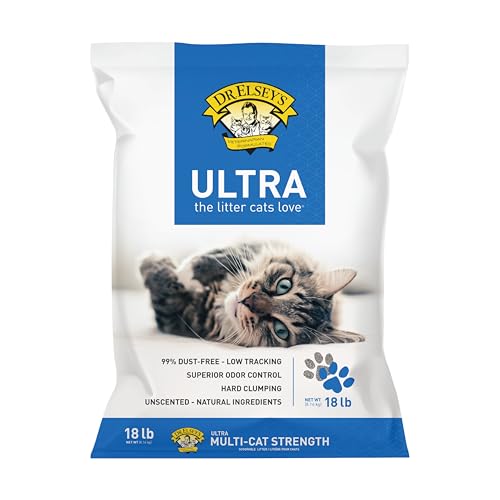
PREMIUM QUALITY: A combination of premium texture and granule size made with 100% bentonite clay for maximum clumping creates litter particles that are just the right size.

FRESH STEP CLUMPING CAT LITTER: One 18.5-lb. box of Amazon exclusive Fresh Step Advanced Simply Unscented Clumping Litter to keep litter boxes smelling fresh without the use of fragrances and dyes
Optimal Litter Box Location
When we consider the placement of litter boxes, it’s imperative to prioritize both the cat’s comfort and the practicality of the area. An ideal litter box location is usually a quiet, low-traffic zone, allowing our cats to use the box without anxiety. Ideally, we should place litter boxes away from food and water bowls, ensuring a sanitary environment. If we have multiple cats, following the guideline of one litter box per cat plus one extra can help ease territorial disputes and guarantee accessibility. Furthermore, avoiding areas with loud appliances or stressful environments is essential, as these factors can deter our cats from using the box regularly. Accessibility is important, especially for older or physically limited cats, so choose locations they can easily reach. For enhanced hygiene and convenience, consider positioning a motion sensor trash can nearby to simplify the disposal of soiled litter during routine cleaning.
The Role of Box Quantity in Multi-Cat Households
In multi-cat households, the quantity of litter boxes plays a considerable role in maintaining harmony and ensuring each cat feels secure in their territory. To minimize competition, we recommend having one litter box per cat plus one extra; for example, with three cats, four litter boxes are ideal. Insufficient litter boxes can lead to stress and inappropriate elimination behaviors. We should place these boxes in quiet, accessible areas, away from food and water, to enhance usage. Additionally, varied box types and substrates cater to individual preferences, thereby promoting healthier habits. Studies indicate that increasing the number of available litter boxes considerably reduces house-soiling incidents, improving overall litter box use and contributing to a more peaceful multi-cat environment. When selecting boxes, consider top entry designs that reduce litter spillage and provide the privacy cats naturally seek during elimination.
Recommended Products
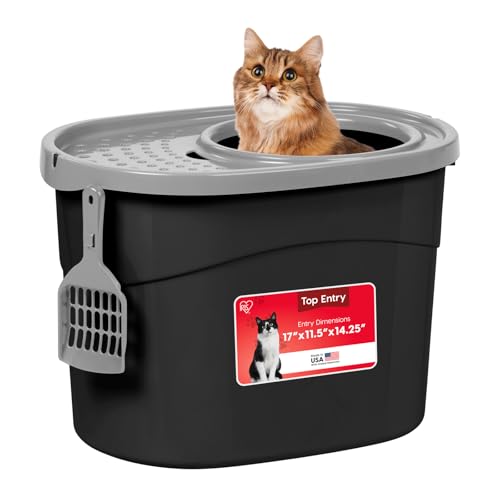
MADE IN USA with global materials - The IRIS USA top entry kitty litter tray offers a functional and aesthetically pleasing solution to your cat's bathroom needs. With the top entry kitty litter box, everything stays inside and out of sight, and the enclosed design lessens the prevalence of unpleasant odors in the room, something that's sure to make everyone in the family happy.

FOR CAT PRIVACY: This covered cat litter box features high walls that create a secluded space for your kitty, so that they can feel comfortable while doing their business discreetly

DIMENSIONS: Spacious design measures 20.75"L x 16.12"W x 14.62"H with a convenient entry opening of 9"W x 10.5"H—ideal for cats of various sizes while helping contain litter inside the box.
Observing Your Cat’s Litter Box Behavior
Observing our cats’ litter box behavior is vital for ensuring their health and comfort, as subtle changes in their habits can reveal underlying issues. For instance, when cats prefer to perching on the edge or engaging in “gargoyling,” it may indicate discomfort with box size or litter type. If we notice our cats waffling, hesitating to enter, it might signal dissatisfaction with the box environment. Additionally, behaviors like scratching outside the litter may suggest poor box cleanliness. Kicking litter before elimination often points to frustration with excessive depth. Finally, monitoring port-a-potty behaviors, where cats avoid using the box, is essential, as it suggests potential stressors or unappealing box conditions that we need to address promptly.
Interpretation of Specific Litter Box Behaviors
Understanding specific litter box behaviors is essential for identifying potential issues that may affect our cats’ well-being. For instance, when a cat engages in “gargoyling,” perching on the litter box’s edge, it often indicates discomfort due to inadequate size or depth. If we observe “waffling,” a cat hesitating to enter its litter box, this may suggest cleanliness concerns or environmental distractions that need addressing. Likewise, “box banging,” where cats scratch outside the litter area, usually reflects issues with the box’s hood or cleanliness, necessitating more frequent cleaning. If our cat exhibits “port-a-potty” behavior, rapidly exiting without burying waste, this can signal dissatisfaction with box conditions or location stressors, requiring immediate attention for our cat’s comfort and health.
Common Mistakes to Avoid in Litter Box Care
While we may believe that our cats will adapt to any litter box setup, neglecting proper care can lead to serious litter box issues. One common mistake is not cleaning litter boxes daily and thoroughly washing them weekly. Cats may avoid their boxes if they detect unpleasant odors or cleanliness issues. Additionally, using ammonia-based cleaners can deter them due to the confusing scent that resembles urine. We should make sure we have one litter box per cat, plus one extra, to reduce conflicts. It’s essential to avoid confining cats for extended periods, as this fosters anxiety. Finally, let’s not ignore each cat’s substrate preferences; unscented, clumping litters may be more appealing than scented or coarse alternatives.
Gradual Changes for Litter Preferences
To effectively change our cats to a new litter type, we must blend the old and new litters in a gradual manner, ideally starting with a mixture that comprises 75% of the current litter and 25% of the new option. Over several days, we should incrementally alter this ratio, eventually achieving a complete shift. Selecting a new litter that replicates the texture and scent of a fine-grained, unscented litter often yields better results, as this aligns with cats’ established preferences. During this period, daily scooping is essential to maintain cleanliness, minimizing any potential negative associations. By paying close attention to our cats’ behavior, we can swiftly identify signs of discomfort, allowing us to make necessary adjustments in the mixture accordingly.
Strategies for Encouraging Positive Litter Box Habits
Creating positive litter box habits begins with establishing an environment that caters to our cats’ natural behaviors and preferences. We should provide one litter box per cat plus one extra, placing them in quiet locations, away from food and water bowls. To promote cleanliness, scooping the litter box daily and washing it weekly is essential. It’s recommended to use fine-grained, unscented clumping litter, with a depth of one to two inches, as studies indicate this is what cats may prefer. We must also observe any signs of discomfort, such as waffling or box banging, to adjust factors like litter type or box size. When introducing new litter, we should do so gradually to encourage acceptance.
Frequently Asked Questions
What Is the 3-3-3 Rule for Cats?
The 3-3-3 rule is our way of saying cats need three days to adjust, three weeks to feel at home, and three months to truly settle, all while managing litter box cleanliness and cat stressors effectively!
What Is the Litterbox Rule?
The litter box rule states we should have one box per cat plus one extra. By prioritizing litter box maintenance and observing our cats’ behavioral cues, we help guarantee they feel comfortable and secure using them.
What Type of Litter Box Do Most Cats Prefer?
Most cats strongly favor spacious, simple litter box styles with fine-grained litter types. By providing an open environment, we help guarantee their comfort and cleanliness, fostering a happier, healthier litter box experience for our furry friends.
What Is the Golden Rule for Litter Boxes?
The golden rule for litter boxes is simple: we should provide one box per cat plus one extra. This helps guarantee litter box cleanliness, aligning with our cats’ behavioral habits for a happy and stress-free environment.