As an Amazon Associate, we earn from qualifying purchases. Some links on this site are affiliate links at no extra cost to you. Our recommendations are based on thorough research and editorial judgment.

The Ideal Placement for Your Cat’s Litter Box Explained

To guarantee proper usage of our cat’s litter box, we must place it in quiet areas, avoiding high-traffic zones. It’s vital to keep the box at least six feet away from food and water dishes. In multi-level homes, we should provide boxes on each floor for easy access. Monitoring our cat’s behavior when introducing new locations is essential, as it can help identify preferences and potential stressors in their environment, which we will explore further.
Key Takeaways
- Place litter boxes in quiet, low-traffic areas to ensure privacy and encourage usage.
- Maintain at least six feet distance from food and water dishes for cleanliness.
- Provide one litter box per cat plus one additional box to minimize territorial conflicts.
- Ensure boxes are accessible on each floor of multi-story homes for convenience.
- Monitor cat behavior to identify preferred locations, adjusting placements as necessary for comfort.
The Importance of Litter Box Placement
You may be interested

Can You Compost Used Cat Litter? Safety Guidelines
September 20, 2025
How Deep Should Cat Litter Be in the Box?
September 20, 2025
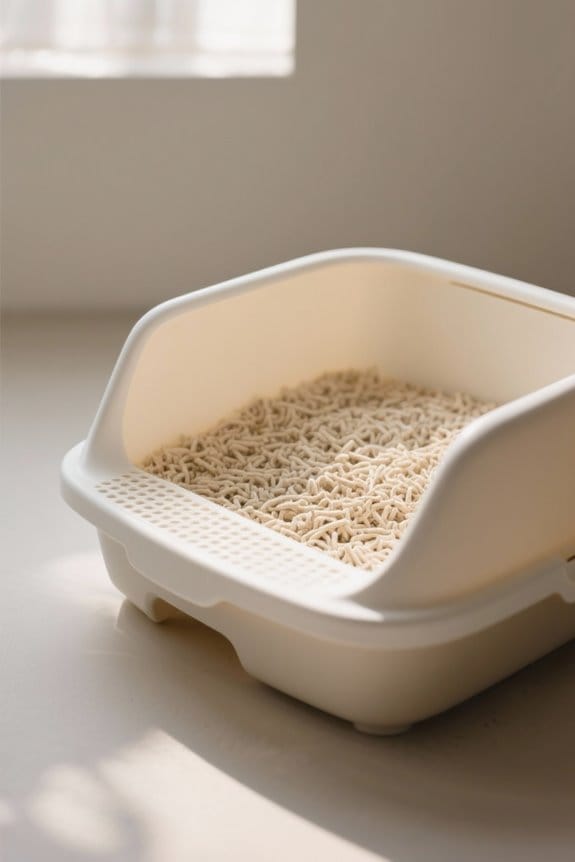
When we consider the placement of a litter box, it is essential to recognize that cats thrive in environments where they feel secure and free from disturbances; consequently, we must prioritize selecting a location that meets these needs. Ideally, the litter box should be placed in a quiet area away from high-traffic areas to guarantee privacy, as sudden noises can deter cats from using it. Additionally, we should maintain at least six feet of distance from food and water dishes to promote better hygiene. In multi-level homes, we need to provide accessible boxes on each floor, making sure that they are easy to reach. Avoid placing boxes in corners or hard-to-access areas which can lead to inappropriate elimination behaviors. Proper placement can minimize conflict among multiple pets by designating areas that consider privacy and access while maintaining optimal hygiene conditions.
Ideal Locations for Litter Boxes
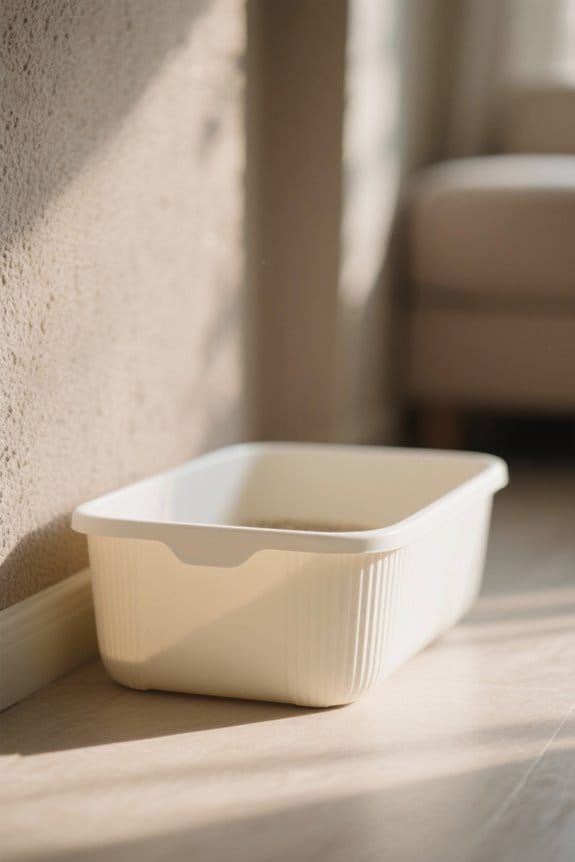
To guarantee ideal use of litter boxes, we must strategically select locations that promote accessibility and comfort for our cats. Litter box placement should occur in quiet areas, away from high traffic zones, ensuring our cats feel secure and private during use. We should avoid placing boxes in remote corners, as long distances can deter usage. It’s essential to position litter boxes at least six feet from food and water bowls to reduce stress and maintain hygiene. In multi-cat households, we must space individual litter boxes apart to prevent territorial conflicts and encourage use. Accessibility is vital, particularly for senior cats or those with mobility challenges; consequently, we recommend having one litter box on each floor of our home. Additionally, monitoring cat behavior when introducing new litter boxes in different locations is essential to ensure comfort and consistent usage, as open-top designs allow for easy observation of cats’ habits and health.
Recommended Products

LONG-LASTING STAINLESS STEEL LITTER BOX: Crafted from premium stainless steel, this kitty litter box is scratch-proof, rust-resistant, and designed to last up to 5 years. Unlike plastic, it won't crack, absorb odors, or stain over time, making your cat always have a clean and safe space. With this long-lasting durability, you won't have to worry about constant replacements, saving you time and money.

Stainless Steel Material and Open Top: Kirecoo cat litter box is made from high-quality stainless steel. Unlike plastic litter box, this litter pan delivers good performance and sturdy. Stainless steel litter box is proof against scratches and dents during use and do not absorb or retain stinky smell. The open-top design of the top entry litter box is ideal for cats that may feel too anxious to enter an enclosed litter box, as well as for those who prefer open air of an unenclosed space.
Noise and Distractions to Avoid
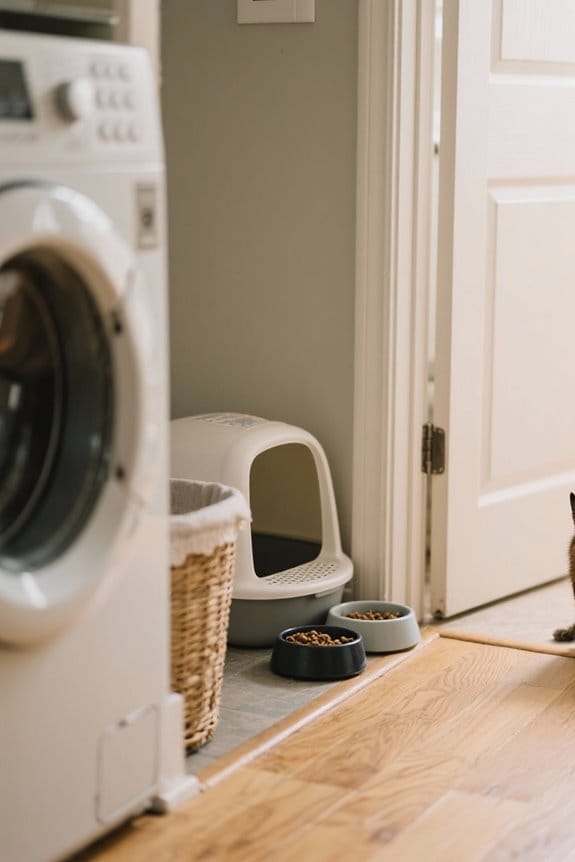
Selecting an appropriate location for a litter box involves careful consideration of potential noise and distractions, as these factors are critical to ensuring our cats feel comfortable while using it. For ideal placement, we should avoid areas with loud appliances, such as laundry rooms, since sudden noises can startle cats and deter them from using the litter box. Additionally, we must steer clear of high-traffic zones where consistent foot traffic could increase stress. Privacy is essential; cats prefer secluded spots to maintain comfort during their bathroom routine. As a result, it’s imperative to locate the litter box in an environment that minimizes unexpected sounds, allowing our cats to feel safe and secure while using their box. For homes with limited space, corner cat litter boxes can maximize efficiency while still providing the privacy and quiet environment cats need.
Accessibility for Cats of All Ages
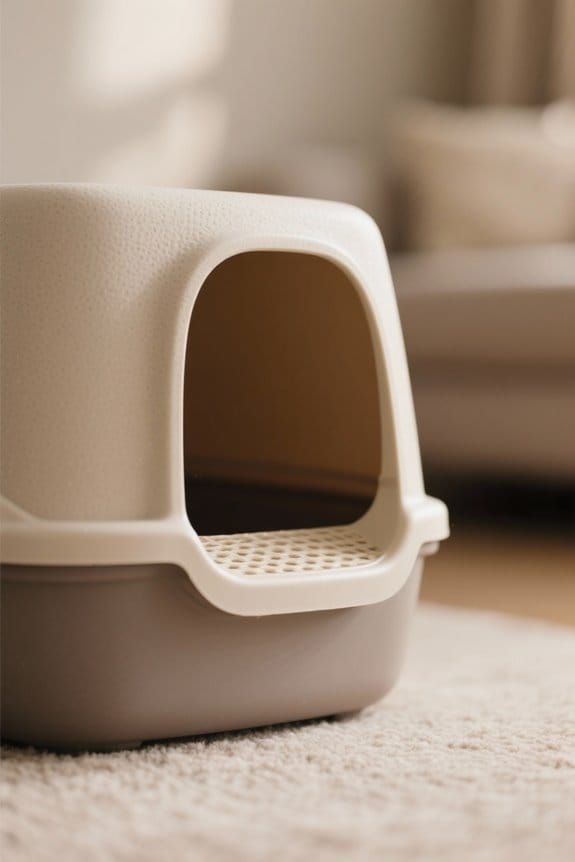
Determining the ideal placement for litter boxes requires a keen understanding of the varying accessibility needs of cats throughout their lives. For senior cats and those with physical limitations, litter boxes must be easily reachable, ideally located within a few steps of their favorite resting spots. In a multi-story home, it’s vital to provide a litter box on each floor to minimize the distance that both younger and older cats must travel. Opt for low-sided alternatives to high-sided litter boxes, as kittens struggle with entry. Additionally, placing the box in a quiet area, avoiding dark corners or confined spaces, helps reduce stress and enhances accessibility, particularly for elderly or arthritic cats to guarantee they maintain their normal bathroom habits. Consider positioning a cat litter disposal system nearby to simplify maintenance and ensure regular cleaning, which is crucial for maintaining a fresh environment that encourages consistent litter box use.
Multi-Cat Household Considerations
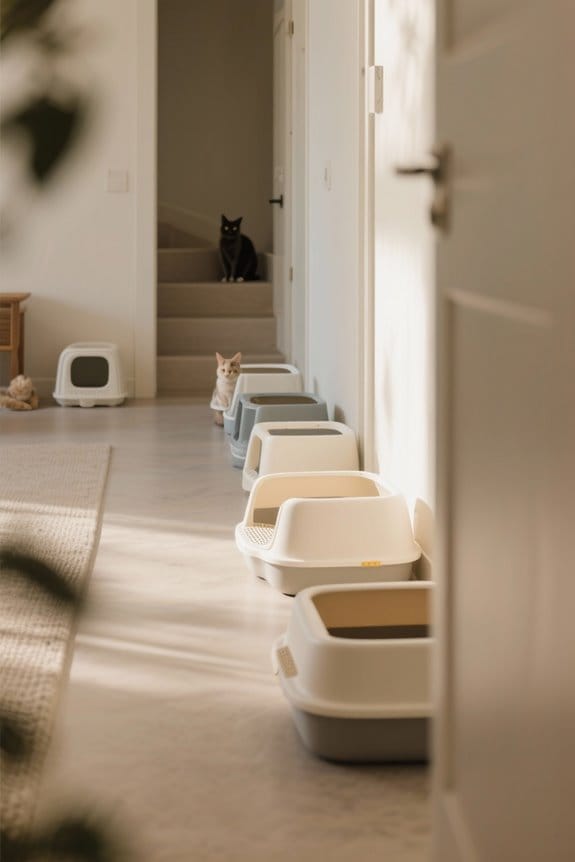
When managing a multi-cat household, it is vital to create an environment that accommodates the unique needs of each feline resident while preventing stress and territorial disputes. We recommend having one litter box per cat plus one additional box. This setup reduces territorial conflicts and minimizes potential litter box problems. Box placement is significant; avoid high-traffic areas and instead opt for secure locations where each cat can feel safe. Spacing boxes apart will help prevent anxiety, as placing them too close may lead to avoidance. Also, consider creating multiple exit routes to enhance security during elimination. Larger boxes are particularly beneficial in multi-cat environments, as they provide ample space for each cat and help reduce litter tracking between areas. It is important to monitor each cat’s behavior closely to guarantee that individual preferences are met, allowing for an overall harmonious living space.
Separation of Food and Litter
To guarantee the well-being of our cats, it’s essential that we maintain a clear separation between their food and litter areas. Ideally, we should keep food and water bowls at least six feet away from the litter box to reduce stress and prevent potential health issues. Cats are instinctually clean animals, so placing their food near their bathroom can deter them from eating, leading to discomfort. Enhanced separation promotes better hygiene, minimizing the risk of contamination from litter. In smaller spaces, visual barriers, like partitions, help create distinct areas, fostering a sense of separation. Prioritizing this separation not only supports our cats’ natural instincts but also contributes notably to their overall well-being, ensuring a healthier and more comfortable living environment. Covered litter boxes with enclosed designs can further enhance this separation by containing odors and preventing litter scatter that might otherwise spread toward feeding areas.
The Right Size and Type of Litter Box
Choosing the right size and type of litter box is essential for our cats’ comfort and hygiene. A suitable litter box should measure at least one and a half times the cat’s length from nose to tail, ensuring adequate space for movement. For multi-cat households, it’s advisable to provide one litter box per cat, plus one additional box, which helps minimize territorial disputes. Many cats prefer open-top boxes due to their easier access and improved sense of safety compared to covered containers. Meanwhile, high-sided boxes can accommodate cats that urinate at higher angles, yet these should be avoided for kittens or elderly cats, who may find entry challenging. Regular assessments of size and type will help us meet our cats’ changing preferences. Just as proper sizing matters for litter boxes, ensuring adjustable collar fits is crucial for your cat’s safety and comfort as they grow and their neck size changes.
Recommended Products
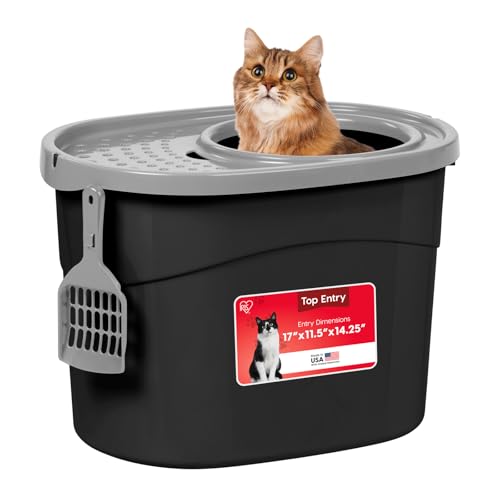
MADE IN USA with global materials - The IRIS USA top entry kitty litter tray offers a functional and aesthetically pleasing solution to your cat's bathroom needs. With the top entry kitty litter box, everything stays inside and out of sight, and the enclosed design lessens the prevalence of unpleasant odors in the room, something that's sure to make everyone in the family happy.

MADE IN USA: The IRIS USA open top kitty litter tray offers a functional and comfortable solution to your cat's bathroom needs. With the open air kitty litter pan, getting in and out of the tray has never been easier for your cat and the tall walls keep any litter or spraying inside the tray.
Maintaining Litter Box Hygiene
Maintaining litter box hygiene is essential for ensuring the health and well-being of our cats, and it involves a systematic approach to cleaning and care. We should scoop the litter box daily to prevent odor buildup, and we must perform a thorough cleaning weekly using unscented soap or baking soda. Fresh litter must be added regularly, maintaining a depth of one to two inches to support comfort. It is vital to provide at least one litter box per cat, plus one additional box, to minimize territorial disputes. We need to actively monitor the litter box for any signs of discomfort or avoidance behaviors in our cats, as these may indicate dissatisfaction with cleanliness, which could require immediate attention. Additionally, incorporating charcoal filters with activated carbon can significantly improve odor control between cleanings, with most filters requiring replacement every one to three months depending on the model.
Recommended Products

😺Compatibility: Odor eliminator is designed for Hooded Cat Litter Box, set of 12 pieces, activated carbon charcoal bags can trap urine and feces odors in their pores so your home smells clean and fresh.

STRONG COMPATIBILITY: Our activated carbon filter comes in three sizes—4.5'' x 6.5'' , 3.6'' x 10'', 2.5"D x 10.39"W x 0.2"H—designed to be compatible with various covered and dome-style cat litter boxes. If your litter box is not perfectly compatible, you can adjust the filter using DIY methods like cutting or taping to fit your needs. This ensures a flexible and versatile solution for multiple litter box systems.

For Van Ness:Replacement litter box filter inserts compatible with Van Ness Corner Enclosed Cat Pan and Van Ness CP77 White Enclosed Sifting Cat Pan/Litter Box. Please check the model number before purchasing, other models of litter boxes must be cut and cannot be used directly
Observing Your Cat’s Behavior
While observing your cat’s behavior, we can gain valuable insights into their preferences and needs regarding litter box placement. Cats often indicate preferred locations through consistent use or avoidance of specific areas. We should monitor their routines and identify spots where they feel most comfortable, ideally near resting or play zones. If a cat displays reluctance towards a litter box, it may signal dissatisfaction with its placement, necessitating a reassessment of potential stress factors like noise or foot traffic. Additionally, we must observe their body language when approaching the litter box; signs of hesitation or discomfort can reveal issues with access or placement. Understanding these behaviors allows us to optimize the litter box environment according to our cat’s unique preferences. Similarly, signs of excessive scratching or discomfort during grooming may indicate environmental stressors that warrant attention to your cat’s overall comfort and well-being.
Creative Solutions for Special Needs
Addressing the needs of special cats, such as elderly or arthritic individuals, is paramount for their comfort and well-being. We recommend low-sided litter boxes to facilitate easy entry and exit, thereby reducing physical strain. Position these boxes in quiet areas, allowing special needs cats to feel secure and minimizing anxiety during use. In addition, consider implementing multiple exit routes, which can prevent feelings of entrapment, especially in multi-cat households where dynamics can be tense. If you need to relocate boxes, do so gradually to help them adjust comfortably, rather than making sudden changes. Finally, using sensor cat doors can guarantee exclusive access to certain litter boxes, creating a safe space for more vulnerable felines. For cats experiencing heightened anxiety during litter box use, consider supplementing environmental modifications with calming pheromone collars that can help reduce stress-related behaviors within 1-2 weeks of regular use.
Recommended Products

Thoughtful 3.15in Low Entry Design – Each litter box features a 3.15" low front entry, making it easy for kittens, senior cats, or injured pets to step in and out with confidence. High sides still provide excellent splash protection, combining care and practicality

【Ideal for All Pets】: Our low entry stainless steel litter box is perfect for senior arthritic cats, sick pets, and kittens, providing easy access compared to traditional 6-inch high options, making it the best low entry litter box for your furry friends.

OPEN-TOP KITTY LITTER BOX: This small cat litter pan provides ample space on all sides for cats to do their business comfortably, and is great for small cats or kittens to access
Trending Products for Litter Boxes
Understanding the latest trends in litter box products can greatly enhance our cats’ bathroom experience. For improved maintenance convenience, litter box liners serve as an efficient solution, making clean-ups easier while controlling odors. We can enhance odor control by selecting popular clumping litters, such as Arm & Hammer™ Naturals Clumping Litter or ARM & HAMMER™ Double Duty, which effectively solidify waste for simpler disposal. In addition, opting for litters made from natural materials like pine, corn, and recycled paper appeals to environmentally conscious pet owners and tends to be more comfortable for our cats. Self-cleaning boxes have also gained traction, greatly reducing maintenance time, thereby benefiting both our cats and ourselves. Exploring user reviews can guide us in choosing the best products for our needs.
Recommended Products

📲 APP CONTROL: Manage and monitor your automatic litter box remotely through an intuitive app, providing real-time updates and control over the cleaning schedule. (Only 2.4G WIFI)
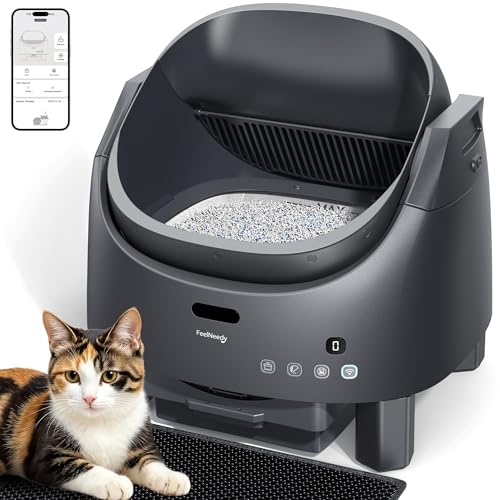
【Fully Automatic Cleaning – No Daily Scooping Required】 No more daily scooping chores. This litter box activates automatically once your cat exits. With a 10L waste drawer that holds roughly 7–10 days of waste (for one cat), you’ll spend less time on cleanup and more time enjoying your furry friend.
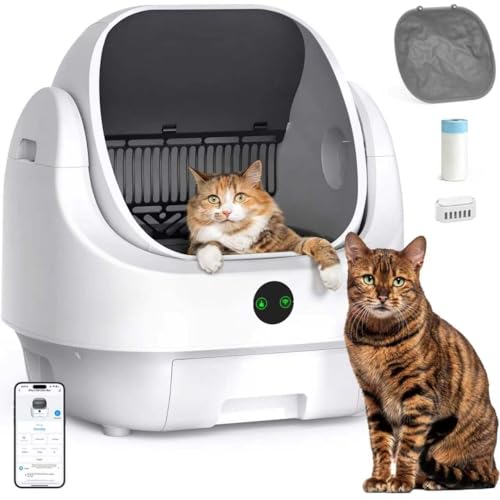
Self-Cleaning & Zero Scooping: Eliminates the need for daily scooping! After your cat exits, the self-cleaning litter box automatically cycles to separate waste and seal it into a sealed waste compartment. The generous 9L waste bin holds up to 10 days of waste(1 cat), allowing you to enjoy a fresher home—with no scooping required
Frequently Asked Questions
Where Should a Cat Litter Box Be Placed?
We should place the litter box in quiet, low-traffic locations, ensuring accessibility while considering cat behavior. This meets their privacy needs, aids scent control, and helps in multi-pet households with thoughtful space considerations.
What Is the Golden Rule for Litter Boxes?
The golden rule for litter boxes is simple: we need one box per cat, plus one extra. This guarantees litter box hygiene, size, accessibility, and maintenance, while minimizing odor and enhancing litter box training success.
Where to Not Put a Litter Box?
Did you know that 60% of cats avoid litter boxes in high-traffic areas? We should avoid those spots, loud appliances, and locations near food, ensuring accessibility, cleanliness, and harmony, especially with multiple cats or young children around.
Should I Have a Litter Box Upstairs and Downstairs?
Absolutely, having a litter box upstairs and downstairs boosts our cats’ multi-level accessibility. It supports their behavior, guarantees better sanitation, optimizes our space, and enhances odor control while making litter box maintenance easier for us.