As an Amazon Associate, we earn from qualifying purchases. Some links on this site are affiliate links at no extra cost to you. Our recommendations are based on thorough research and editorial judgment.


Understanding Ear Wax Build-Up in Cats: Normal vs. Concerning

Understanding ear wax build-up in cats requires knowledge of what’s normal versus concerning. Normal ear wax appears minimal, often light yellow to brown, and is odorless. Excessive wax may indicate infections, typically presenting as dark, thick discharge or an unpleasant odor. Frequent scratching or head shaking may accompany these symptoms, signaling discomfort. Regular ear inspections can prevent complications. As we explore further, we’ll discuss causes of wax accumulation and effective home care techniques for your cat’s ears.
Key Takeaways
- Normal ear wax in cats is minimal, odorless, and varies from light yellow to brown, serving as a protective barrier.
- Excessive scratching, head shaking, or dark, thick discharge may indicate health issues like infections or ear mites.
- Regular inspections can help identify abnormal wax characteristics or signs of irritation that require attention.
- Certain cat breeds may be genetically predisposed to ear wax issues, necessitating regular cleaning and checks for ear health.
- Consult a veterinarian if there’s persistent wax buildup, unpleasant odors, or if the cat shows signs of discomfort or irritation.
What Is Normal Ear Wax in Cats?
You may be interested


10 Best Carpet Cleaners for Pet Stains That Will Rescue Your Floors
December 12, 2025

When we examine ear wax in cats, or cerumen, it’s important to understand what constitutes a normal appearance and function so we can better monitor our feline companions’ health. Normal ear wax typically appears minimal in quantity, often light yellow or brown, with a waxy texture that can present a slight oily sheen. This waxy consistency serves a protective function, trapping dirt and bacteria, hence preventing ear infections. Healthy ear wax is odorless, and while a small amount is expected in healthy cats, excessive ear wax may indicate underlying medical issues, genetic predispositions, or age-related changes. Regular inspections of our cats’ ears allow us to discern these normal characteristics from potential problems requiring veterinary intervention. If excessive wax buildup occurs alongside persistent scratching or odor, it may signal ear mites, which require treatment with alcohol-free formulations to minimize irritation during care.
Signs of Excessive Ear Wax Build-Up

Observing our cats’ behavior and physical characteristics can alert us to signs of excessive ear wax build-up. We should note any excessive scratching or head shaking, as these are common symptoms. Additionally, if we see dark, thick ear discharge resembling coffee grounds, this could indicate earwax buildup or possibly cat ear mites. The presence of an unpleasant odor may suggest a deeper infection, warranting immediate attention. If there’s irritation around the ear area, leading to redness or scabbing, it’s essential to conduct a thorough physical examination. Regularly checking our cats’ ears allows us to catch changes in wax texture, color, or quantity early, ensuring timely veterinary evaluation when necessary. Using gentle ear cleansers with non-toxic formulations can help maintain healthy, odor-free ears when applied bi-weekly or weekly. Monitoring these signs can greatly aid in maintaining our cats’ health.
Common Causes of Ear Wax Accumulation

What are the common causes of ear wax accumulation in cats, and how can we identify them? One primary factor is natural earwax production; however, excessive earwax may signify underlying issues. Bacterial and fungal infections, often resulting in itching or inflammation, can lead to increased earwax production. Additionally, foreign debris, such as dirt or plant material, lodged in the ear canal can irritate the skin and cause abnormal discharge of earwax. Certain cat breeds might be genetically predisposed to excessive earwax and related problems, which requires attentive monitoring. Regular ear cleaning and checks can minimize excessive earwax buildup, promoting ear health. Identifying these causes early helps prevent more serious conditions and guarantees our cats remain comfortable. Ear mites, which are common parasites, can also trigger excessive scratching and contribute to abnormal earwax accumulation, similar to how flea infestations cause persistent scratching and discomfort in cats.
How to Differentiate Between Ear Wax and Ear Mites

Identifying whether your cat has a normal accumulation of ear wax or is affected by ear mites is important for ensuring their overall ear health. We should carefully observe the ear discharge; normal ear wax appears light yellow or brown with a waxy texture and is typically minimal and odorless. In contrast, if your cat has ear mites, expect a dark, crumbly discharge resembling coffee grounds, often accompanied by excessive wax buildup and potentially foul odor. Additional signs of ear mites include significant itching and scratching, which are not usual with simple ear wax. Should we suspect a mite infestation, a veterinarian can confirm the diagnosis through microscopic examination of the discharge, while excessive ear wax requires a different evaluation approach. Similarly, changes in behavior like excessive tearing or discharge around the eyes can indicate when specialized cleaning products may be needed to maintain your cat’s overall health.
Symptoms of Ear Mite Infestations in Cats
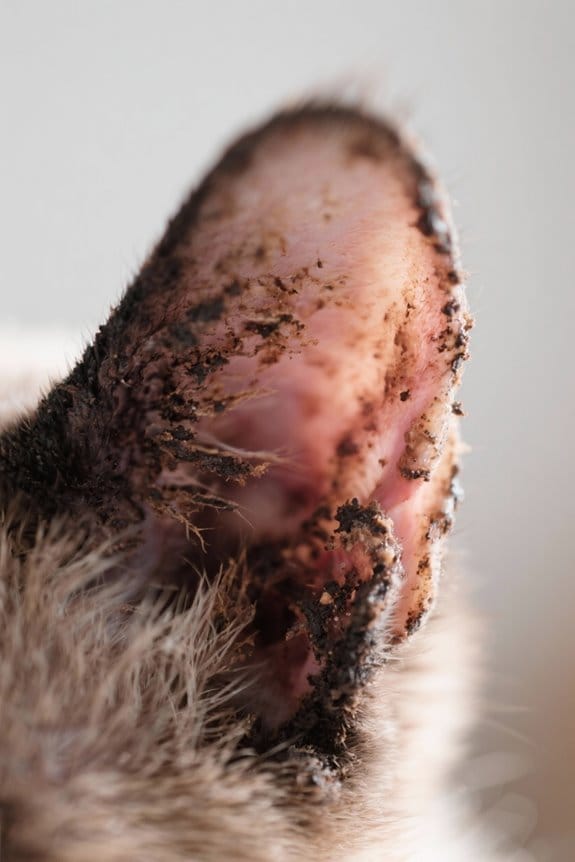
How can we recognize the symptoms of ear mite infestations in our cats? Affected cats often exhibit dark brown ear discharge that resembles coffee grounds, an indication of mites feeding on earwax. We should be vigilant for excessive scratching and intense itching, which can lead to injuries in the ear canal. Additionally, symptoms of ear mite infestations may include swollen or misshapen ears, as well as scabs formed from continuous scratching. Frequent head shaking is another key signal and may suggest discomfort or inflammation. It’s vital to monitor for these symptoms, as untreated infestations can result in secondary infections, potentially causing eardrum damage and complicating treatment. Understanding these signs is essential for maintaining our cats’ ear health. To help alleviate boredom and stress during recovery, providing interactive cat toys can promote mental stimulation and natural play behaviors while your cat heals.
The Impact of Allergies on Ear Health
While we’ve identified the signs of ear mite infestations, it’s important to recognize that allergies can also greatly impact our cats’ ear health. Allergies, whether due to pollen, dust mites, or specific food components, lead to inflammation in the ears, causing excessive wax buildup. This wax can trap bacteria, considerably increasing the risk of infections like otitis externa. When our cats are frequently exposed to allergens, their ear canals become inflamed, creating a vicious cycle of irritation and further wax accumulation. To mitigate these issues, we must carefully manage our cats’ allergies through dietary adjustments, controlling their environment, or utilizing medications. Effective management is essential to promote ideal ear health and reduce the likelihood of wax-related complications. Having a cat first aid kit on hand can help address minor ear irritations and other health concerns before they escalate into more serious problems.
Veterinary Diagnosis for Ear Wax Issues
A thorough veterinary diagnosis is essential for addressing ear wax issues in cats. Initially, we should schedule a consultation with a veterinarian, who will conduct a physical examination using an otoscope to inspect the ear canal for abnormalities. During this process, they’ll examine earwax or discharge for signs of excessive ear wax, and may observe changes in coloration or odor. Additionally, swabbing the ear discharge for microscopic analysis helps differentiate between healthy wax buildup and potential concerns like ear infections or ear mite infarction. Given that symptoms can overlap considerably, an accurate diagnosis often necessitates careful evaluation, especially when our cats show signs of discomfort or persistent issues. Timely intervention is critical to prevent further complications. Just as with skin conditions like ringworm, professional veterinary guidance ensures accurate diagnosis and appropriate treatment tailored to your cat’s specific condition.
Recommended Products

Developed in Collaboration with Veterinary Dermatologists: Recommended for the routine cleansing of sensitive ears in dogs, cats, puppies, and kittens of any age.

HELPS ALLEVIATE – This dog and cat ear cleaner was formulated with properties to help promote healthy ear canals. Rinse pet's ears daily with solution and massage area

Cat and dog ear cleaner – quickly and effectively clean non-infected ears in pets of all ages
Treatment Options for Excessive Ear Wax
After completing a thorough veterinary diagnosis, we can explore effective treatment options for excessive ear wax in cats. Commonly, our veterinarian might recommend specific prescription ear cleaners designed to dislodge and manage excessive earwax safely. These vet-recommended solutions help prevent ear infections and maintain a healthy ear environment. In some cases, medicated drops may be necessary, particularly if there’s a risk of inflammation or infection due to the wax buildup. We should avoid using cotton swabs for cleaning, as this can inadvertently push debris deeper into the ear canal. Regular monitoring of our cat’s ears is essential; we must remain vigilant for any unusual odors or discharges, which could indicate a worsening condition requiring immediate veterinary intervention. For routine maintenance after treatment, gentle enzyme-based cleaners can help maintain healthy, odor-free ears and prevent future wax accumulation.
Managing Ear Mite Infestations
Ear mites, scientifically known as Otodectes cynotis, pose a significant threat to our feline companions, especially if we have multiple cats or outdoor pets. To effectively manage ear mite infestations, we should recognize the common symptoms of ear infection, including intense itching, excessive head shaking, and dark ear discharge resembling coffee grounds. It’s essential to consult a veterinarian to diagnose ear mites, as they typically inspect the ear canal and may swab for microscopic analysis. Treatment often requires prescription anti-parasitic medications and thorough cleaning of cat ear wax. We should clean our cat’s ears regularly, as maintaining a clean environment helps prevent infestations, especially in households with multiple cats or outdoor cats that are more susceptible. During the recovery period, using an inflatable collar can prevent cats from scratching at their ears and disrupting the healing process while still allowing them to eat and drink comfortably.
Importance of Regular Ear Health Checks
Conducting regular ear health checks is essential for our cats, as it allows us to detect potential problems early on, before they develop into more serious conditions. During these inspections, we should look for signs of ear infections, such as redness, swelling, or discharge, which may indicate an underlying issue. Excessive scratching or sensitivity in our cat’s ears is also vital to note. A clean, light pink inner ear surface is good, while unusual colors or odors should prompt a visit to the vet. Ideally, we should perform these regular ear health checks monthly to identify issues like ear mites in cats or excessive wax buildup before they escalate, ensuring our cats maintain optimal ear health. Just as with other skin irritations, early detection of ear problems allows for more effective treatment and prevents conditions from worsening.
Home Care for Your Cat’s Ears
Maintaining our cats’ ear health at home requires a systematic approach, particularly in addressing wax accumulation and potential infections. First, we should regularly inspect our cat’s ears for excessive wax or unusual discharge, signaling possible health issues. When cleaning, we can use a veterinarian-recommended liquid ear cleaner along with cotton balls, ensuring we gently clean the ear flaps without inserting anything into the ear canal, minimizing injury risk. It’s crucial to monitor our cats for signs of discomfort, such as scratching, head shaking, or irritability, as these may indicate the need for ear cleaning. Finally, we must maintain a clean environment to prevent irritants, helping promote healthy ear function and reducing the likelihood of wax build-up.
When to Seek Veterinary Assistance
It’s essential to recognize when our cats may need veterinary assistance, especially if they show signs of distress or discomfort that could indicate ear problems. If we notice excessive scratching, head shaking, or persistent discomfort, it’s vital to seek veterinary assistance to evaluate potential issues. Dark or foul-smelling ear discharge resembling coffee grounds may indicate ear mites or infections, warranting immediate consultation. Redness or swelling in the ear canal, coupled with an unpleasant odor, are additional signals requiring veterinary evaluation. Moreover, if persistent earwax buildup does not respond to at-home cleaning efforts, we should consult a veterinarian to prevent complications. Finally, if we suspect a foreign object lodged in our cat’s ear, prompt intervention is essential to avoid trauma to ear structures.
Preventative Measures for Healthy Ears
To effectively prevent ear problems in our cats, we should establish a routine that includes regular inspections and a clean living environment, addressing any potential issues before they develop into serious conditions. We must regularly inspect our cat’s ears for any signs of dirt or earwax buildup, ensuring they maintain healthy ears. Maintaining a clean living space, free from dust and allergens, is vital, as these can contribute to excessive wax production. After bathing or swimming, we should keep our cat’s ears dry to prevent infections. A balanced diet rich in essential fatty acids supports ear health and minimizes wax production. Finally, scheduling routine veterinary check-ups will help us monitor our cat’s ears and resolve any concerns early.
Frequently Asked Questions
When Should I Worry About My Cat’s Ear Wax?
We should worry about our cat’s ear wax if we notice excessive wax, infection symptoms, or if they’ve had ear trauma. Regular cleaning and vet visits can help address allergic reactions and prevent further issues.
What Does Unhealthy Cat Ear Wax Look Like?
Did you know that 20% of cats suffer from ear infections? Unhealthy ear wax can show unusual colors, foul odors, and texture differences, often indicating excessive accumulation or concerning discharge types with serious health implications for our feline friends.
Why Is There so Much Gunk in My Cat’s Ear?
If there’s lots of gunk in our cat’s ear, it could indicate common ear infections or improper cat ear hygiene. We should follow ear cleaning tips and focus on preventive care to maintain healthy feline ear anatomy.
How to Tell the Difference Between Ear Wax and Ear Mites in Cats?
To tell the difference between ear wax and ear mites in our cats, we should compare symptoms, seek veterinary diagnosis, explore treatment options, and apply prevention tips to keep their ears healthy and comfortable.