As an Amazon Associate, we earn from qualifying purchases. Some links on this site are affiliate links at no extra cost to you. Our recommendations are based on thorough research and editorial judgment.

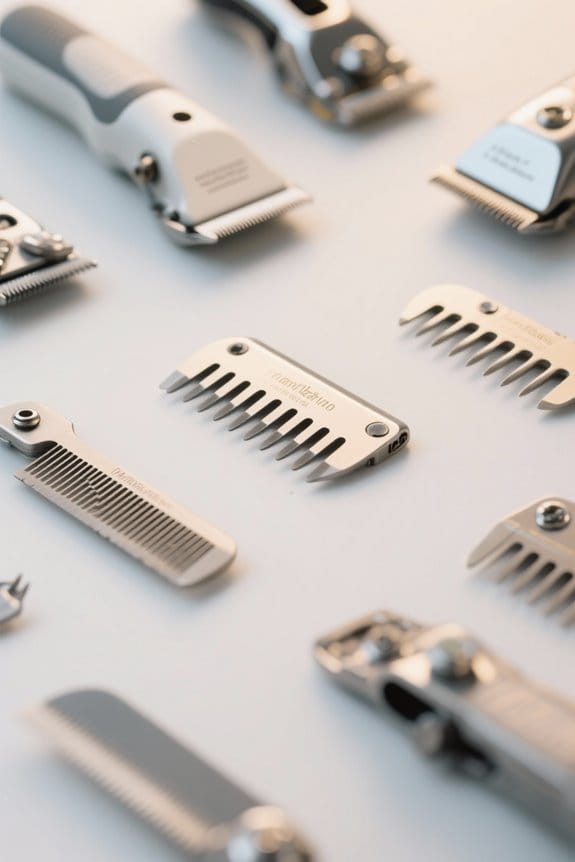
Understanding Blade Types for Cat Clippers

When selecting blades for cat clippers, we must consider factors like coat condition and desired length. Generally, a size 10 blade, leaving 1.5-1.8mm of hair, is ideal for standard trims. For tougher mats, we recommend a size 15, while a size 30 is appropriate for severely matted areas but needs caution. Additionally, materials like stainless steel and ceramic affect durability and heat retention. Prioritizing proper maintenance guarantees blade effectiveness, and there’s more important information to follow.
Key Takeaways
- Choose blade size based on coat condition; size 10 is ideal for general clipping, and size 15 or 30 for tougher mats.
- Blade materials include stainless steel for durability and ceramic for cooler operation, affecting comfort during grooming sessions.
- Proper tooth spacing enhances grooming efficiency, with wide-tooth blades for thick fur and fine-tooth blades for short coats.
- Regular maintenance, including tension adjustments and oiling, ensures optimal blade performance and prevents skin irritation during clipping.
- Monitor blades for signs of dullness or snagging, and replace them every 10-12 weeks for optimal grooming quality.
What Type of Blade Should I Use?
You may be interested


When selecting the appropriate blade for cat clipping, it’s essential to assess both the coat condition and the desired cutting length. For general clipping, a size 10 blade, which measures 1.5-1.8mm in length, offers an ideal balance for safety and aesthetic. If we’re encountering mats in tough-to-reach areas, a size 15 blade, cutting at 1.2-1.5mm, can provide a closer cut without excessively thinning the coat. It’s imperative to choose a size 30 blade for severely matted sections, though we must exercise caution to prevent skin injury. Additionally, adjustable 5 in 1 clipper blades allow for varied blade lengths in one attachment, enhancing our grooming efficiency. Always verify compatibility with the clipper model before making a purchase. Regular clipping combined with proper brushing helps maintain a healthy coat and skin while reducing the likelihood of severe matting.
Understanding Clipper Blade Sizes
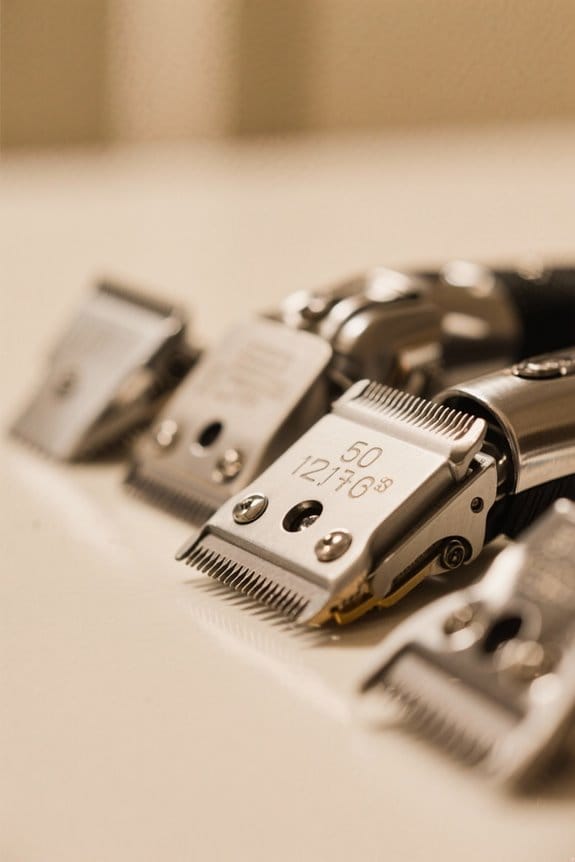
Clipper blade sizes play a critical role in achieving the desired grooming results for our feline companions, with a range that typically spans from #50, which cuts hair to under 1mm, to #3, leaving hair over 1cm long. Understanding each blade size helps us determine appropriate cutting lengths based on our cat’s coat type and grooming needs. For general grooming, a #10 blade is commonly used, leaving approximately 1.5-1.8mm of hair. On the other hand, lower numbered blades like #3 or #4 cater to thicker, longer fur, while higher numbers allow for fine detailing and closer cuts. Each blade size influences not only the grooming process but also the overall appearance of our cats following clipping procedures. Just as crunchy textures in dental treats provide mechanical benefits for oral health, the physical design of clipper blades determines how effectively they cut through various coat densities.
Recommended Products

Upgrade stainless steel fixed blade and ceramic moving blade can provide excellent cutting performance.

The attachment combs fit all type A5 detachable blades (sizes 10, 15, and 30) ,These attachment combs are designed to fit over standard A5 detachable blades and come in sizes that address the most common grooming needs. also compatible with most Oster ,Wahl and Andis detachable-style clippers.

1. Complete 8-Size Grooming Set Includes 8 popular guide comb sizes and a durable storage case, providing versatile coat-length options for everyday grooming and professional styling.
Recommended Blade Lengths for Cats
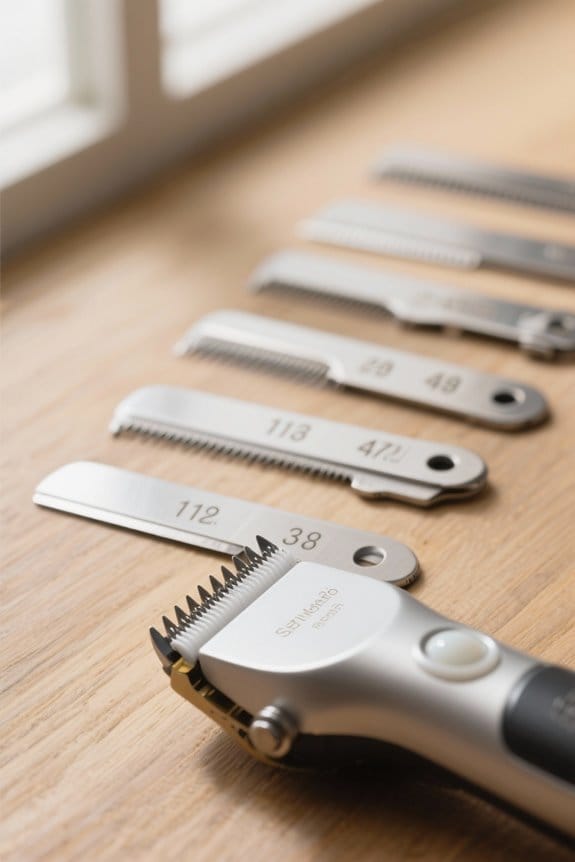
Understanding the recommended blade lengths for cat grooming is essential for achieving ideal results, as different hair lengths serve varying grooming purposes. For general grooming, using a size 10 blade is typically advised, as it leaves approximately 1.5-1.8mm of hair, suitable for standard trims and lion cuts. When dealing with intermediate clipping or mats, a size 15 blade can be utilized, trimming hair down to around 1.2-1.5mm for a closer cut. In severe cases, a size 30 blade, which cuts to about 0.5mm, proves effective for matted areas, but requires caution to prevent skin pulling. Each of these blade lengths caters specifically to varying coat types, enhancing overall comfort and efficiency during the grooming process. Quality grooming tools feature sharp stainless steel blades that ensure effective cutting without causing discomfort to your pet during the grooming session.
Recommended Products

Durable Stainless Steel Comb: This clipper comb cuts to a 3/8 inch length for professional, easy dog, cat, and pet grooming

MATERIAL: The blade of the detachable clipper is made of premium carbon and steel;The sharp cutting edges of the blade are made precisely for long-term use

Replacement Blade: Providing a smooth cut and show-quality finish for animal coats, the extra wide #10W blade offers a 1 8mm (1/16-inch) cut length
The Importance of Blade Material
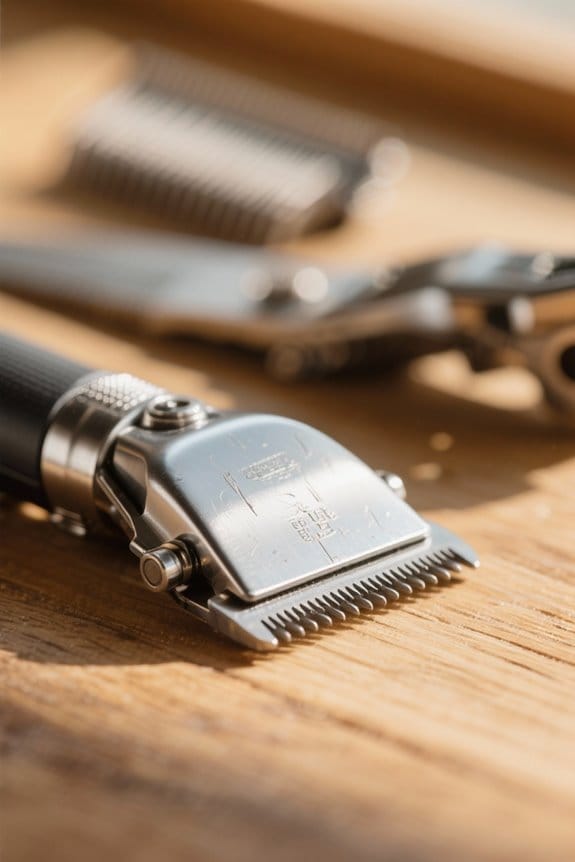
Selecting the right blade material is significant for ensuring a successful grooming experience, as it directly impacts both performance and comfort for our feline companions. The most common options are stainless steel and ceramic blades, each offering unique advantages. Stainless steel provides durability and corrosion resistance, making it suitable for extensive use; these blades can be sharpened repeatedly, yielding a sharp edge at a lower long-term cost. Conversely, ceramic blades remain cooler during use, reducing the risk of overheating and discomfort for sensitive cats, but often require replacement once dull. Consequently, blade material selection is essential; selecting the appropriate material enhances maintenance requirements, influences overall grooming efficiency, and assures a smooth, stress-free clipping process for our pets. Additionally, precision-cut blades with rounded edges are particularly beneficial for trimming delicate areas and reducing the risk of injury to cats with sensitive skin.
Recommended Products

3pcs/pack standard size blades for replacement in a package,please noted clipper is not included

6 pack standard size blades replacement in the package,please noted clipper is excluded

Low heat transfer and friction index of Ceramic keeps blades running 50 percent cooler than steel
Tooth Spacing and Its Impact on Grooming
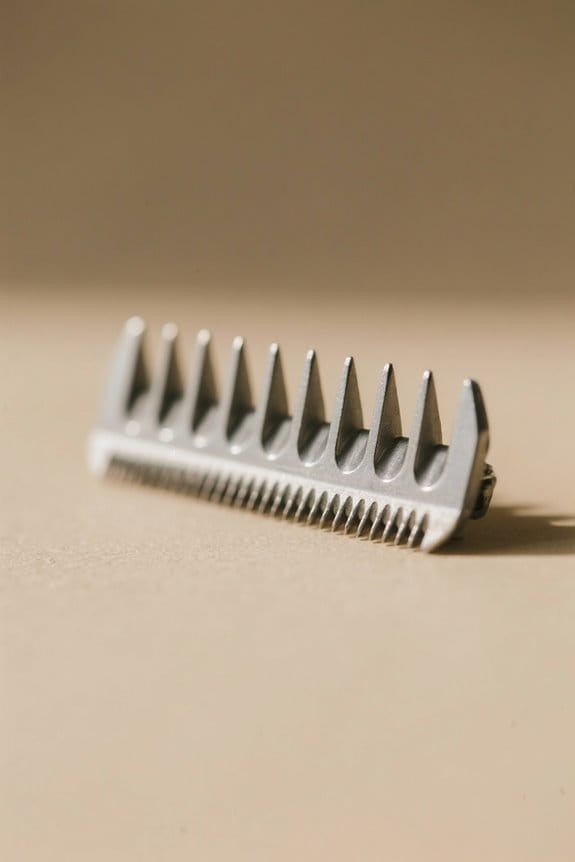
When it comes to grooming our feline friends, the spacing of the blades’ teeth plays an essential role in the effectiveness of the process, particularly as it influences how well the clipper interacts with different coat types. Wide-tooth blades, characterized by their spaced-out teeth, are ideal for cutting through thick or matted fur, facilitating quicker grooming while minimizing the risk of snagging. Conversely, fine-tooth blades, with their closely spaced teeth, provide a smooth and precise cut, making them suitable for shorter, finer coats. Selecting the appropriate tooth spacing can considerably enhance our grooming efficiency, improving hair feeding and cutting performance, thereby ensuring our cats experience reduced stress and discomfort during the grooming session, ultimately promoting better overall skin and coat health. For cats with particularly thick coats or severe matting, pairing clippers with dual-sided deshedding tools can help prepare the fur and reduce shedding by up to 95% before clipping begins.
Matching Blades to Different Coat Types
Choosing the right blade type for grooming our cats is essential to guarantee the best results tailored to their individual coat characteristics. For long, thick coats found in Maine Coons, we should utilize clipper blades #3 to #4 to effectively reduce bulk without sacrificing length. Curly coats, seen in Poodles, benefit from wide-tooth blades #3 to #5, which help prevent pulling while guaranteeing smooth results. In contrast, short, smooth coats like those of Beagles require fine-tooth blades #7 to #10 for a close trim without irritation. For double coats, such as Huskies, longer blades #5 or #7 are ideal for steering through outer coats while protecting the softer undercoat. Properly matching blades to coat types guarantees peak grooming efficiency. When dealing with thick or matted fur, stainless steel or ceramic blades provide the necessary cutting power while reducing heat buildup for safer grooming sessions.
Tips for Clipping Matted Cat Coats
Properly clipping matted cat coats requires a systematic approach to guarantee both the cat’s safety and a successful grooming outcome. When addressing badly matted areas, we should use a size 30 blade for a very close cut, taking extra care to avoid tugging at the skin. For less severe mats, a size 15 blade serves effectively, minimizing irritation. Initially, we must employ wide-tooth blades, like a skip tooth #7, for first passes to reduce snagging and pulling. Always keep the coat taut before clipping to prevent hitting skin folds, as cat skin is thinner than dog skin. Additionally, regular blade maintenance is essential; dull blades can create snagging, complicating the clipping process and causing unnecessary discomfort. For mats that are less severe or to maintain the coat between clipping sessions, consider using slicker brushes with rounded bristles to gently work through tangles and prevent future matting.
Maintenance of Clipper Blades
Maintaining clipper blades is essential for guaranteeing ideal grooming performance and the comfort of our feline patients. We should regularly clean steel blades every five minutes during use to prevent hair build-up, which can hinder cutting efficiency and lead to dull edges. It’s vital to oil sharp blades before, during, and after grooming sessions to reduce friction and prevent overheating. Detachable blades also require regular tension adjustments using a flathead screwdriver, ensuring optimal top cutter movement for effective clipping. If we notice signs of snagging or tugging, resharpening the blades promptly can extend their lifespan, maintaining grooming quality for 10 to 12 weeks. Prioritizing proper blade care guarantees a smooth, efficient grooming experience for our cats. Just as digestive enzymes help break down food for better nutrient absorption in cats, well-maintained clipper blades ensure efficient cutting action by properly separating and processing each hair strand during grooming.
Sharpening Your Clipper Blades
After addressing the importance of maintaining clipper blades, we should focus on sharpening our clipper blades to guarantee peak performance during grooming sessions. Regular sharpening is essential, especially since cat coats can be denser and finer than those of dogs. We recommend sending our blades, particularly Andis adjustable blades and A5 detachable blades, to professional sharpening services for ideal results. Dull blades will snag or tug, indicating the need for immediate resharpening. Instead of sharpening individually, we should consider resharpening blades as sets, promoting uniform performance across all blades. With proper care and regular sharpening, we can extend the usable life of our blades to approximately 10-12 weeks, ensuring effective cutting throughout our grooming endeavors. Just as with nail clippers, blade sharpness should be regularly inspected to ensure clean, effective cuts during each grooming session.
Safety Precautions When Grooming Cats
Understanding the necessary safety precautions when grooming cats is essential for guaranteeing a safe and effective grooming experience. First, we should always use sharp blades, as dull ones can snag the coat, causing discomfort and potential skin damage. While clipping, it’s imperative to keep the cat’s coat taut, as this helps in preventing nicks from occurring due to loose skin folds, especially in areas like armpits and joints. We can achieve this by gently stretching the cat’s legs and carefully maneuvering the clippers. Additionally, leveraging instructional videos on grooming techniques can enhance our skills in safely handling clippers. When trimming near sensitive areas, incorporating a built-in safety guard can help prevent over-cutting and reduce the risk of injury. By adhering to these safety precautions, we can minimize risks and guarantee the cat remains comfortable and secure throughout the grooming process.
Adjusting Blade Tension for Optimal Performance
To achieve ideal performance from our cat clippers, it’s essential that we focus on adjusting the blade tension properly, as this greatly impacts cutting efficiency. First, we should obtain a flathead screwdriver and carefully turn the tension screw, guaranteeing the top cutter can move freely after each adjustment. A tension that’s too tight can restrict side-to-side movement, while one that’s too loose can lead to ineffective cutting, causing frustration during grooming. To guarantee a smooth cut and prevent snagging on our cat’s coat, we must regularly check the blade tension, making necessary adjustments as needed. After adjusting, don’t forget to apply oil to the blades, enhancing their functionality and preventing overheating during use for optimum grooming results.
Identifying When Your Blade Needs Replacement
Proper maintenance of our cat clippers includes not only adjusting the blade tension but also recognizing when it’s time to replace the blade. If we notice that the blade starts snagging or tugging on our cat’s coat, it’s a clear sign it needs replacement to guarantee a smooth grooming experience. Additionally, if the blade leaves patches or fails to cut evenly, it’s time to take into account a new one. Regular use typically renders blades ineffective after 10-12 weeks, so we should monitor for signs of dullness and visible damage, such as nicks or chips. For ideal grooming results and safe grooming practices, we must be proactive in replacing blades when sharpening no longer resolves persistent cutting issues.
Investing in Quality Clipper Blades
While we might be tempted to opt for cheaper options when purchasing clipper blades, investing in high-quality blades is vital for achieving optimal grooming results. Premium brands, like Oster and Wahl, provide durable blades designed to resist clipper burn, reduce coat damage, and guarantee peak performance. These blades typically feature sharper edges and better tooth spacing, which results in a smoother grooming process—especially important for dense or matted coats. Regular maintenance, including cleaning and oiling, is essential to extending the lifespan of these quality blades. By choosing durable blades with positive reviews from professionals, we not only enhance our grooming outcomes but also save money in the long run by minimizing the need for frequent replacements and maximizing efficiency.
Recommended Products

PET CLIPPER BLADE REPLACEMENT: This cat hair trimmer blade deeply penetrates diverse varieties of undercoat animal hair. Designed with a snap-on/off system, the replacement blade has quick-feed teeth, for pet hair sculpting.

PACKAGING - There with 3-pieces replacement hair blades (just for our hair clipper 005 & 006) in a box, the clipper is not included.

🐶【PERFECT DESIGN】High Quality Stainless Steal blade Cat & Kitten and easy for cut which is Small, lightweight claw clippers ideal for cats, kittens and other small animals.
Frequently Asked Questions
Does a #7 or 10 Blade Cut Shorter?
When we think about grooming techniques, a #10 blade cuts shorter than a #7, allowing for precise clipping length. Depending on coat types, we can create beautiful styles while keeping our furry friends comfortable.
What Clipper Blade for Cats?
When choosing clipper blade types for our cats, we recommend size 10 for general grooming and size 15 for mat removal. Using proper grooming techniques and maintenance tips is essential for these unique cat coat types.
What Do Different Clipper Blades Do?
Different clipper blades can transform grooming into an art form! By knowing clipper blade sizes and understanding blade materials, we can apply effective clipping techniques and follow blade maintenance tips for a smooth grooming experience.
Which Clipper Blade Is Best for Shaving Cats 4F 10 or 1F?
For shaving cats, the #10 blade’s perfect for fur length considerations and skin sensitivity factors. We recommend regular clipper maintenance tips to keep our grooming experience smooth, avoiding discomfort with a blade thickness comparison before choosing.