As an Amazon Associate, we earn from qualifying purchases. Some links on this site are affiliate links at no extra cost to you. Our recommendations are based on thorough research and editorial judgment.


How to Safely Bathe a Cat: Complete Guide

To safely bathe a cat, we begin by gathering essential supplies, including cat-specific shampoo, towels, and a non-skid mat. We fill the sink or tub with 2-3 inches of lukewarm water. Next, we gently brush the cat to prevent mats. We apply shampoo from neck down, avoiding the face, and rinse thoroughly. Afterward, we towel-dry the cat while providing positive reinforcement. Following these precise steps is vital for effective bathing. Further details and best practices are available.
Key Takeaways
- Gather necessary supplies like cat-specific shampoo, towels, and a non-skid mat before starting the bathing process.
- Prepare a calm environment; use a Feliway diffuser to help relax the cat and play before the bath.
- Brush the cat thoroughly beforehand to remove loose hair and mats, making the bathing process easier.
- Use lukewarm water, applying shampoo from neck down and rinsing well; avoid getting water in the cat’s face.
- After bathing, towel-dry the cat and offer treats and praise to reinforce positive behavior and reduce stress.
Understanding Feline Grooming Habits and Factors Influencing Bath Frequency
You may be interested



10 Best Bentonite Cat Litters for a Fresh and Odor-Free Home
January 31, 2026
While it might seem surprising, most cats are adept at grooming themselves, utilizing their specially designed tongues to remove dirt and oil, which reduces our need to bathe them frequently. Generally, short-haired cats require bathing every few months, while long-haired breeds may need baths every four to six weeks to prevent matting. Additionally, an indoor cat’s lifestyle allows it to go three to six months without a bath, but outdoor cats often require more frequent baths due to environmental exposure. Health conditions can further influence bath frequency; for instance, obese or senior cats may struggle with grooming, necessitating medicated baths. Senior cats in particular may benefit from additional care considerations, including ensuring proper hydration and kidney function through their diet alongside appropriate bathing schedules. Finally, hairless breeds like the Sphynx must bathe weekly to manage oil buildup and skin health.
When to Consider Bathing Your Cat

When should we consider bathing our cat? We typically need to think about bathing when our cat is dirty, has skin conditions, or struggles to groom effectively due to obesity or age. Hairless breeds, like the Sphynx, require weekly bathing to manage skin oil and prevent buildup. Long-haired cats may benefit from baths every 4 to 6 weeks to avoid matting and promote coat health, while short-haired cats could only need an occasional bath every few months. If we notice specific skin conditions, it’s essential to consult a veterinarian, as medicated baths might be necessary to alleviate infections or irritations. Additionally, exposure to harmful substances, such as gasoline or antifreeze, necessitates immediate bathing to avoid serious health complications. Cats experiencing hot spots or skin irritations from allergies or flea infestations may also benefit from bathing as part of their treatment plan.
Essential Bathing Supplies for Cats
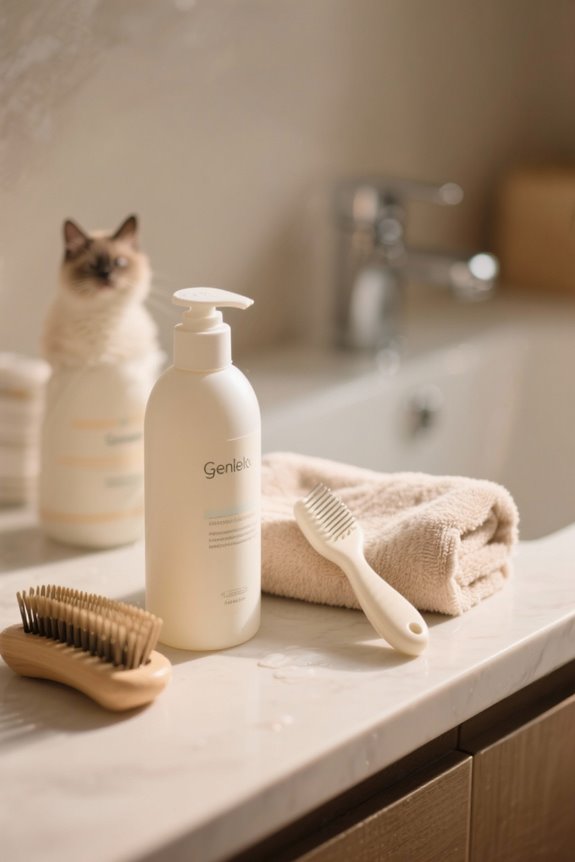
To effectively bathe a cat, it is vital to have the right supplies at hand, making certain the process is both safe and efficient. Begin by selecting a cat-specific shampoo, such as DermAllay Oatmeal Shampoo, to avoid skin irritation. Next, gather essential items, including grooming wipes, cat-safe ear cleaner, towels, and a non-skid mat to prevent slipping during the bath. It’s also advantageous to have additional tools like a spraying faucet attachment for thorough rinsing and a pet grooming dryer for productive drying. Prior to bathing, confirm the bathing area is calm and quiet, which can significantly reduce stress for your cat while we complete this necessary task. Preparing these bathing supplies beforehand will facilitate a smooth experience. Additionally, consider having dryer balls ready for post-bath laundry to effectively remove any pet hair from towels and other fabrics used during the bathing process.
Recommended Products

【Wide Functions】Cats are naturally afraid of water, so they have fierce resistance when bathing, cat washing bag is very suitable for help cat bathing, trimming nails, cleaning ears and teeth, giving injections and medicine, eye drops, easy to care for your cat.

Product Contents: The cat bathing bag set includes 2pcs cat shower bags of different colors( pink and gray),1pcs pet comb, 1ps shower brush, 1pc pet nail tweezers, 1pc nail, 1pc cat nail cap and 3pcs pet insect catchers. The pack contains full set of tools for pet bathing, very convenient to use.

【Premium Pet Supplies for Showerheads & Sprayers】Our 6PCS pet grooming kit includes 2PCS pet grooming gloves, 2 PCS dog washing brush, and 2PCS dog finger toothbrush to meet all your pet care needs—bathing, grooming, hair removal, massaging, and oral care. Crafted from soft, premium silicone, it’s safe and gentle for dogs, cats, horses, and other pets - The Best Dog Gifts - Merry Christmas
Preparing Your Cat for a Bath
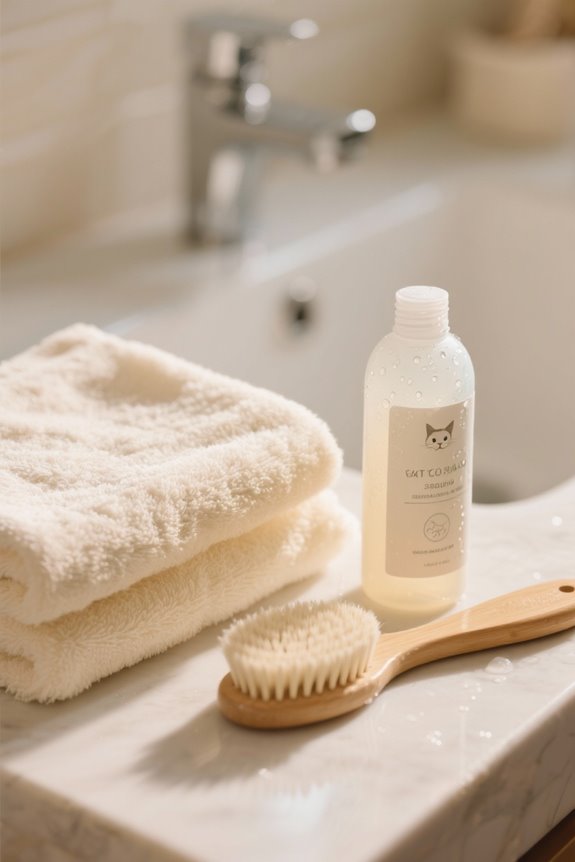
Preparing your cat for a bath involves several critical steps that can help guarantee a smoother experience for both you and your pet. First, we should gather all necessary supplies, including cat-specific shampoo, several dry towels, and a rubber mat to prevent slipping. Prior to bathing, it’s essential to trim your cat’s nails a few days in advance, minimizing the risk of scratches during the bath. We should also brush your cat thoroughly to remove loose hair and tangles, enhancing comfort. To create a calm environment, using a Feliway diffuser and minimizing noise can greatly reduce your cat’s stress. Engaging in playtime before the bath may also help tire them out, resulting in a more relaxed bathing experience. When selecting a shampoo, consider using a hypoallergenic formula with soothing ingredients like oatmeal and aloe vera to maintain pH balance and protect sensitive skin.
Creating a Cat-Friendly Bath Environment
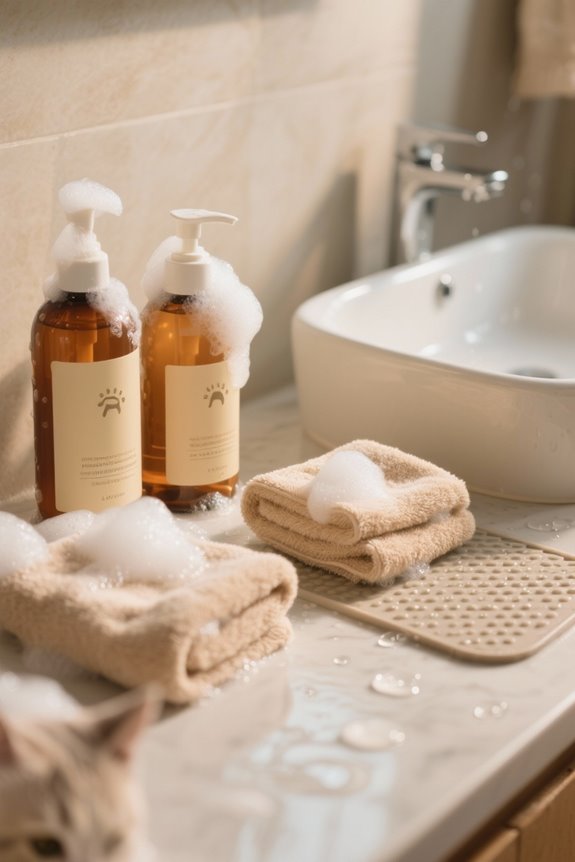
Creating a calming atmosphere in the bathing area is essential for reducing your cat’s anxiety and ensuring a successful bath. First, we’ll need to eliminate distractions; close doors, and remove items that might frighten them, creating a secure environment. Next, place a rubber mat or towel in the sink or tub to prevent slips, enhancing the cat’s sense of stability. Fill the basin with lukewarm water, ensuring it’s shallow enough to wet the cat without submerging it, making the experience less intimidating. Gather all necessary supplies—shampoo, towels, and washcloths—and keep them within reach to avoid leaving the cat unattended, which may increase their stress. Consider using a water-resistant carrier nearby as a safe retreat space where your cat can feel secure before and after the bath. Finally, introduce your cat to the bathing area gradually for a calm and familiar approach.
Recommended Products

Adorable Cat-Shaped Design – Inspired by the soft, relaxed charm of a cat lying on its back, this unique novelty bathmat brings a playful and cozy touch to your bathroom. The blue floral cat pattern adds a refined decorative look, making it ideal for cat lovers, cute bathroom decor, and fun home styling.

Black Cat & Monstera Leaf Design:This black cat bathroom rug features a playful black cat combined with trendy monstera leaf-elements, creating a cute and modern bath rug that adds personality to any bathroom décor

Wide Range of Application:These versatile cat bath mat can be used on stairs, patios, garages, laundry rooms, indoors and outdoors, use them to decorate your house and welcome guests. The mat prevents water, sand, mud and snow from entering the house
How to Hold Your Cat During Bathing
While we may feel apprehensive about holding our cat during the bathing process, it’s essential to do so with confidence and care to assure the safety of both the cat and ourselves. To properly hold the cat, we should scruff the loose skin at the nape of their neck, which provides better control during bathtime, minimizing distress. For added security, consider using a grooming loop or gentle harness to secure your cat in place, preventing sudden movements that could lead to scratches. Ascertain the cat is facing away from the running water, which alleviates fear and facilitates easier washing. Additionally, employing calming techniques, such as speaking softly or offering gentle pets, can greatly reduce anxiety for our feline companion. Using grooming tools that operate at low noise levels can further minimize stress during bathing and grooming sessions.
Step-by-Step Guide to Bathing Your Cat
Now that we’re prepared to hold our cat securely, it’s time to begin the bathing process with a systematic approach. First, we gather all supplies: cat shampoo, towels, a rubber mat, and conditioner. It’s essential to brush our cat thoroughly beforehand, which helps remove loose hair and mats, making the process smoother. Next, we fill a sink or tub with 2-3 inches of lukewarm water, ensuring our cat’s head stays above water as we introduce them slowly. We then apply cat shampoo from the neck down, avoiding the face and ears, and rinse thoroughly to eliminate any residue. Finally, we use a towel to dry our cat completely, keeping them warm to prevent chills, especially for sensitive breeds. For cats who find traditional bathing stressful, cat bathing wipes offer a convenient alternative for maintaining hygiene between full baths.
Tips for Wetting Your Cat Effectively
To wet our cat effectively, we must proceed with careful consideration of both technique and the animal’s comfort. Begin by ensuring the water temperature is lukewarm, as extremes can cause discomfort. Using a gentle sprayer or pitcher, start wetting your cat from the neck down to prevent fear and avoid water entering the ears or eyes. It’s essential to wet your cat thoroughly, but we should avoid saturating the head. Instead, we can clean the face afterward using a damp cloth. If our cat resists being wet, we can gradually introduce water by using a washcloth, gently wiping it over their body. Additionally, make sure the bathing area has a non-skid surface for support and security. For cats who experience significant bathing anxiety, consider using self-cleaning litter boxes between baths to maintain hygiene and reduce the frequency of necessary bathing sessions.
Choosing the Right Shampoo for Your Cat
Selecting the right shampoo for our cat is an important step in ensuring their coat remains healthy and clean, particularly after a bath. Always opt for a cat-specific shampoo, as dog shampoos can cause skin irritation due to differing pH levels. It’s vital to choose all-natural or hypoallergenic formulas to reduce the risk of allergic reactions. For cats suffering from skin conditions, consulting a veterinarian is important to find appropriate medicated shampoos tailored to their health needs. Additionally, we can consider using conditioners specifically designed for cats, particularly for long-haired breeds, to enhance softness and reduce static. Avoid using human shampoos, which may strip essential oils and lead to dryness and additional skin issues. Just as with bath products, it’s essential to select pet-safe ingredients in all grooming and care products we use on our cats to prevent irritation and health complications.
Rinsing and Drying Your Cat Properly
After we’ve successfully shampooed our cat, it’s essential to focus on rinsing them thoroughly to remove all traces of the product, as any leftover residue can irritate their skin. We should use lukewarm water and rinse until the water runs clear, ensuring complete removal of the shampoo. Avoid directly wetting the cat’s head; instead, we can use a damp cloth to gently clean their face while keeping it dry. For long-haired or dry-skinned cats, applying a cat-specific conditioner is advisable, but it must be rinsed out completely to prevent buildup. After rinsing, we gently squeeze excess water from their fur without scrubbing, minimizing stress. Finally, wrap your cat in a towel to absorb moisture, providing warmth. If your cat sustains any minor scratches during the bath, consider applying an antiseptic spray to prevent infection and promote healing.
Recommended Products

COMPLETE SET: Includes a microfiber bath wrap towel and matching hair turban featuring an adorable colorful cat pattern, perfect for after-shower drying and getting ready

This body wrap bath towel for kids girls is made of premium coral fleece, extremely soft and skin-friendly; Absorbing the water on your princess' skin quickly; breathable, warm and cozy for wearing; Machine Washable

[Size] This dog towel is available in 4 colors and 5 sizes, suitable for almost all sizes of dogs and cats, please check the picture details for specific sizes. Please make sure to measure your pet carefully before purchase, if your pet's measurement is between two sizes, please choose the bigger size
Managing Your Cat’s Stress During Bath Time
Although bathing a cat can be a challenging task, managing their stress during this process is vital for their overall well-being and cooperation. First, we should create a calm environment by minimizing noise and distractions. Before placing our cat in the water, we can gently place our cat into the tub, ensuring they feel secure. Gradually introducing water using a damp washcloth helps build positive associations and reduces anxiety. Using a Feliway diffuser before and during bath time promotes relaxation. It’s important to reinforce positive behavior, offering treats and gentle praise when they remain calm. Finally, keeping the bath duration under 10 minutes prevents overwhelming the cat, minimizing stress-related behaviors and fostering a more positive bathing experience.
How to Reward Your Cat After Bathing
To effectively reward our cat after bathing, it’s important to provide immediate positive reinforcement, which establishes a favorable association with the bathing experience. We should offer treats, such as a few small pieces of their favorite soft delicacy, immediately following the bath. This action reinforces the idea that bathing leads to a positive experience. Additionally, we can provide verbal praise with soothing words, helping decrease any stress caused by the bath. Engaging in a brief play session with a preferred toy further diverts attention and fosters a joyful atmosphere. Also, gently petting and cuddling our cat after the bath offers comfort, while a small portion of wet food can serve as a special reward, making the experience more enjoyable.
Alternatives to Full Baths for Cat Hygiene
While rewarding our cat after a bath is important, exploring alternatives to full baths can help maintain their hygiene with less stress. For routine cleaning, we can utilize pet-safe grooming wipes, which effectively remove dirt and debris from our cat’s fur without the need for water. Additionally, a damp washcloth can be employed to gently wipe down our cat’s coat, concentrating on areas that typically collect dirt or emit unpleasant odors. In situations where a quick clean is needed, dry shampoo specifically formulated for cats can be sprinkled onto the fur to absorb oils. Finally, regular brushing not only reduces loose fur but also minimizes the frequency of baths, thereby contributing considerably to our cat’s overall coat health.
Signs That Indicate Your Cat Needs a Bath
Recognizing when our cat needs a bath involves paying close attention to several critical signs, as maintaining their hygiene is essential for their overall health. If our cat develops a strong odor, particularly common in long-haired breeds, it’s a clear indication they need a bath. Additionally, we should watch for skin issues, such as infections or excessive oiliness, which often require medicated baths to promote healing. Cats with flea infestations also need baths to remove fleas effectively from their skin and coat. If our cat rolls in something sticky or dirty, like grease or mud, a bath becomes necessary to restore cleanliness and prevent skin irritation. Finally, obese, elderly, or arthritic cats may struggle to groom, indicating they need a bath to maintain hygiene.
Frequently Asked Questions
What Is the 3-3-3 Rule for Cats?
The 3-3-3 Rule for cats helps us understand their behavior during adjustment: three days of anxiety, three weeks of exploration, and three months for them to feel at home, needing our patience and grooming essentials.
What Is the Safest Way to Bathe a Cat?
To safely bathe our cats, we should prep supplies, use gentle cat bathing techniques, and focus on post-bath care. Keeping calm during the process and rewarding them with treats makes it less stressful for everyone.
What Are Common Mistakes When Bathing a Cat?
When we bathe our cats, we often forget to use proper bath products and check water temperature. Ignoring cat behavior and forcing them into the bath can lead to stress and a messy experience for everyone.
How Do You Give an Unwilling Cat a Bath?
To give an unwilling cat a bath, we can use feline resistance techniques, like a calm environment and treats. Afterward, we’ll practice post-bath care, ensuring they feel secure and reassured throughout the process.