As an Amazon Associate, we earn from qualifying purchases. Some links on this site are affiliate links at no extra cost to you. Our recommendations are based on thorough research and editorial judgment.


Understanding the Direction of Hair Growth in Cat Grooming

Understanding hair growth direction in cat grooming is essential for maintaining coat health. We should groom in the direction of hair growth to preserve protective qualities, enhance circulation, and minimize discomfort. Clipping techniques can vary; clipping with the grain retains length and insulation, while clipping against the grain shortens the coat for shedding management. Using appropriate tools, like slicker brushes for long-haired cats and soft brushes for short-haired ones, can greatly improve grooming results. More details on specific grooming techniques will help optimize care for your cat.
Key Takeaways
- Grooming should be done in the direction of hair growth to maintain coat health and prevent irritation.
- Clipping with the grain preserves the coat’s protective qualities, while clipping against it shortens the coat and manages shedding.
- Different coat types require varied grooming techniques; short-haired cats need less frequent grooming than long-haired ones.
- Regular grooming promotes blood circulation and distributes natural oils, enhancing overall skin health.
- Cat grooming should align with individual needs, considering coat type, sensitivity, and potential environmental factors like sun exposure.
The Importance of Following Hair Growth Direction
You may be interested


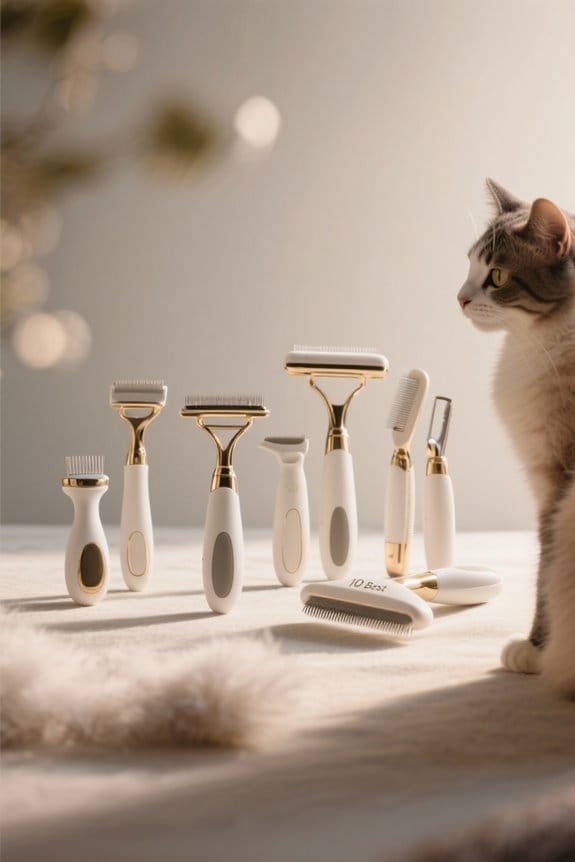
When we groom our cats, it’s crucial that we recognize the importance of following the direction of hair growth. Grooming in this manner helps maintain the coat’s protective qualities while promoting even layering. This technique stimulates blood circulation in the skin, which is essential for overall skin health and facilitates the distribution of natural oils. By sticking to the natural hair growth direction, we can prevent potential irritation or discomfort that can arise from grooming against the grain. Additionally, our efforts to follow this direction enhance the grooming experience, strengthening the bond between us and our cats. For optimal results, begin grooming near the base of the coat and work outward, which ensures effective fur management while maintaining your cat’s comfort throughout the process. Ultimately, an informed approach to grooming guarantees a healthier coat and improved well-being for our feline companions.
Clipping Techniques: With the Grain vs. Against the Grain
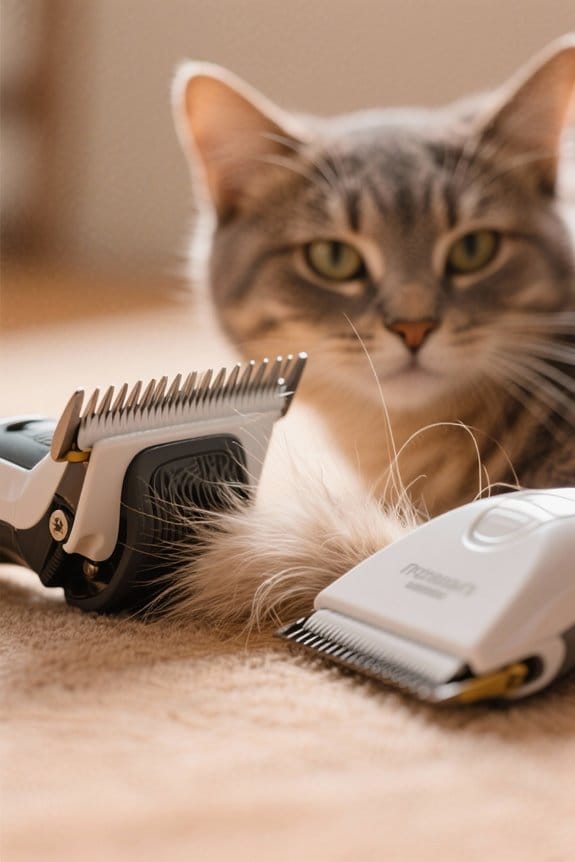
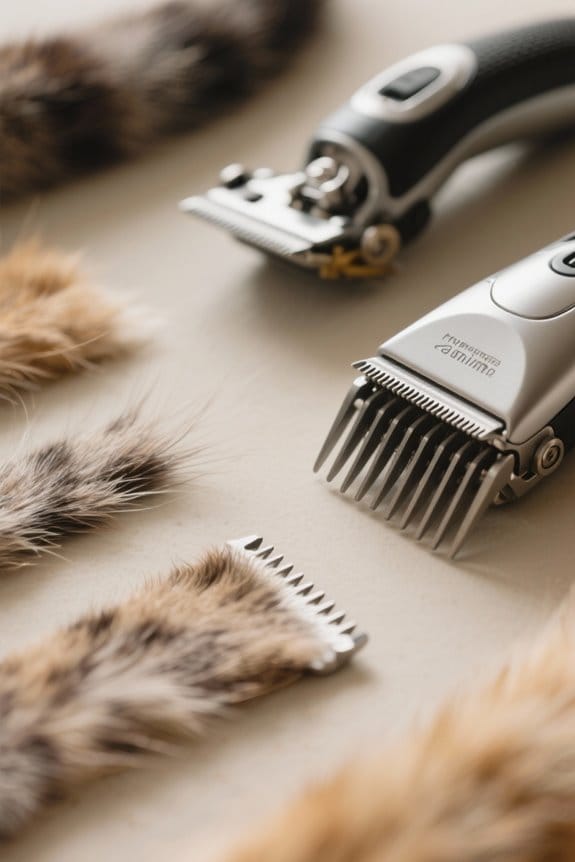
Understanding the differences between clipping with the grain and against the grain is essential for effective cat grooming. Clipping techniques vary in purpose; when we clip with the grain, we follow the natural direction of hair growth, preserving the coat’s protective qualities and leaving it longer. This method tends to yield a more uneven finish. On the other hand, clipping against the grain shortens the coat and removes down hairs, but could expose lighter coat colors to sunburn. Experienced groomers often prefer clipping with the grain, ensuring minimal disruption to arrector-pili muscles, while learners may find the pronounced results of clipping against the grain more appealing. Ultimately, we must assess each cat’s coat conditions and groom accordingly. When selecting clippers for matted hair, look for models with sharp stainless steel blades that operate quietly to minimize stress during grooming sessions.
Recommended Products

Trimmed Clean and Fast: Cat hair clippers is the combination of powerful motor plus sharp stainless steel head and safe ceramic head, pet shaver brings a smooth and unhindered grooming experience. Oneisall pet shaver is safe and efficient, with limit comb cuts cleanly without harming your pet. Thanks to its accompanying storage bag, making organization and portability a breeze.

Below 50 dB: The oneisall silent motor reduces noise by 17%, ensuring that even the most sensitive pets won't be scared, allowing them to enjoy a comfortable grooming experience

Ultra-Quiet : The silent cat clipper’s noise when working is below 50dp,making it ideal for cats who are sensitive to noise. Trim your beloved feline's paws, face, ears, legs, and other areas without causing any fear or anxiety.For long haired cats, please first trim their hair to the appropriate length with steel scissors and combs, then use 3-in-1 electric trimmer for body trimming to avoid pulling,
Effects of Clipping Directions on Coat Health
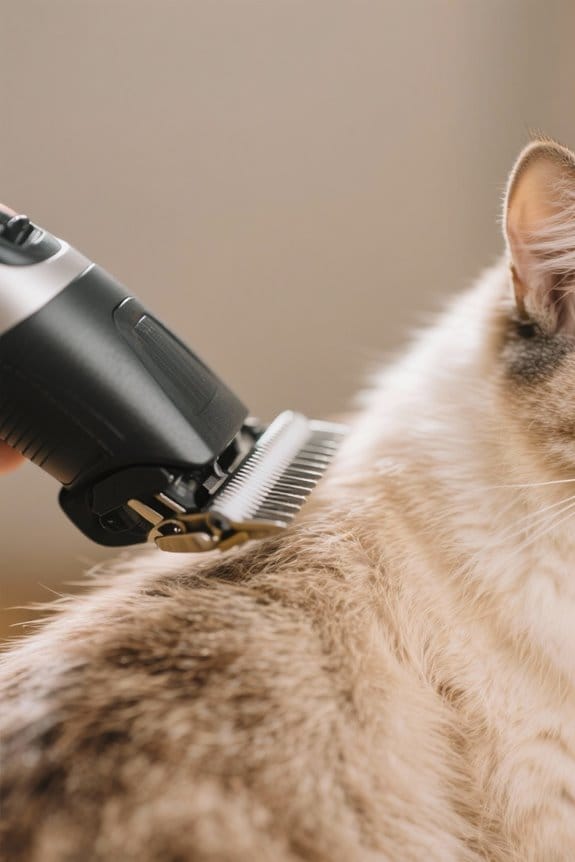
Clipping directions can markedly affect a cat’s coat health, as both techniques have distinct implications for the animal’s well-being. Clipping against the grain creates a shorter coat, effectively managing shedding and reducing down hairs, which contributes to cleanliness. Conversely, clipping with the grain preserves more of the undercoat, providing insulation and protection from environmental factors. While these grooming practices can’t be proven to adversely affect skin health, we must consider the individual cat needs and potential sun exposure, especially for lighter-coated breeds. Regular grooming routines should also incorporate dental care assessments, as approximately 40% of cats experience dental disease that often goes unnoticed during typical grooming sessions. Consequently, our grooming approach should be tailored, incorporating appropriate grooming methods that address shedding management and the cat’s specific lifestyle requirements, ensuring a balanced and healthy coat overall.
Factors Influencing Clipping Method Choice
Selecting the appropriate clipping method for a cat is important, as it can greatly impact its coat health and comfort. The choice should reflect the cat’s hair type, grooming history, and sensitivity to grooming procedures. For example, long-haired cats often require gentle clipping techniques to prevent matting, while lighter-coated cats may be clipped against the grain, which can expose them to sunburn; therefore, environmental factors are significant. Clipping with the grain allows for better retention of the undercoat, offering insulation during colder months. Additionally, evaluating a cat’s grooming history is crucial since cats accustomed to regular grooming might tolerate varied clipping methods more effectively. Between clipping sessions, using a slicker brush with fine, coated bristles can help maintain coat health and reduce shedding by capturing loose hair effectively. We must carefully consider each factor to guarantee a safe and comfortable grooming experience.
The Role of Brushing in Maintaining Coat Integrity
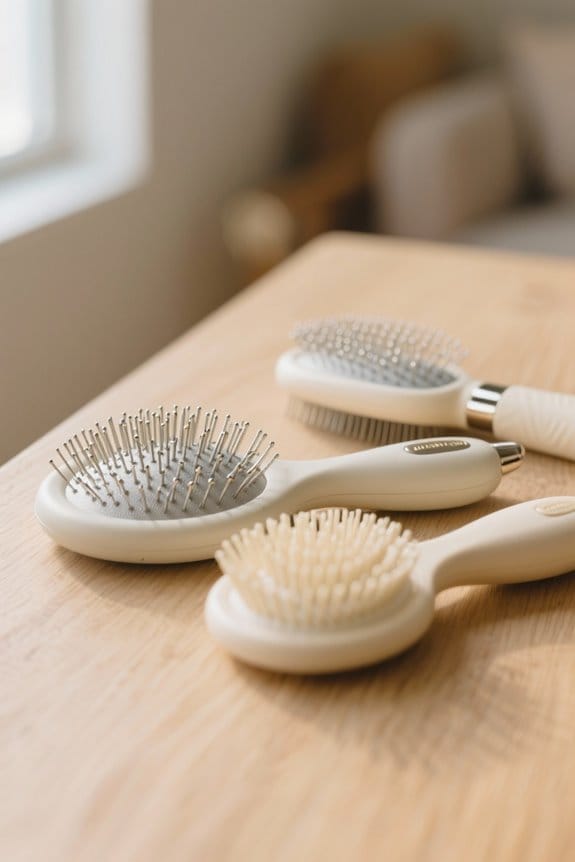
Brushing plays a considerable role in maintaining the integrity of a cat’s coat, making it an essential component of any grooming regimen. Regular brushing helps eliminate loose hairs and undercoat, reducing the risk of matting, especially in long-haired breeds. By using slicker brushes for lengthy fur and bristle brushes for shorter coats, we maximize brushing effectiveness. Additionally, grooming techniques matter; brushing with the grain promotes natural shine and enhances coat integrity, while against the grain efficiently removes tangles. Our consistent grooming sessions also improve blood circulation, thereby supporting healthy skin and facilitating ideal hair growth. Specialized de-shedding tools can reduce shedding by up to 90% when used regularly, making them particularly effective for managing excessive fur loss. Following these steps can greatly contribute to the overall health and appeal of our cats’ coats.
Recommended Products

Dual-Head Design: 2 sides, 2 coats, 1 tool! Use the 9-teeth side of this dog and cat brush for smooth dematting, and the 17-teeth side for quick coat thinning and deshedding.

DUAL-SIDED DESIGN: Our Undercoat Rake Dog brush is perfect for deshedding your pet's coat. Designed with a dual-sided design, start with a 9-teeth side to tackle stubborn mats and tangles, and finish with a 17-teeth side to thin out and deshed after.

【Easy Desheding】: Swihauk self cleaning dog brush for long haired dogs with release bottom helps effortlessly reduce shedding. A must have dog brush for short haired dogs, cat brush for indoor cats, cat brush for shedding, slicker brush for dogs.
Grooming Sensitivity: Understanding Your Cat’s Needs
Understanding our cat’s grooming sensitivity is vital to providing an effective and comfortable grooming experience. By recognizing the direction of hair growth, we can select appropriate grooming techniques that align with our cat’s needs. Cats often exhibit signs of discomfort, such as skin rippling or tail twitching, when groomed against their natural hair growth direction. For those with sensitive skin, this discomfort can lead to negative experiences. Observing our cat’s reactions helps us modify our grooming approach, enhancing their comfort and compliance. Additionally, tailoring techniques to suit a cat’s unique coat type and growth direction not only minimizes sensitivity but also promotes a more positive grooming experience. Professional grooming can further guarantee that we address these sensitivities effectively. Using grooming tools with soft edges prevents skin irritation and ensures a safer, more comfortable experience for cats during their grooming sessions.
Recommended Products
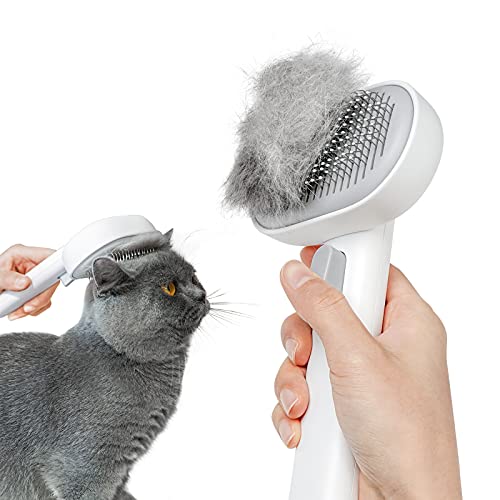
【Professional Cat Hair Brush】Perfect gift for pet owners, vets, and pet groomers. Using this cat brush for long haired cats on a regular basis can gently and effectively remove loose hair, tangles, knots, dander and trapped dirt. Suitable for short, medium or long, thick, thin or curly haired dogs/cats/rabbits, making your pets shiny and healthy.

Gentle Bristle Brush: The Menesia Pet Soft Brush features soft boar bristles that are perfect for cats and dogs with short hair, providing a gentle grooming experience.

Cat brushes for long haired cats and short haired cats
Grooming Tools for Optimal Results
Choosing the right grooming tools is essential for achieving ideal results in our cat grooming routine, as the appropriate instruments can greatly enhance both the effectiveness and comfort of the process. For effective grooming, we should utilize a slicker brush to remove loose hair and tackle tangles, especially for long-haired cats. Coupling this with a metal comb helps smooth and detangle the fur without discomfort. For cats prone to excessive shedding, incorporating a de-shedding comb can remarkably improve coat health and minimize hairballs. Additionally, we should not neglect nail trimming; using specialized nail clippers guarantees safety and precision. When dealing with thick or matted fur, quiet pet clippers operating below 50 decibels can provide a stress-free grooming experience while efficiently managing challenging coat conditions. Finally, finishing grooming sessions with rubber grooming mitts enhances shine and relaxation, promoting an overall positive experience for our feline companions.
Recommended Products

Grooming and Vacuuming All at Once : Our pet grooming clippers with vacuum function, can collects 99% of pet hair into a vacuum container. The removed loose hair will be sucked into the vacuum dust box directly when grooming pet hair, no mess, keep your home neat and clean. Even if you are a novice, you can easily complete home grooming
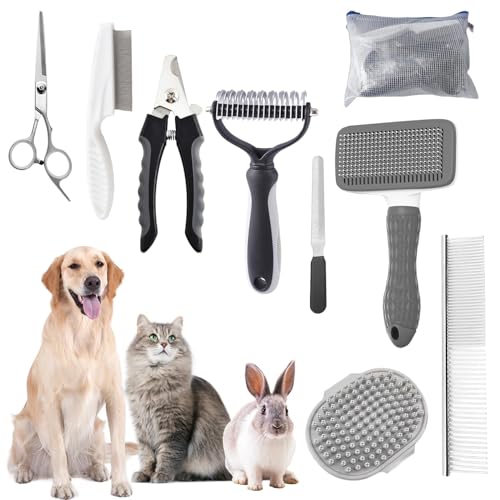
All-In-One 9-Piece Set:complete set of cat rabbit dog grooming brushes for grooming, all the essentials in one easy-to-find, easy-to-carry bag;Includes all the tools needed for your pet's daily care shedding with a self-cleaning brush, double-sided deshedding rake,bathing brush,coarse and fine-toothed rows of combs, flea comb,dog grooming scissor, dog nail clippers and sharpening pads;All-around care for your pet;It is a good choice for gift giving and personal use
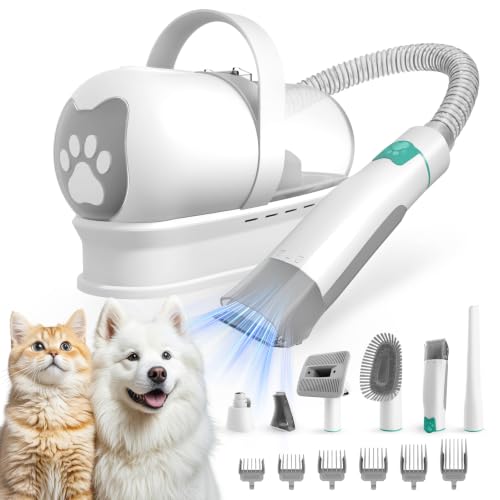
Effortless Grooming & Vacuuming: Our dog grooming vacuum features a vacuum function that can collect 99% of pet hair into a vacuum container while trimming and grooming, preventing hair from spreading all over the house and keeping your home clean
Tailoring Grooming Techniques to Different Coat Types
Selecting grooming techniques tailored to a cat’s specific coat type enhances the overall grooming experience and guarantees effective care. For short-haired cats, we should brush following the direction of hair growth, as this removes loose fur and promotes a healthy coat. Long-haired cats, however, necessitate daily brushing focused on detangling mats, especially by working carefully against the direction of hair growth in sensitive areas. Curly-haired cats benefit from using soft brushes or grooming mitts in the direction of their curls to maintain texture. Since the undercoat’s hair growth may differ from the topcoat, adapting our grooming techniques for both layers is critical. For specific concerns, consulting a professional groomer will further enhance our cat’s grooming routine. Beyond brushing, maintaining your cat’s nails through regular trimming is essential for complete grooming care and helps prevent overgrowth and discomfort.
Recommended Products

【Professional Pet Grooming Kit 】3 Pet grooming tools selected by pet lovers, which can meet daily all the grooming needs of pets. Let you, as the groomer, personally give your furry friend a shiny and healthy coat. This is a must-have beauty product set for pet lovers! The Best Dog Gifts - Merry Christmas

Clean Pets, Clean House: Depets cat & dog brush for shedding can easily remove loose hair, shedding mats, dander and dirt of your pet, which not only keep your pet clean, but also provide you with a clean and hygienic home environment

【Easy Desheding Brush】: THe self cleaning dog brush for long haired dogs and short haired dogs with release bottom helps effortlessly reduce shedding. It's the one cat brush for indoor cats you must have, cat brush for shedding, slicker brush for dogs and horses.
Frequently Asked Questions
How to Tell Which Cat Is Dominant in Grooming?
We can often tell which cat’s dominant in grooming by observing body language, like relaxed postures and grooming routines. Submissive signals, such as lowered ears, indicate social interactions and bonding habits within their grooming hierarchy.
What Direction Do I Shave My Cat?
When we shave our cat, we should clip with the grain for grooming safety, especially if their skin’s sensitive. For example, a relaxed cat enjoys coat maintenance more than an anxious one. Post-grooming care matters, too.
Do You Shave a Cat With the Grain or Against?
We typically shave cats with the grain to guarantee grooming safety and maintain fur length. Following veterinary advice on coat types and using proper grooming tools can enhance cat behavior and minimize risks during shaving.
What Not to Do When Grooming a Cat?
When grooming our cats, we shouldn’t rush sessions, ignore sensitive areas, or use inappropriate tools. We must avoid overwhelming them, neglecting skin conditions, and poor hygiene practices while being mindful of cat grooming mistakes and incorrect brushing techniques.