As an Amazon Associate, we earn from qualifying purchases. Some links on this site are affiliate links at no extra cost to you. Our recommendations are based on thorough research and editorial judgment.


How to Clean and Maintain Cat Grooming Brushes

To effectively clean and maintain our cat grooming brushes, we should start by removing hair and debris with our fingers or a rat tail comb. Next, we prepare a vinegar solution with warm water in equal parts and soak our brush for 5 to 30 minutes. After soaking, it’s essential to rinse thoroughly under running water and air dry bristle side down. Regular cleaning and inspection for wear will guarantee peak performance, and additional insights can be invaluable.
Key Takeaways
- Remove hair and debris from brushes using a rat tail comb or your fingers after each grooming session.
- Soak brushes in a warm water and vinegar solution for 5 to 30 minutes to disinfect them.
- Rinse brushes thoroughly with clean water to eliminate any soap or vinegar residue.
- Air dry the brushes completely, bristle side down, to prevent mold or rust buildup.
- Regularly inspect brushes for wear and replace them if any damage is visible.
Why Is It Important to Clean Cat Grooming Equipment?
You may be interested


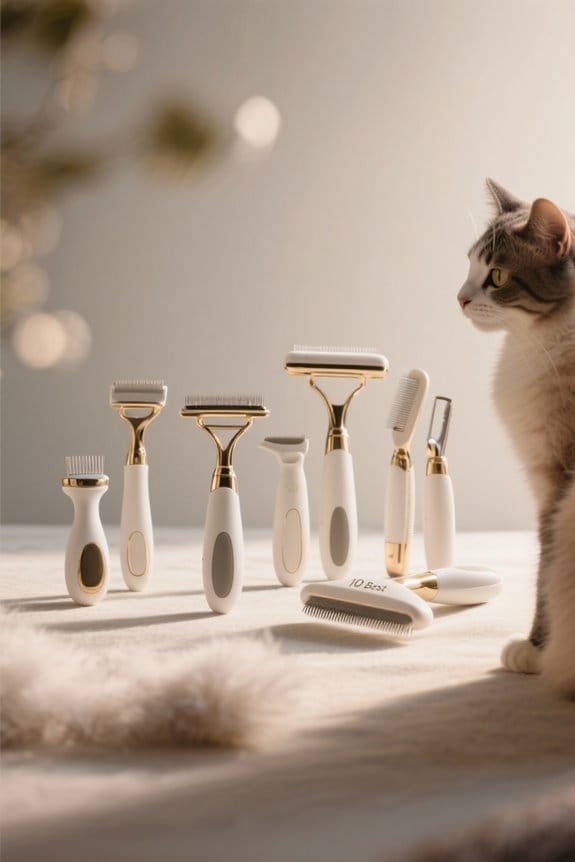
Cleaning cat grooming equipment is essential for several reasons, especially considering the health implications for both our pets and ourselves. Regular cleaning of tools like brushes is vital, as it helps eliminate fur buildup and harmful bacteria, thereby promoting the health of cats. Furthermore, using clean brushes reduces the risk of skin irritation during pet grooming sessions. This not only enhances the effectiveness of our grooming practices, allowing brushes to glide smoothly, but also helps reduce stress and anxiety in our cats, particularly in multi-cat households. Additionally, maintaining clean equipment increases the longevity of our grooming tools, ultimately saving us money on replacements. Clean brushes after each use to remove fur and allergens, ensuring self-cleaning mechanisms work effectively and maintain their functionality over time. Finally, ensuring we use clean water and hygienic practices fosters a healthier living environment for everyone involved.
Recommended Products
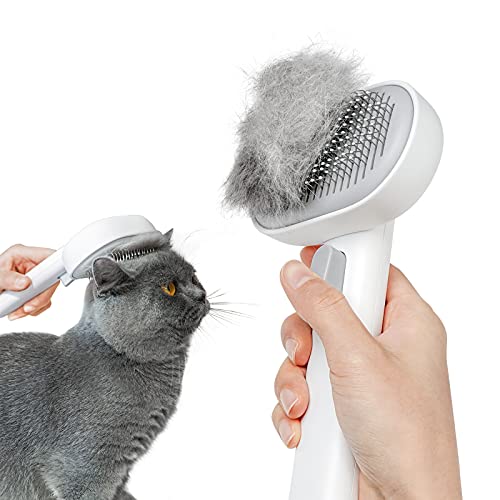
【Professional Cat Hair Brush】Perfect gift for pet owners, vets, and pet groomers. Using this cat brush for long haired cats on a regular basis can gently and effectively remove loose hair, tangles, knots, dander and trapped dirt. Suitable for short, medium or long, thick, thin or curly haired dogs/cats/rabbits, making your pets shiny and healthy.

Clean Pets, Clean House: Depets cat & dog brush for shedding can easily remove loose hair, shedding mats, dander and dirt of your pet, which not only keep your pet clean, but also provide you with a clean and hygienic home environment

NO-RINSE FOAMING BRUSH: The built-in soft silicone brush head dispenses a gentle foam for a stress-free grooming experience. Simply massage onto the chin and wipe dry with a tissue—no water required
How to Clean a Cat Brush
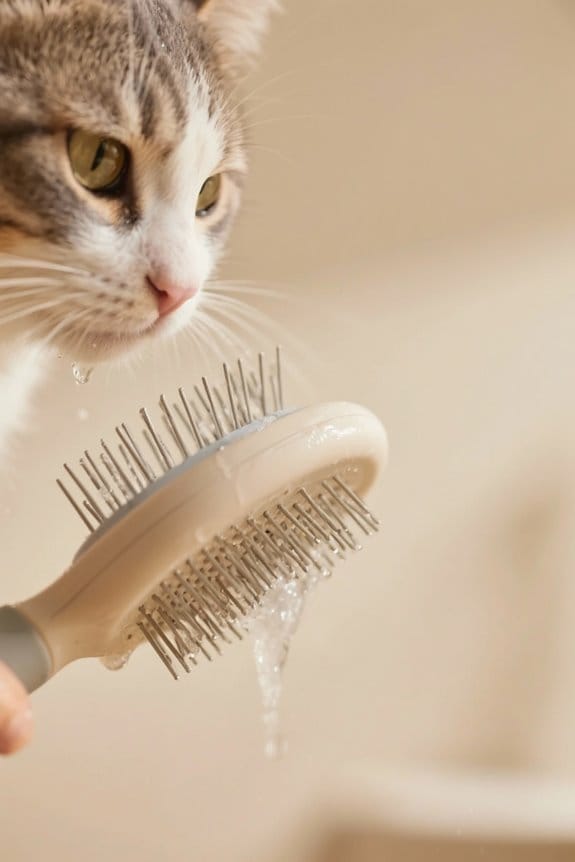
Maintaining clean grooming tools, such as cat brushes, is essential not only for our pets’ hygiene but also for effective grooming practices. To clean a cat brush, we begin by removing hair and debris using a rat tail comb or our fingers, making the cleaning process more effective. Next, we prepare a mixture of warm water and equal parts vinegar—ensuring the solution is pet-safe. Soak the brush in this solution for 5 to 30 minutes to loosen dirt stuck within the bristles. After soaking, we rinse the brush thoroughly under clean water and shake off any excess moisture to prevent mold growth. Finally, it’s important to air dry the brush completely, bristle side down, to maintain its shape for regular grooming sessions. Regular cleaning of tools enhances performance and promotes a healthier coat, while stainless steel needle combs and other high-quality implements should receive the same thorough cleaning treatment to ensure optimal grooming results.
Recommended Products

Comprehensive Cleaning Package: Our cleaning kit for cat water fountain includes 2 specialized green cleaning cloth brushes, 2 scouring pad cleaning brush, 4 different specifications cleaning brushes, 1 compressed cleaning sponge, and a convenient storage plastic box for organized keeping.With AIMAOGOU cleaning brushes, every corner of the water dispenser can be cleaned

💖UPGRADED Easy Desheding Brush: our cat massage pet brush Upgraded durable 304 stainless steel for better deshedding brush experience for cats dogs rabbits and furry small animals.Whether you're a pet owner or groomer,You deserve to have this undercoat shedding dog cats grooming BRUSH. Your lovely pets enjoy ur brushing! Cat brush for shedding indoor cats, slicker brush for dogs cats and horses rabbits .

Superior Efficiency: Our innovative triangle pet hair remover makes pet hair removal a breeze. Say goodbye to stubbornly trapped fur on car mats, furniture, clothing, and more. Experience 10X faster and more efficient hair removal with Analan!
How to Clean a Complete Cat Grooming Kit

When we consider our feline companions’ health and hygiene, a clean grooming kit is vital to guarantee ideal grooming practices. To start, we should remove all visible hairs and dirt from our brushes and combs by using a rat tail comb or toothbrush. For stainless steel scissors and clippers, submerge them in a disinfecting solution, such as diluted bleach or a commercial cleaning solution, for at least one minute to eliminate germs, then rinse thoroughly. After cleaning, all grooming tools must be air-dried in a warm, dry location to prevent rust or mold. Regular inspections for signs of wear are essential; replacing any damaged items will help maintain grooming efficacy and promote sanitary practices within our cat grooming kit. For de-shedding tools specifically, use mild soap and water for deep cleaning as needed, ensuring they are completely dry before storing them in a cool, dry place to maintain longevity.
Recommended Products

Dog & Cat Hair Grooming and Hair Health: Pet steam deshedding brush Set for long & short haired cats & dogs; Brush & remove loose hair; Detangle knots & mats; Coat care, reduce shedding; Mist softens coat, relieves dryness; Deep coat clean, remove dirt; Reduce static, protect coat; Relieve itching & dandruff; Odor control, reduce smell
Patent-Pending Design: Paw Science's dental finger wipes are hypoallergenic and pH balanced for your pet's oral cavity.

【10 Pieces pet Kits】 10 pieces of pet grooming accessories ,The set contains pet nail clipper and file, flea comb*2, pet shampoo bath brush, pet shedding brush, silicone toothbrush,Which is enough to meet your pet's cleaning needs.
How Often Should Cat Grooming Tools Be Cleaned?
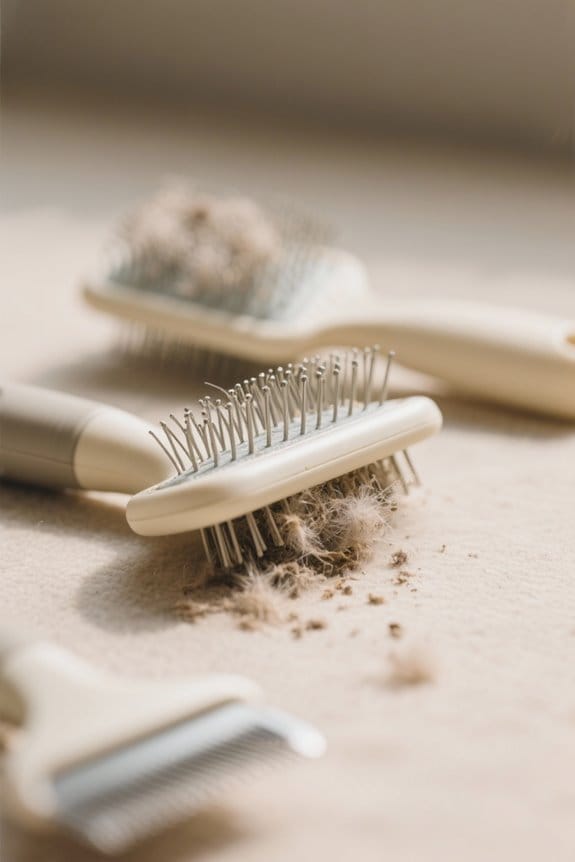
To guarantee ideal hygiene and health for our cats, it is crucial to establish a regular cleaning routine for grooming tools. In multi-cat households, we should clean our cat grooming tools after every use to prevent the spread of germs and reduce stress in our pets. For particularly dirty cats, we may need to clean our brushes and combs every one to two weeks, depending on visible dirt or hair accumulation. Regular cleaning not only enhances the effectiveness of our grooming implements but also promotes better hygiene for both our cats and ourselves. By evaluating grooming tools for visible signs of debris build-up, we promote a consistent cleaning schedule that contributes to the longevity of our grooming tools and overall cat maintenance. Additionally, maintaining clean grooming tools is essential for early detection of skin issues or parasites during regular grooming sessions.
Tips for Maintaining Hygiene With Cat Grooming Tools
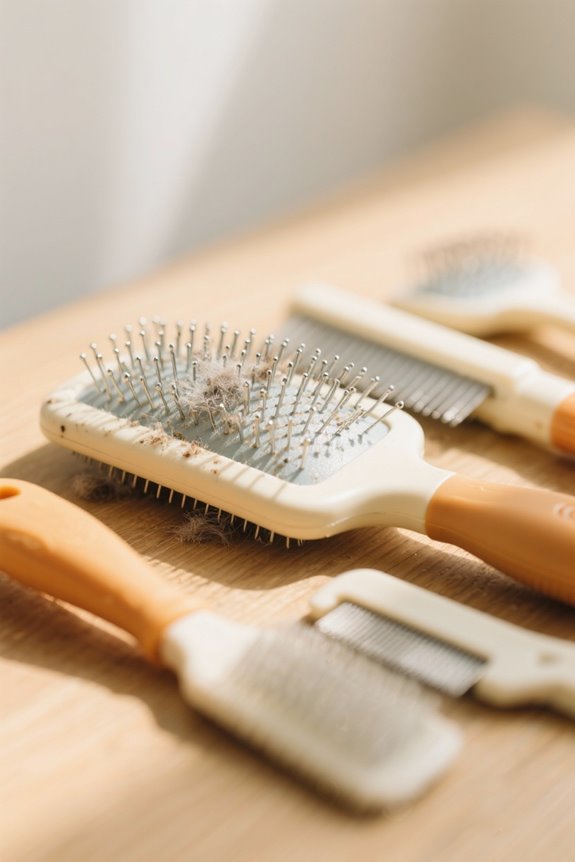
Cleansing grooming tools effectively is essential for fostering a hygienic environment for our cats, as inadequate cleaning can lead to the proliferation of harmful bacteria and allergens. To maintain hygiene, we should clean our grooming brushes after every use, particularly in multi-cat households. Using a solution of equal parts vinegar and water or pet shampoo, we can soak the brushes for 5 to 30 minutes to effectively remove dirt and fur. After rinsing, it’s vital to disinfect the tools with a pet-safe disinfectant to prevent skin infections. We must maintain a routine, cleaning brushes weekly or after significant use, especially if our cat has skin irritations or shedding issues. Store the tools in a dry place, air-drying with bristles facing down. Self-cleaning brushes with quick-release buttons facilitate easy fur removal between grooming sessions, making it simpler to maintain proper hygiene standards.
Recommended Products

【Professional Pet Grooming Kit 】3 Pet grooming tools selected by pet lovers, which can meet daily all the grooming needs of pets. Let you, as the groomer, personally give your furry friend a shiny and healthy coat. This is a must-have beauty product set for pet lovers! The Best Dog Gifts - Merry Christmas

【CAT GROOMING BRUSH】Cat brush with release button can gently and effectively remove loose hair, tangles, knots, dander and trapped dirt. Suitable for short, medium or long, thick, thin or curly haired dogs/cats/rabbits, making your pets shiny and healthy.

【Easy Desheding Brush】: THe self cleaning dog brush for long haired dogs and short haired dogs with release bottom helps effortlessly reduce shedding. It's the one cat brush for indoor cats you must have, cat brush for shedding, slicker brush for dogs and horses.
Special Considerations for Different Types of Brushes
Understanding the specific cleaning requirements for different types of grooming brushes is essential, as each tool has unique features that necessitate tailored care methods. For slicker brushes, we must carefully remove trapped fur and debris with our fingers or a detailer tool before soaking them in warm soapy water with gentle soap. Bristle brushes require regular maintenance; using a coil cleaner or toothbrush, we can dislodge any trapped hair, followed by gentle scrubbing with mild soap. Deshedding tools should be thoroughly cleaned after each use, removing loose hair and soaking metal parts in warm soapy water. For wide-tooth combs, we need to manually remove caught hair and dirt, then soak them in a vinegar and water solution for sanitation. When cleaning precision trimmers with stainless steel blades, frequent blade maintenance ensures optimal performance and longevity of the grooming tool.
Recommended Products

【Easy Desheding】: Swihauk self cleaning dog brush for long haired dogs with release bottom helps effortlessly reduce shedding. A must have dog brush for short haired dogs, cat brush for indoor cats, cat brush for shedding, slicker brush for dogs.

【Reusable & Easy to Clean】Pet hair removal glove are washable and reusable, offering a sustainable alternative to wasteful sticky papers and lint rollers! Save money while reducing environmental impact. Cleaning is simple – just shake off debris or rinse under water for repeated use.

DUAL-SIDED DESIGN: Our Undercoat Rake Dog brush is perfect for deshedding your pet's coat. Designed with a dual-sided design, start with a 9-teeth side to tackle stubborn mats and tangles, and finish with a 17-teeth side to thin out and deshed after.
Engaging the Community: Sharing Success Stories and Tips
How can we leverage the experiences of fellow cat owners to enhance our own grooming practices? Engaging with our community through forums or social media allows us to exchange effective cat grooming tips and unique challenges. By sharing success stories about how we consistently clean our brushes to manage loose hair, we inspire others to adopt similar routines. Posting before-and-after photos of grooming tools can visually motivate community members to prioritize maintaining their brushes. Discussing specific grooming challenges, such as mats or excessive pet hair, permits the sharing of innovative solutions, which could include various tools like specialized bristles or combs. Community members can also share their experiences with maintaining different grooming tools, from cleaning blade components to proper storage methods that help prolong lifespan of equipment. Together, we create a supportive environment that encourages us all to keep our cats’ coats healthy and well-groomed.
Frequently Asked Questions
How to Clean a Cat Grooming Brush?
To clean a cat grooming brush, we should remove fur, soak bristles in a solution, rinse thoroughly, and air dry. Regular cleaning boosts pet hygiene, supports coat health, and enhances our grooming techniques for effective fur shedding management.
How to Sterilize a Cat Brush?
In our quest for feline health—like knights battling bacteria—we’ve found that using pet-safe disinfecting solutions and specific sterilization methods for various brush types guarantees we maintain cleanliness and minimize allergies. Regular cleaning’s vital for effective grooming!
How Many Times a Week Should I Brush My Cat’s Hair?
We should brush our cat’s hair based on coat type; longhaired cats may need daily grooming sessions, while shorthaired ones benefit from weekly brushing. Let’s observe for signs of discomfort and adjust our techniques accordingly.
Can You Use Dawn Dish Soap to Clean Hair Brushes?
Absolutely, using Dawn dish soap’s grease-cutting benefits can enhance brush cleaning. For effective pet grooming hygiene, we should remember brush maintenance techniques and common cleaning errors—diluting soap and proper drying methods keep brushes in top shape!