As an Amazon Associate, we earn from qualifying purchases. Some links on this site are affiliate links at no extra cost to you. Our recommendations are based on thorough research and editorial judgment.

How Deshedding Tools Work: Mechanism Explained

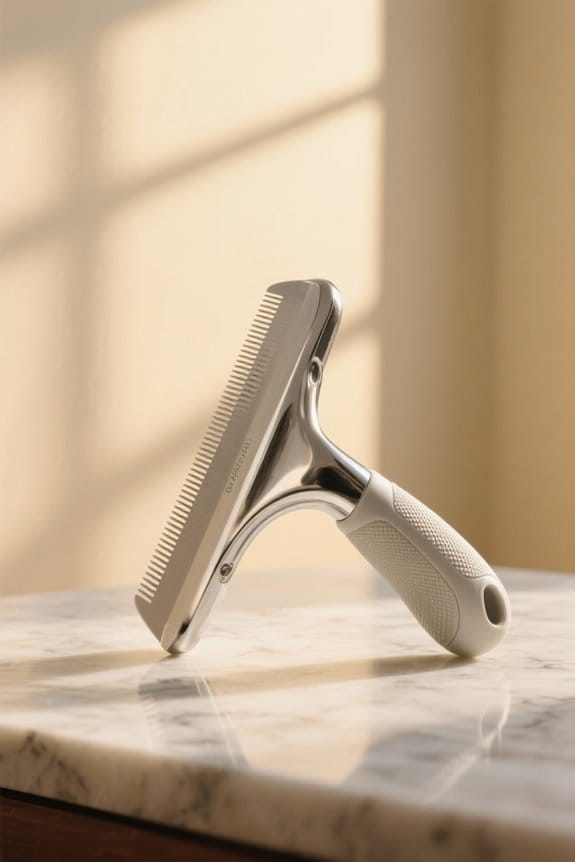
Deshedding tools function by utilizing specialized design elements, such as sharp blades or bristles, to effectively capture loose fur and undercoat without damaging the skin. These tools work best when used on dry fur, allowing the removal of dead hair while stimulating natural skin oils to enhance coat health. By applying gentle pressure and brushing in the direction of hair growth, we minimize irritation and promote a cleaner environment. Additional details about grooming techniques can further improve your approach.
Key Takeaways
- Deshedding tools use specialized edges or bristles to effectively grab and pull loose undercoat fur from a pet’s coat during grooming sessions.
- Undercoat rakes penetrate deep into dense fur to remove thick undercoats, while slicker brushes detangle and smooth both short and long-haired coats.
- Rubber brushes gently massage the skin while collecting loose fur, making them ideal for short-haired breeds and minimizing discomfort.
- Grooming tools should be used in the direction of hair growth to reduce skin irritation and maximize comfort for pets during the deshedding process.
- Regular use of deshedding tools ensures improved air quality and reduced allergens by limiting the amount of loose fur shed in the home.
Understanding the Shedding Process
Understanding the shedding process is essential for pet owners who seek to manage their pets’ grooming needs effectively. This cyclical process involves a series of phases: growth, regression, rest, and shedding, culminating in the loss of dead hair. During shedding season, pets typically release their undercoat, particularly in spring and autumn, to adjust to temperature changes. It’s vital to recognize that environmental factors, like warm indoor conditions, can lead to year-round shedding. To properly deal with a pet’s loose undercoat, we should utilize deshedding tools, designed to remove loose fur without damaging the topcoat. Regular brushing not only maintains a pet’s coat but also enhances skin health, making deshedding tools an invaluable part of our grooming routine. Additionally, providing fiber-rich supplements like cat grass can support digestive health and help manage hairballs that result from grooming and shedding.
Importance of Grooming for Pets
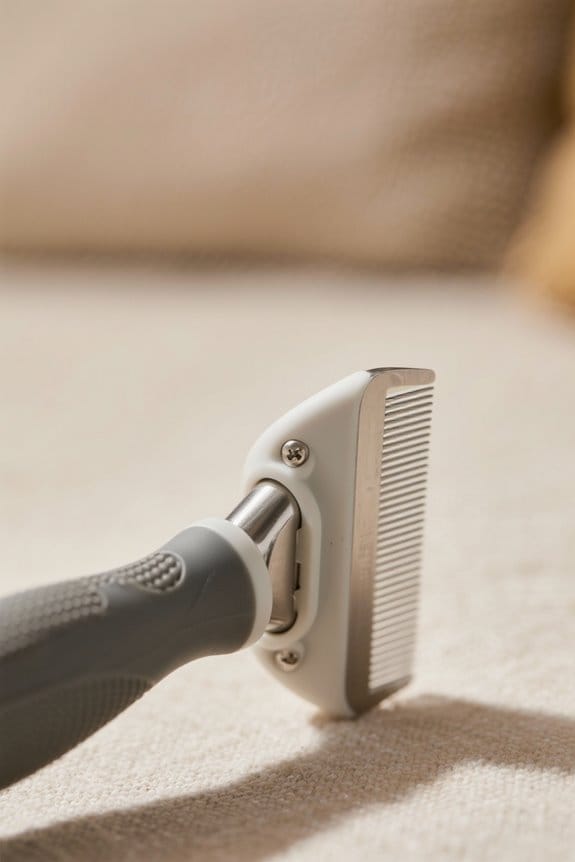
Grooming is not merely a cosmetic necessity for our pets; it plays an essential role in their overall health and well-being, particularly when we consider the various benefits that regular grooming provides. Establishing a consistent grooming routine helps maintain coat health by effectively removing loose fur, dirt, and debris, creating a cleaner living environment. Furthermore, grooming stimulates natural oils in the skin, enhancing coat shine and promoting ideal skin condition. Regular grooming also aids in early detection of skin issues or parasites, allowing for prompt care. Additionally, consistent grooming can greatly reduce shedding around the home, minimizing allergens and improving air quality, which ultimately contributes to our pets’ comfort and overall quality of life. Beyond these health benefits, grooming sessions serve as valuable bonding time between pet and owner, strengthening the relationship through positive interaction and care.
Overview of Deshedding Tools
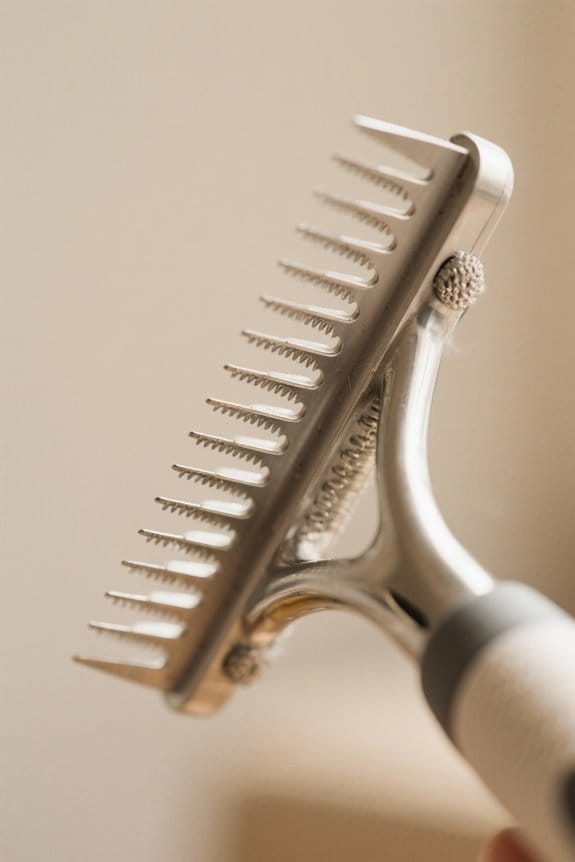
Deshedding tools play an essential role in managing pet hair, particularly for those with thick undercoats. These tools are specifically designed to remove loose hairs effectively, greatly reducing shedding and keeping our homes cleaner. Options like deshedding brushes and undercoat rakes cater to various coat types and lengths, employing sharp blades to cut through loose undercoat fur with ease. Ergonomic designs enhance their usability, minimizing hand fatigue during long grooming sessions, allowing thorough care. It’s best to use deshedding tools on dry fur, as wet hair tends to clump, increasing discomfort for pets. Regular maintenance, including cleaning blades and checking for wear, is vital for ensuring peak performance and preventing skin irritation. Additionally, self-cleaning slicker brushes offer a convenient alternative by featuring one-button mechanisms that quickly remove collected hair from pins, simplifying the grooming process.
Types of Deshedding Tools Available
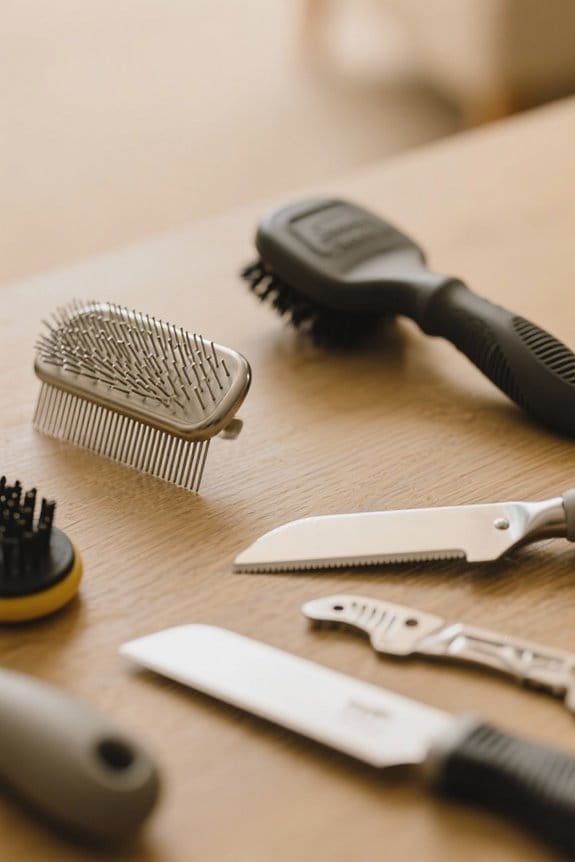
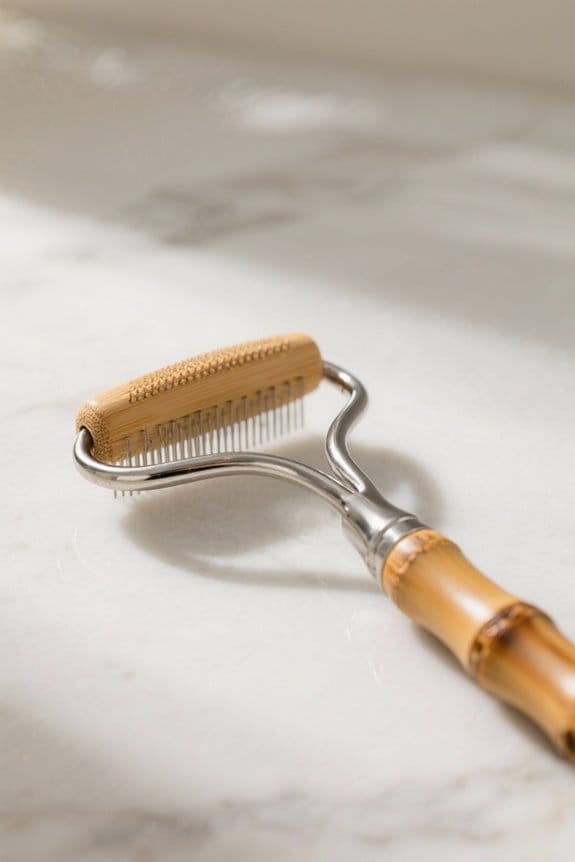
When it comes to managing shedding in pets, various types of deshedding tools are available, each designed for specific coat types and grooming needs. Among them, the undercoat rake features long teeth, making it effective for removing loose hair from thick undercoats, ideally suited for breeds with dense fur. Slicker brushes utilize fine wire bristles to detangle and eliminate loose hair, adaptable for both short and long-haired pets. For short-haired dogs, rubber brushes provide a gentle massage while effectively collecting loose fur without irritation. Additionally, combs with varying tooth lengths offer versatility for most coat types, allowing for efficient detangling and minimizing shedding. Tools featuring dual-sided designs combine multiple functions, such as the 9-teeth side for dematting and 17-teeth side for deshedding, maximizing grooming efficiency in a single implement. Selecting the right deshedding tool markedly impacts the effectiveness of the grooming process we undertake.
Recommended Products

【Professional Pet Grooming at Home】 Skip expensive salon visits—this all-in-one grooming vacuum kit includes clippers, nail grinder, blow dryer, brushes, and nozzles to keep dogs and cats fresh, trimmed, and clean.

DUAL-SIDED GROOMING TOOL – Our double-sided dematting comb features 12 blades for mats, tangles, and matted hair and 23 blades for shedding control. Functions as a dog deshedding brush, dog undercoat brush, cat dematting tool, cat deshedding brush, and dog rake for long haired pets.

SELF-CLEANING RETRACTABLE BRISTLES: Designed with a push-button mechanism that retracts bristles to quickly release trapped fur, making grooming cleanup effortless and mess-free. Ideal for removing mats, tangles, and loose pet hair on dogs and cats of all coat types.
How Deshedding Tools Prevent Matting
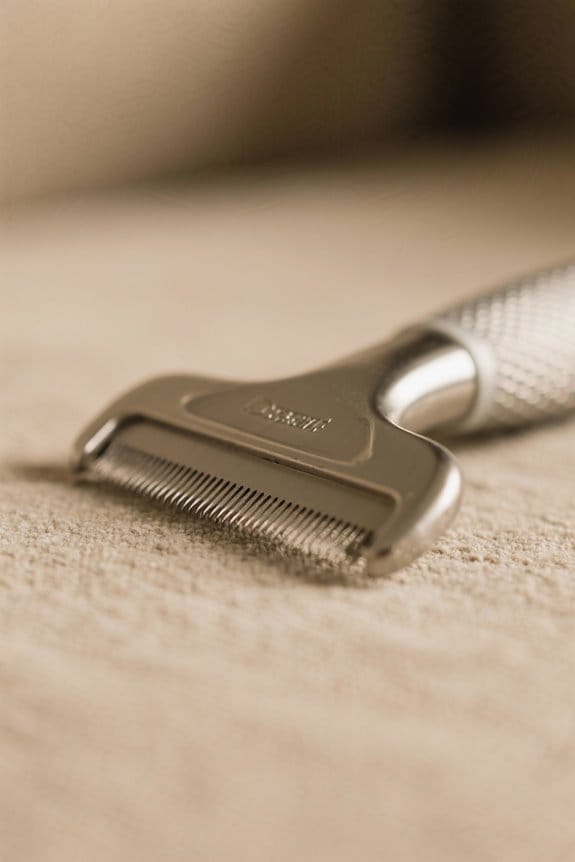
Managing shedding effectively requires a thorough understanding of how different deshedding tools function to prevent matting in pets’ coats. These specialized tools utilize designed teeth that penetrate through the topcoat to remove loose undercoat fur, greatly reducing the chances of tangling. By regularly using these tools, we can loosen and lift trapped hair, which ultimately helps maintain a healthy coat. Many deshedding tools are equipped with rounded edges that glide smoothly over the skin, minimizing the risk of pulling tangled hairs. When we deShedding consistently and brush the coat thoroughly, we enhance its integrity and greatly decrease the likelihood of matting. This proactive approach helps create a more manageable and healthy coat, preventing the buildup of mats and knots. For particularly stubborn tangles, brushes with rounded bristles can ease discomfort during detangling and prevent skin irritation while working through problem areas.
Mechanism of Deshedding Brushes
The mechanism behind deshedding brushes is engineered to effectively target the loose undercoat of pets, which contributes considerably to shedding. These deshedding tools feature fine, closely spaced teeth designed to gently lift loose undercoat hair while preserving the integrity of the topcoat. When using these brushes, apply gentle pressure and always brush in the direction of hair growth to minimize the risk of skin irritation or discomfort. This method not only guarantees that dead fur is efficiently removed, but it also promotes a healthy skin environment. Regular use of deshedding brushes can drastically reduce the amount of loose undercoat, resulting in less fur throughout the home—benefitting both pets and owners alike by maintaining a cleaner living environment. For optimal results, professionals recommend brushing 3-4 times per week to maintain coat health and effectively manage shedding in high-shedding breeds.
Choosing the Right Deshedding Tool for Your Pet
Selecting the appropriate deshedding tool for your pet necessitates careful consideration of their unique coat characteristics. For long-haired dogs, we should opt for fine-toothed tools that effectively reach the undercoat while minimizing stress on the skin. Conversely, short-haired breeds typically require gentler brushes, preventing tugging or discomfort during grooming. Ergonomic and lightweight designs are important, as they reduce hand fatigue, making grooming sessions more manageable. Additionally, multifunctional tools that can both de-shed and demat are advantageous, especially during heavy shedding periods. It’s crucial that we check the blade size and sharpness to guarantee comfort; dull blades may tug at hair, while overly sharp ones could inflict skin irritation. Finally, easy-release mechanisms facilitate efficient debris removal for seamless cleaning. Tools with self-cleaning mechanisms simplify maintenance by allowing quick removal of accumulated fur with the push of a button, extending the tool’s lifespan and ensuring consistent performance.
Recommended Products

BENEFITS - Save time and effort, tackle mats and tangles without the pain or discomfort, and loosens knots for a smoother brushing experience.


Effective at reducing loose fur : Double "C" shaped teeth structure goes deep into undercoat without damaging the topcoat and removes any dead undercoat before it makes it's way to the couch or kitchen floor.
Proper Technique for Using Deshedding Tools
When we begin using deshedding tools on our pets, it’s vital to adopt the proper technique to secure effective grooming while minimizing any potential discomfort for the animal. First, we should always brush our pet’s coat to remove tangles and bring loose undercoat to the surface. Selecting the appropriate deshedding tool is essential; for short-haired pets, a suitable brush is ideal, while long-haired breeds require a rake. We must brush in the direction of hair growth, applying gentle pressure to avoid irritation to the pet’s skin. Concentrating on high-shedding areas, like the back, chest, and tail, allows us to effectively remove loose fur. Regularly cleaning the deshedding tool will enhance its efficiency and guarantee our pet’s comfort. Using tools with rounded teeth on brushes can further minimize discomfort during the grooming process.
Recommended Products

𝐀𝐋𝐋-𝐈𝐍-𝐎𝐍𝐄 𝐆𝐑𝐎𝐎𝐌𝐈𝐍𝐆 𝐊𝐈𝐓: Groom like a pro with FurEase dog grooming kit. The daily grooming brush handles loose fur, the weekly deshedding tool tackles tangles, and the dog grooming clippers provide professional-grade trims—all while promoting a shiny, healthy coat and preventing skin issues.

The information below is per-pack only

DOG DETANGLER BRUSH - Chris Christensen Ice Slip Max Pin Brush was created with more pin coverage for quicker, more efficient grooming, glide through all coat textures with ease and is the perfect accompaniment to Chris Christensen's Ice on Ice detangling products, to gently and effectively eliminate tangles and mats. For show dogs specifically, it will allow you to demat the coat while preserving as much coat as possible. It is also an excellent preventative and maintenance brush for daily use.
Benefits of Regular Deshedding
Routine deshedding not only reduces the occurrence of loose fur around our homes, but it also offers several health benefits for our pets. By using a deshedding tool, we can effectively remove loose undercoat fur, which promotes a healthier coat and prevents matting. Different coat types may require varied approaches during deshedding; however, consistent sessions help manage seasonal shedding efficiently. In addition, regular deshedding can greatly minimize skin irritation caused by trapped hair and mats, enhancing overall comfort for our pets. Establishing a routine makes deshedding an integral part of pet grooming, as it encourages positive interaction between us and our pets, while simultaneously fostering a cleaner environment in our homes. Just as with dental care, where regular brushing significantly reduces plaque buildup in cats, consistent grooming practices provide proactive health maintenance for our pets.
Frequency Recommendations for Deshedding
Typically, we should use deshedding tools at least 2-3 times per week during peak shedding seasons, such as spring and summer, to effectively manage the copious amounts of loose fur our pets shed. During other times of the year, frequency recommendations suggest using the deshedding tool 1-2 times a week. This routine will help us remove loose fur effectively, facilitating easier grooming and minimizing the presence of hair in our living spaces. Regular deshedding not only helps maintain a healthy coat but also establishes a reliable grooming routine, enhancing the overall experience for both pets and owners. In addition, monitoring our pet’s shedding patterns will enable us to adjust deshedding frequency based on their specific coat health and comfort needs throughout the year. Similar to how daily cleaning maintains optimal eye health in cats by reducing discharge and debris, consistent deshedding practices contribute to overall pet wellness and hygiene.
Post-Deshedding Care Tips
To guarantee our pets remain comfortable and healthy after deshedding, it’s essential to implement several post-grooming care tips. First, we should finish with a final brush to remove any remaining loose hairs, which enhances our pet’s coat appearance and prevents discomfort. Maintaining a calm, quiet environment during this process reduces anxiety and helps our pets relax. We must monitor their behavior for any signs of discomfort, adjusting our grooming techniques accordingly. Additionally, scheduling regular grooming sessions at consistent intervals promotes a healthy coat and decreases excessive shedding. Finally, ensuring our pets remain adequately hydrated and on a balanced diet supports their skin health, contributing to overall vitality and comfort post-deshedding.
Cleaning and Maintenance of Deshedding Tools
While maintaining the efficiency of our deshedding tools is essential for effective grooming, it requires regular and systematic cleaning. After each grooming session, we should promptly remove hair and debris to prevent clogging, ensuring maximum cutting efficiency. Inspecting the blades for dullness or damage is necessary; should we find any issues, replacing or sharpening them can help avoid accidents during use. To prolong their lifespan, storing deshedding tools in a dedicated dry container is advisable. We can use a soft cloth or brush cleaner to gently wipe down the plastic and rubber surfaces, keeping them hygienic. Finally, we must follow the manufacturer’s instructions for cleaning and maintenance, as this preserves warranties and safeguards our investment.
Recommended Products

Complete Grooming: The furMe kit includes a Grooming Brush, Electric Clippers, De-Shedding Tool, and two specialized cleaning tools, providing a well-rounded grooming experience.

Complete Grooming: The furMe kit includes a Grooming Brush, Electric Clippers, De-Shedding Tool, and two specialized cleaning tools, providing a well-rounded grooming experience.

Maximum Power: With 14,000Pa suction, effortlessly eliminate pet hair and dander while you groom, keeping your space clean with this high-performance grooming vacuum.
Alternatives to Deshedding Tools
When considering alternatives to traditional deshedding tools, it’s important for us to explore a range of options that can effectively manage shedding while catering to different coat types and sensitivities. Shedding blades, with their curved edges, can efficiently remove loose fur from both long and short-haired breeds. For sensitive pets, grooming gloves featuring rubber bristles gently massage the skin while efficiently removing loose hair. Pin brushes serve dogs with longer coats, detangling without damaging hair and distributing natural oils. A simple comb is also effective for light shedding maintenance in shorter-haired pets. Additionally, regular baths using deshedding shampoos can complement these alternatives, helping to loosen fur during grooming and maintain overall coat health.
Recommended Products

15-Piece Horse Grooming Kit: This red grooming set includes a soft rubber horse brush, metal mane comb, metal mane and tail comb, body brush, hoof brush, massage brush, hoof pick with brush, stiff bristle brush, sweat scraper, spiral horse brush, cleaning sponge, 27.5 in shedding blade, 100 braiding rubber bands, gloves, and a red bucket tote.

14-Piece Horse Grooming Kit: This horse grooming kit includes 1x Mane and Tail Brush, 1x Soft Horse Brush, 1x Hard Horse Brush, 1x Oval Massage Curry, 1x Curry Comb, 1x Hoof Pick with Brush, 1x Sweat Scraper, 1x Grooming Sponge, 2x Portable Metal Comb, 1x Horse Braiding Comb, 1x Rubber Band, 1x Gloves, 1x Storage Tote Bag

2 in 1 Rubber Broom & Rounded Metal Head — Electrostatic rubber Bristles acts like a magnet to absorb debris and hair, during the cleaning process, debris and hair won't be blown into the air. Natural Rubber Bristles and Rounded Metal Head Design not only makes it easy to deeply clean pet hair on the carpet, but also protects the carpet from damaging
Frequently Asked Questions
How Does the Deshedding Tool Work?
Deshedding tools effectively streamline our pet coat care routine. By selecting appropriate deshedding tool types and employing ideal grooming frequency, we master fur removal techniques, ensuring our furry friends stay comfortable and our homes remain clean.
How Does a Groomer Deshed a Dog?
We use various deshedding techniques tailored to coat types, starting with brushing and then employing a deshedding tool. Regular grooming frequency helps manage shedding, and maintaining our tools guarantees effective and comfortable sessions for every dog.
What Breeds Should Not Use a Furminator?
Did you know that 30% of dog owners struggle with seasonal shedding? We should avoid using the FURminator on non-shedding breeds, those with sensitive skin, or long-haired types needing specialized grooming for proper coat maintenance.
Do Deshedding Brushes Cut Hair?
Deshedding brushes don’t cut hair; they utilize effective deshedding techniques for various fur types. We should focus on brush maintenance and best practices to guarantee a safe, painless grooming experience while removing dead fur efficiently.